
Qualcomm Patents Technology That Helps Phones Understand Images Without a Cloud Connection
Qualcomm has filed a patent for a system that compresses video frames into compact, labeled summaries so that AI can analyze what it sees without choking on the raw data, a real problem when that AI is running on a phone or a camera chip, not a server farm.
What Qualcomm's compressed image-ID system actually does
A security camera stares at an empty hallway all night. Analyzing every pixel of every frame for anything unusual is enormously expensive, and most of that data is redundant. That's the problem this Qualcomm patent is trying to fix.
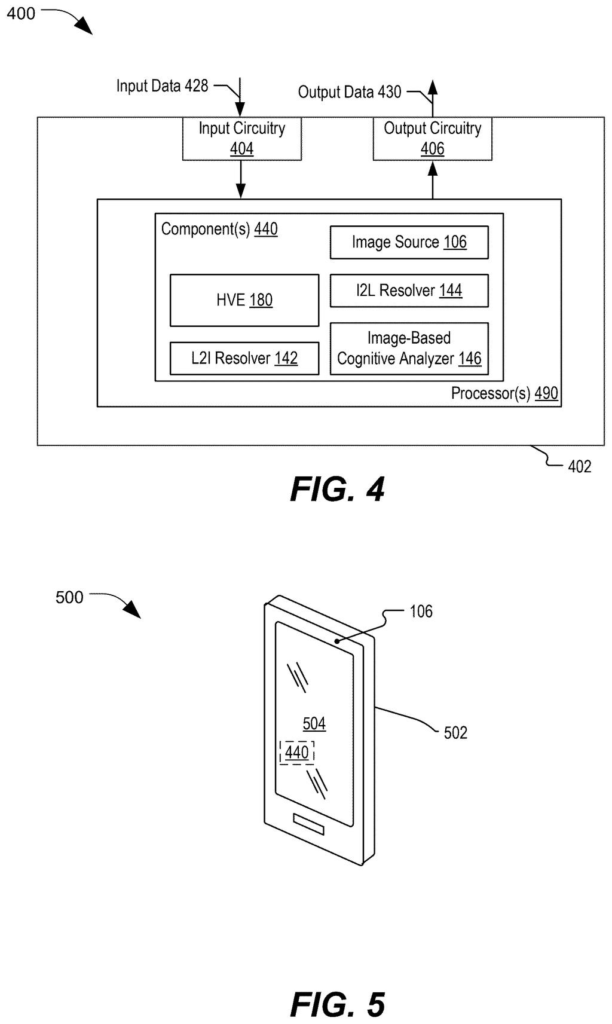
The filing describes a system that takes a video stream and processes each frame through a layered encoder, essentially squishing the image down to a compact mathematical summary. That summary then gets converted into a small set of labeled identifiers, like a short list of visual "tags" that capture the key features of the frame. Instead of hauling around full image data, the AI works from those identifiers.
The goal is to make AI-based image analysis faster and cheaper to run on devices with limited processing power, like smartphones or embedded cameras. You'd get the benefit of continuous, intelligent video understanding without draining a battery or requiring a cloud connection for every frame.
process, at a hierarchical vision encoder (HVE), an image frame of a sequence of image frames to generate image latent data, wherein the image latent data corresponds to a downscaled representation of the image frame …
Translation: The device uses a specialized encoder to turn video frames into smaller, simplified data representations.
How the encoder shrinks frames into compact visual identifiers
The patent centers on a component Qualcomm calls a hierarchical vision encoder (HVE), a multi-stage system that processes image frames at different levels of detail, from broad shapes down to fine features, before compressing the result. This layered approach ("hierarchical" just means it works in stages, from coarse to fine) produces what the patent calls image latent data, a compact mathematical version of the original frame that retains the important visual information while being much smaller.
That latent data is then converted into image-feature group (IFG) identifiers, essentially short codes or labels that group together related visual characteristics from the frame. Think of them as a highly compressed index of what the image contains, rather than the image itself.
Those IFG identifiers get added to a running dataset that the AI uses to understand the full video sequence over time. The system is built for what the patent calls "cognitive analysis", meaning AI tasks like recognizing objects, detecting events, or understanding scenes, as opposed to just storing or displaying video.
- Frame is processed by the hierarchical vision encoder into compressed latent data
- Latent data is converted into a set of IFG identifiers
- Identifiers are added to the image analysis dataset for AI reasoning across the full sequence
The one or more processors are also configured to process the image latent data to generate a set of IFG identifiers. The one or more processors are further configured to add the set of IFG identifiers to image analysis data used to represent the sequence of image frames for image-based cognitive analysis.
Translation: The system creates labels for image features and attaches them to the data so the phone can understand what it is seeing.
What this means for AI cameras running on mobile chips
The practical target here is on-device AI vision: cameras, phones, and other edge hardware that need to run continuous image analysis without a constant connection to a remote server. Processing raw video frames is expensive in compute and power terms, and that cost scales badly when a device is watching a scene all day. A system that reduces each frame to a small, structured set of identifiers before the AI touches it could make real-time visual understanding genuinely viable on constrained chips.
Qualcomm's position as the dominant supplier of mobile application processors makes this filing strategically sensible. The company sells the chips inside the majority of Android flagship phones, as well as processors used in XR headsets and camera systems, so a more efficient visual AI pipeline would benefit a wide range of its existing products. This kind of efficiency-focused vision AI work sits squarely in the stream of latest Big Tech patents reshaping what on-device AI chips are expected to handle.
That makes this Qualcomm's ninth filing we've tracked since July in our on-device AI privacy watchlist, adding to earlier work like their teaching cameras unseen objects and low-power event detection patents.
The problem this patent attacks is real and genuinely costly at scale. Running AI vision analysis continuously on a battery-powered device is one of the harder engineering constraints in mobile computing right now. Raw video data is enormous, and most approaches to on-device AI either compromise on accuracy or on battery life.
A system that front-loads the compression work and hands the AI a compact, structured summary instead of raw pixels is a sensible architectural response. The specific approach, encoding frames into labeled feature-group identifiers before passing them to an analysis model, is a reasonable extension of ideas that have been circulating in the computer vision field for a few years. This filing is less about a conceptual leap and more about Qualcomm staking out IP in a specific implementation path for its own chip ecosystem.
Whether this actually appears in a shipping product is a separate question. But the problem it addresses, making AI cameras smarter about what they actually process, is one that matters to anyone who has watched a phone get warm just from running a live photo analysis feature for a few minutes.
Get our take in your Top Stories
Liked this breakdown? Add Patentlyze as a preferred source on Google, and our plain-English take shows up more often in your Top Stories the next time Qualcomm patent news breaks.
There are more where this came from
We read every patent application Big Tech publishes and send you the ones worth knowing. Plain English, free, every week.
The drawings
14 drawing sheets from US 2026/0253403 A1 · click any drawing to enlarge


Want this weekly breakdown for a company we don't cover? Patentlyze Pro →
Be the first to weigh in