
Apple Files Patent for Phones That Grade Their Own Wireless Signal Forecasts
Apple has filed a patent for a phone that double-checks its own AI's signal predictions, and tells the cell tower when the AI starts guessing wrong.
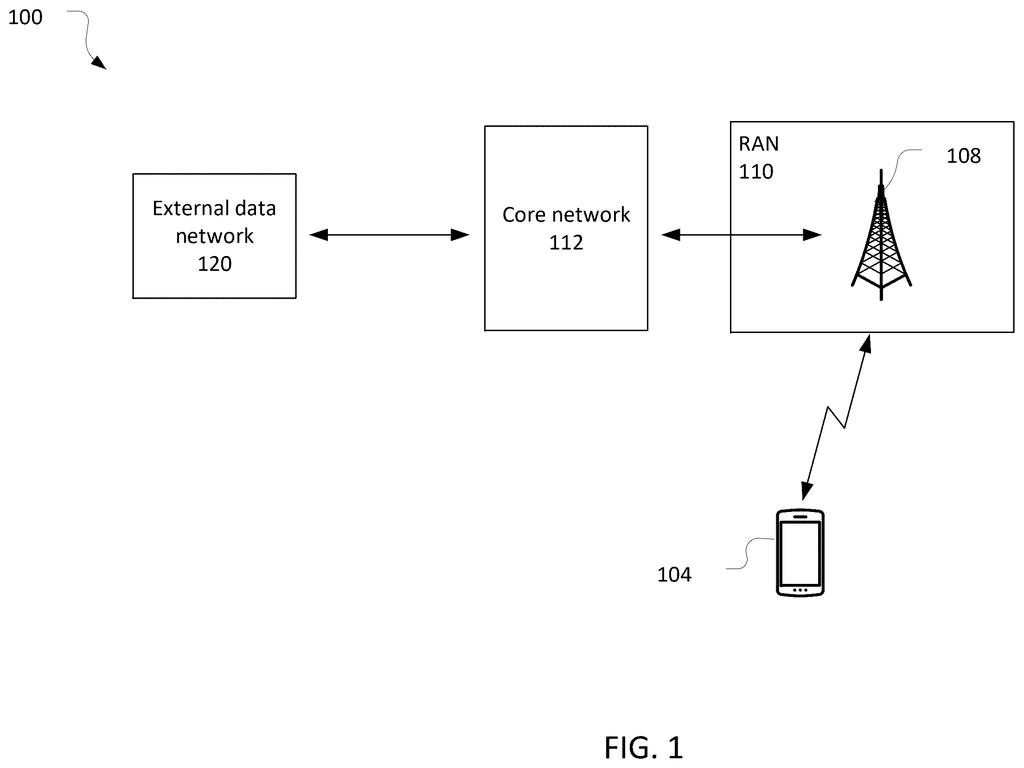
What Apple's self-grading signal forecast does
Imagine a weather app that forecasts rain, then checks the sky an hour later to see whether it got it right. If it keeps missing, it tells you to stop trusting it. That is roughly what Apple describes for your phone's wireless connection.
Phones and cell towers constantly trade measurements about how good the signal is. Newer phones can use an AI model to predict that signal a moment ahead, which can save battery and airtime. The catch is that the AI can drift and start guessing badly. In this patent, the tower sets aside a few extra measurements inside the stretch of time being predicted. Your phone compares its guess with what it actually measures, and flags the tower if the miss gets too big.
The tower can then switch the phone back to the older, plain method of measuring the signal.
… obtaining, via a CSI prediction model, a predicted CSI based on the prediction resource, wherein the predicted CSI is for a prediction window; obtaining a CSI measurement based on the monitoring resource, wherein the monitoring resource is within the prediction window; and generating, for transmission to a network, a message based on the predicted CSI and the CSI measurement.
Translation: The phone guesses its future signal strength and then checks if it was right.
How the phone checks its guess against reality
The patent covers how a phone and a cell tower keep tabs on an AI model that predicts channel state information (CSI, readings describing how good the radio link is). The tower uses CSI to schedule data to your phone, and the model lets the phone report what the signal will look like instead of what it did a moment ago.
To check the model, the tower configures two groups of reference signals (known test signals it sends out):
- Prediction resources: the readings the AI uses to forecast the signal for a future time window.
- Monitoring resources: extra readings taken inside that window, which supply the real answer to compare against.
The phone scores the gap with a standard measure such as NMSE (normalized mean square error, basically how far off the guess was) or SGCS (a similarity score between predicted and real readings). If the gap crosses a threshold the tower set, the phone sends a message: one bit saying so, or several bits giving the score. In another version, the phone sends both sets of readings and the tower does the scoring.
The tower then picks an action: switch the model off and return to the older estimation method, retrain it, or adjust the threshold. The monitoring signals can come less often than the prediction ones, or on demand. The description also covers a separate idea: choosing antenna beams from continuous space instead of a fixed menu.
The present application relates to devices and components including apparatuses, systems, and methods for performance monitoring for channel state information (CSI) prediction.
Translation: This patent covers how mobile devices track the accuracy of their own signal forecasts.
Why this matters for your phone's 5G signal
If your phone leans on an AI model to manage its connection, someone has to notice when that model goes wrong. This filing gives the network a way to catch a slow decline, such as a 5 to 10 percent drop in accuracy, before it turns into a full failure, and a simple fallback to the older method. The aim is a connection that stays dependable even when the AI is off its game.
The filing refers to 5G and later systems such as 6G, and it is written in the language of wireless standards, which points to the rulebook that phone and network makers share. Apple does not name a product, so treat this as groundwork for future connectivity, with no promise that anything ships.
Apple's 524th filing in our Apple coverage since May adds to a run of 5G-and-AI work that includes signal prediction and matched AI labeling.
Claim 1 is fairly specific. The network must set up two separate groups of test signals, one that feeds the prediction and one that only checks it, and the checking signals must land inside the period being predicted. The phone then sends back a message built from both the guess and the real reading.
Claim 18 is looser. It drops the two-group setup and covers any device that compares a prediction with a measurement, spots that the error crossed a limit, and tells the network. If granted, that wording would reach a wide range of phones doing that report-when-wrong check, whatever signal layout they use.
The verdict: routine plumbing, but sensible plumbing. It is written to fit the wireless standards process, and you would only notice it if the AI it watches ever failed.
Get our take in your Top Stories
Liked this breakdown? Add Patentlyze as a preferred source on Google, and our plain-English take shows up more often in your Top Stories the next time Apple patent news breaks.
There are more where this came from
We read every patent application Big Tech publishes and send you the ones worth knowing. Plain English, free, every week.
The drawings
15 drawing sheets from US 2026/0312646 A1 · click any drawing to enlarge


Show the other 7 sheets


Want this weekly breakdown for a company we don't cover? Patentlyze Pro →
Be the first to weigh in