
Intel Patents a Battery-Saving Trick That Shrinks Your Screen's Active Area
When your laptop is running low on battery, Intel wants to shrink the active portion of your screen and power down the edges you're not using, saving energy without turning the display off entirely.
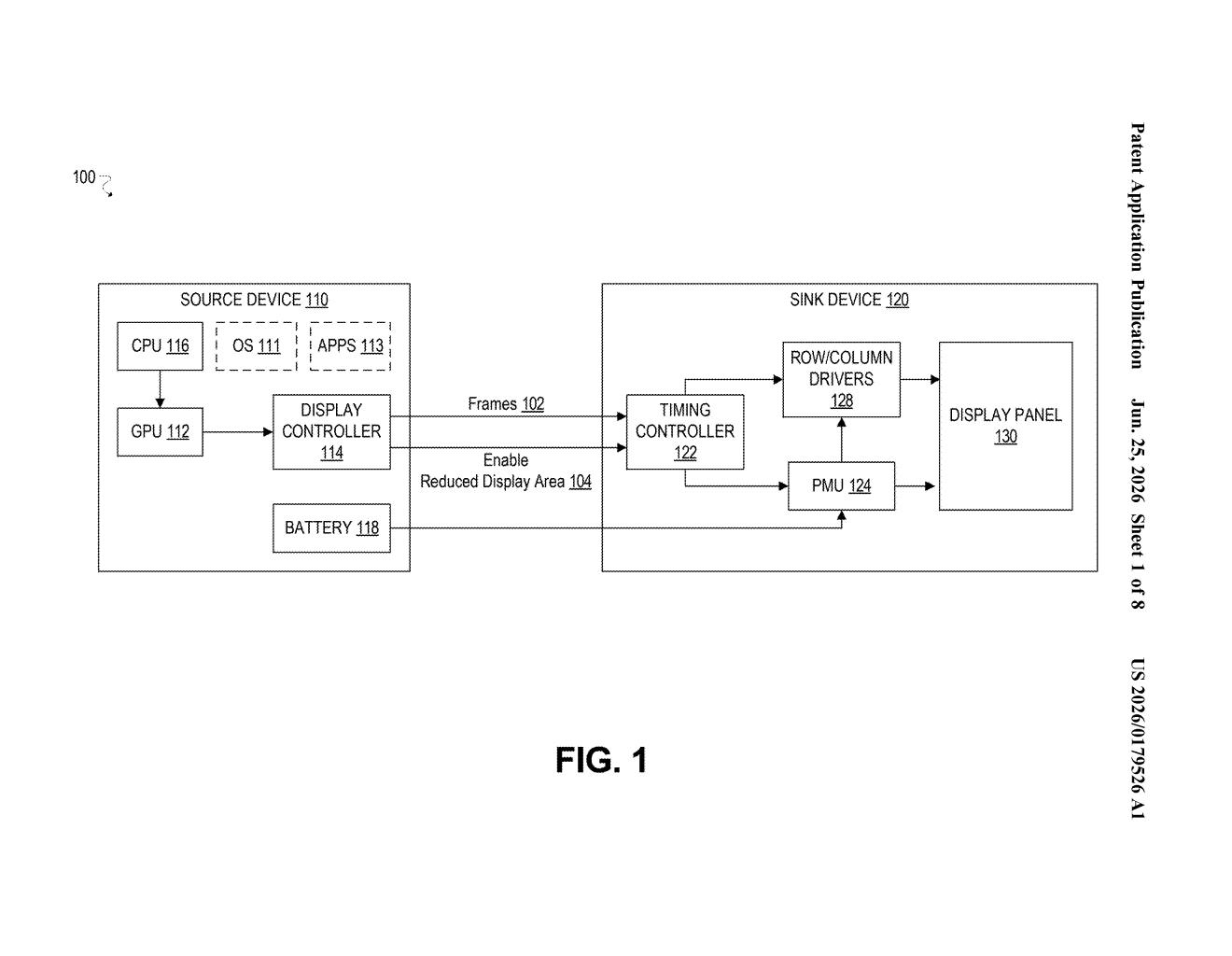
What Intel's display-shrinking power save actually does
Imagine your laptop screen as a sheet of paper. Right now, the whole sheet lights up whether you're using the edges or not. Intel's idea is to shrink the "lit" portion to just the middle, leaving the outer edges of the panel completely dark and unpowered.
When that happens, the device also lowers the resolution of whatever you're watching or working on to match the smaller active area. You get a smaller picture, but the whole display doesn't turn off, and the battery drains more slowly.
Think of it like dimming individual light bulbs in a room rather than flipping the master switch. The fewer pixels that need power, the less energy the screen consumes overall.
How Intel turns off display zones to cut power draw
The patent describes a display system where processing circuitry can reduce the size of the "viewable area" of a screen at runtime. The portions of the panel outside that smaller active zone are fully deactivated, meaning they draw no power.
At the same time, the system renders content at a reduced resolution that matches the shrunken viewable area. Those lower-resolution frames are then displayed only within the smaller active region. The result is a proportional drop in power consumption tied directly to how much of the panel has been switched off.
- Viewable area reduction: the display's active region is made smaller in software and hardware together
- Deactivation of outer zones: pixels outside the active area stop receiving power entirely
- Resolution scaling: rendered frames are dropped to match the smaller area, reducing GPU workload as well
The claim is hardware-agnostic enough to apply to laptops, tablets, or any panel-based device with programmable display circuitry.
What this means for laptop and device battery life
Display panels are one of the biggest power consumers in any portable device. A technique that lets the system surgically turn off portions of the screen (rather than just dimming the whole backlight) could give battery-life engineers a new tool, especially for scenarios like low-power mode or plugged-out warnings.
For you as a user, this could mean a few extra minutes of runtime when your laptop hits 5% battery, or a longer-lasting tablet in reading mode. It's a modest efficiency gain, not a wholesale redesign, but display power is a meaningful enough slice of total consumption that even incremental improvements add up.
This is a straightforward efficiency patent, not a flashy one. The core idea, turning off the parts of the screen you're not using, is intuitive and the implementation described is relatively simple. Whether it ships in a real Intel reference design or stays on paper is the real question, but it fits neatly into the kinds of incremental battery-life improvements that matter to everyday laptop buyers.
There are more where this came from
We read every patent application Big Tech publishes and send you the ones worth knowing. Plain English, free, every week.
Want this weekly breakdown for a company we don't cover? Patentlyze Pro →