
Samsung Patents Technology That Compresses Video Based on Screen Resolution
Most video compression treats all content the same — Samsung's new patent wants the encoder to look at an image at multiple zoom levels before deciding how hard to squeeze it, then factor in the resolution of the screen it's headed for.
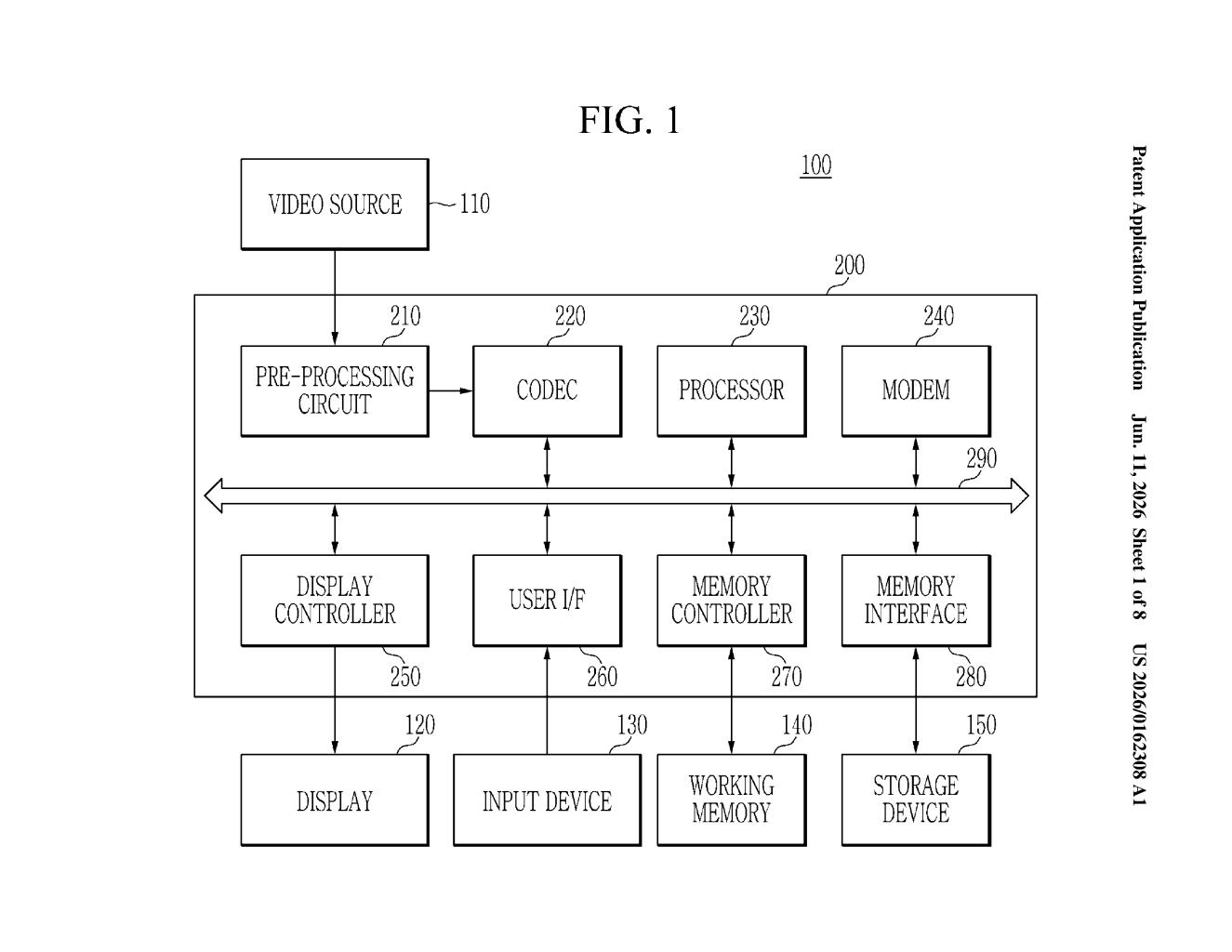
What Samsung's multi-scale compression actually does
Imagine you're streaming a movie and your TV quietly squishes every scene the same way to save bandwidth — whether it's a plain white wall or a dense crowd scene with thousands of tiny faces. That one-size-fits-all approach wastes quality where you need it and wastes data where you don't.
Samsung's patent describes an encoder that looks at the same chunk of video at several different zoom levels at once before deciding how much to compress it. A close-up crop might reveal sharp detail that needs protecting; a wider view might show the same region is surrounded by smooth, compressible areas. The system weighs those readings against the resolution of the actual display — a 4K screen gets different treatment than a 1080p panel.
The result is compression that's tuned to what your specific screen can actually show and what the image actually contains, rather than applying a blanket setting to everything.
How the encoder weighs resolution against image complexity
The patent describes an encoder built around five connected modules that work in sequence on each block of image data:
- Block area transformation module: Takes a chunk of the original image (a "processing unit block") and generates several copies of it at different sizes — essentially zoomed-in and zoomed-out versions of the same region.
- Statistic calculation module: Measures "feature values" for each zoomed version — think of this as calculating how much detail, contrast, or complexity lives in each copy.
- Weight calculation module: Assigns importance scores to each zoom level based on the resolution of the display that will show the final image. A higher-resolution screen might weight fine-grained detail more heavily.
- Complexity calculation module: Combines those feature values and weights into a single complexity score for the source data.
- Cost calculation module: Uses that complexity score to decide how much to compress the image — technically, to set the encoding cost — producing the final compressed output.
The core insight is that complexity is resolution-relative: the same image region is "complex" on a 4K display but might be "simple" on a 720p one, so the encoder should treat them differently.
What this means for display quality on Samsung screens
For Samsung, which makes both the displays and the chips that drive them (including its Exynos processors and display driver ICs), an encoder that knows what screen it's targeting is a natural integration play. Tighter coupling between compression logic and display resolution could mean better image quality at lower data rates — relevant for everything from in-panel processing in QLED and OLED TVs to video encoding on Galaxy phones.
For you as a viewer, the practical promise is fewer compression artifacts in high-detail scenes without ballooning file sizes. Whether this appears in a consumer product or stays in Samsung's silicon stack isn't clear from the patent alone, but the architecture is squarely aimed at hardware Samsung already ships.
This is a solid, focused engineering patent — not a moonshot. Samsung is solving a real and well-known problem in video compression (uniform encoding treats all content the same) with a multi-scale approach that's genuinely more principled than most current encoders. It's worth watching because Samsung has the vertical integration to actually ship this inside a display or SoC, not just publish it.
There are more where this came from
We read every patent application Big Tech publishes and send you the ones worth knowing. Plain English, free, every week.
Want this weekly breakdown for a company we don't cover? Patentlyze Pro →