
Qualcomm Patents a Way to Track Device Movement Using Radio Signal Snapshots
Your phone is constantly sending little radio pulses to the network — and Qualcomm wants to use those pulses, taken at different moments in time, to figure out exactly how far you've moved.
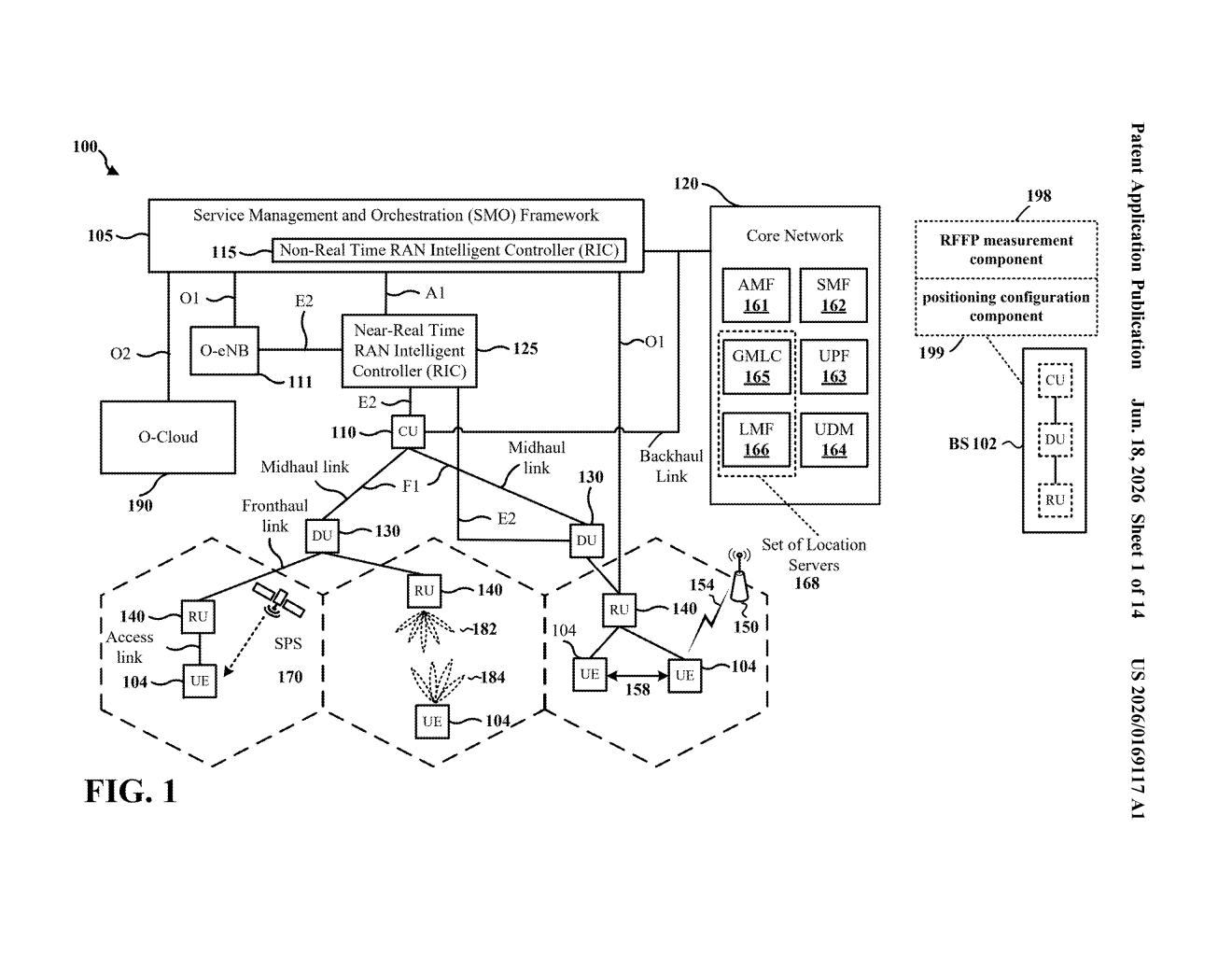
How Qualcomm's radio fingerprint positioning actually works
Imagine your phone as someone leaving smudged fingerprints everywhere they walk. In the wireless world, every device leaves a kind of radio fingerprint — a unique pattern of signal reflections, strengths, and timing that depends on where you are physically standing. Qualcomm's patent takes two of those fingerprints, captured at different moments, and compares them to calculate how much you moved between the two snapshots.
The system uses signals your phone already sends routinely — called sounding reference signals — so no new hardware is needed on your end. A cell tower or other network node collects those signals, runs the comparison through a positioning model, and outputs a displacement estimate: not just where you are, but how far and in what direction you've traveled.
This is especially useful in places where GPS doesn't work well, like inside buildings, underground, or in dense urban canyons where satellite signals bounce all over the place.
How the network compares SRS snapshots to measure movement
The patent describes a system where a network node (think: a base station or similar infrastructure device) collects two batches of sounding reference signals (SRSs) — short, structured radio transmissions a device sends so the network can assess channel conditions. The first batch is captured when the device is at position A; the second batch when it's at position B, at a later time.
From each batch, the node extracts a radio frequency fingerprint (RFFP) — a mathematical snapshot of how the signal arrived: its timing, angle, strength, and multipath reflections (the echoes that bounce off walls and objects). Comparing the two fingerprints produces a displacement measurement: the change in position between the two moments.
That displacement data gets fed into a positioning model — likely a trained machine learning model — which converts the raw RF differences into actual movement estimates. The computation can happen locally at the first network node, or the fingerprint data can be forwarded to a second node (like a centralized location server) for processing.
- No GPS required — works entirely on existing cellular radio infrastructure
- Works from signals devices already transmit for network management
- Supports distributed or centralized computation architectures
What this means for indoor and GPS-denied positioning
Indoor and GPS-denied positioning has been a stubborn problem for cellular networks for years. Standards like 5G NR positioning have added dedicated reference signals for location, but most approaches still estimate absolute position rather than relative movement. Tracking displacement — how far something moved, not just where it is — can be more accurate and more privacy-friendly, since you're comparing signal changes rather than mapping an absolute coordinate.
For Qualcomm, which supplies modem chips to a large share of Android smartphones and IoT devices, owning key intellectual property in next-generation positioning is strategically important. If this approach gets adopted into 5G Advanced or 6G standards, Qualcomm's patents sit squarely in the critical path.
This is a cellular standards patent, which means it's less about a flashy consumer feature and more about staking a claim in the technical specs that future networks will be built on. The displacement-based approach is genuinely interesting — measuring movement rather than absolute position is a cleaner problem in many indoor environments — but whether it lands in a real product depends entirely on standards bodies, not just Qualcomm's engineering team.
There are more where this came from
We read every patent application Big Tech publishes and send you the ones worth knowing. Plain English, free, every week.
Want this weekly breakdown for a company we don't cover? Patentlyze Pro →