
Samsung Patents a Robot Control System That Remembers What It Has Already Moved
Most robots treat every moment like the first time they've seen the room. Samsung's new patent describes a system that lets a robot remember how objects have changed because of its own actions, so it can make smarter decisions on the next task.
What Samsung's robot memory system actually does
Imagine asking a helper to move a glass from the counter to the dishwasher. Later, you ask them to grab that same glass. A person would remember it's now in the dishwasher. Most robots today would look at the counter, find nothing, and get confused.
Samsung's patent describes a way to fix that. Each time a robot picks up, moves, or changes an object, the system logs that change in a running "map" of the room. That map isn't just a snapshot of where things are right now; it also holds the history of what the robot did to each object.
When a new instruction comes in about that same object, the robot checks the history first. Instead of starting from scratch every time, it can reason about the object's current state based on everything that has happened before. It's a small-sounding change, but it's close to how humans naturally track their surroundings.
How the dynamic scene graph tracks object-state changes
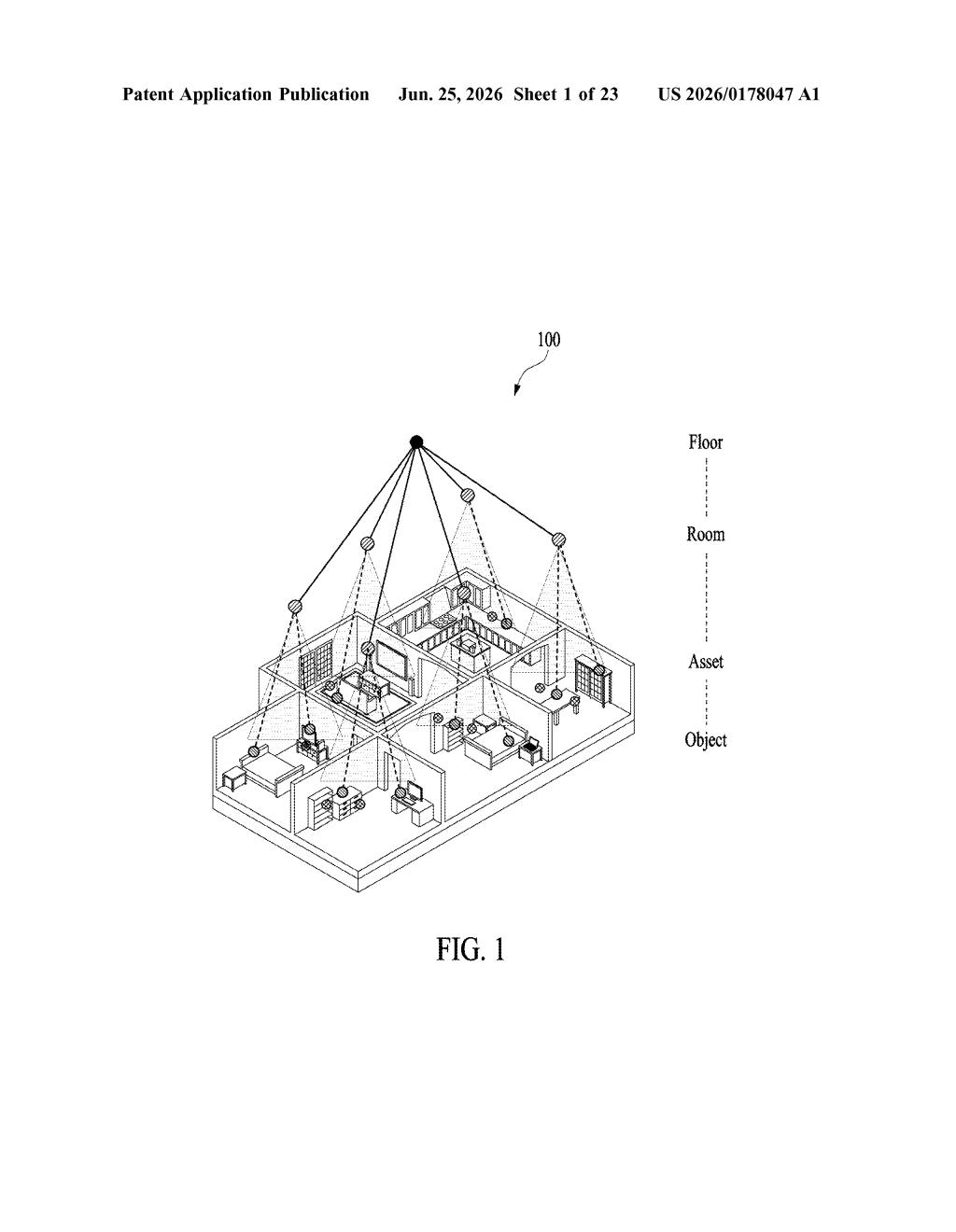
The core of the patent is a structure called a dynamic scene graph. A scene graph is a data model that maps out objects in an environment and the relationships between them (think: "cup is on table," "table is in kitchen"). The "dynamic" part means this map updates in real time as the robot acts.
What Samsung adds on top of that is object-level history information: each object node in the graph can store a record of state changes caused by robot interactions. If the robot opened a drawer, that interaction gets written into the graph entry for the drawer.
The control loop works like this:
- The robot receives an instruction targeting a specific object.
- It checks the dynamic scene graph for that object, including its history.
- It uses that combined current-state-plus-history data to plan and execute the next action.
- After acting, the graph is updated again with the new interaction.
The patent is broad enough to cover any instruction type and any robot platform, which means the same architecture could apply to a household robot arm, a warehouse machine, or a humanoid robot.
What this means for Samsung's home robot ambitions
Samsung has been publicly investing in humanoid and home robot research. A robot that can't track the consequences of its own actions is severely limited in any real home environment, where the same objects get moved, opened, and rearranged constantly. This patent targets that exact gap.
For you as a potential user, the practical difference is a robot that doesn't need to "rediscover" the room after every task. The history-aware graph means a robot could handle multi-step chores across a full day without losing track of what it already did. It also lays groundwork for robots that can explain their reasoning, since the history log gives an auditable record of every state change the robot caused.
This is a foundational patent, not a flashy one. Scene graphs and state tracking are well-studied areas, so the novelty here is narrowly about attaching robot-interaction history to individual object nodes and using that history to drive subsequent control decisions. Whether that's novel enough to survive examination is a separate question. But as a signal of where Samsung is building its robotics software stack, it's a clear and sensible direction.
There are more where this came from
We read every patent application Big Tech publishes and send you the ones worth knowing. Plain English, free, every week.
Want this weekly breakdown for a company we don't cover? Patentlyze Pro →