
Samsung Patents a Layer-by-Layer 3D Escape Route Finder for Robots
When a robot rolls into a crowded hallway, it doesn't just need to know what's blocking the floor — it needs to know what's blocking the space at knee height, waist height, and above. Samsung's new patent tackles exactly that problem.
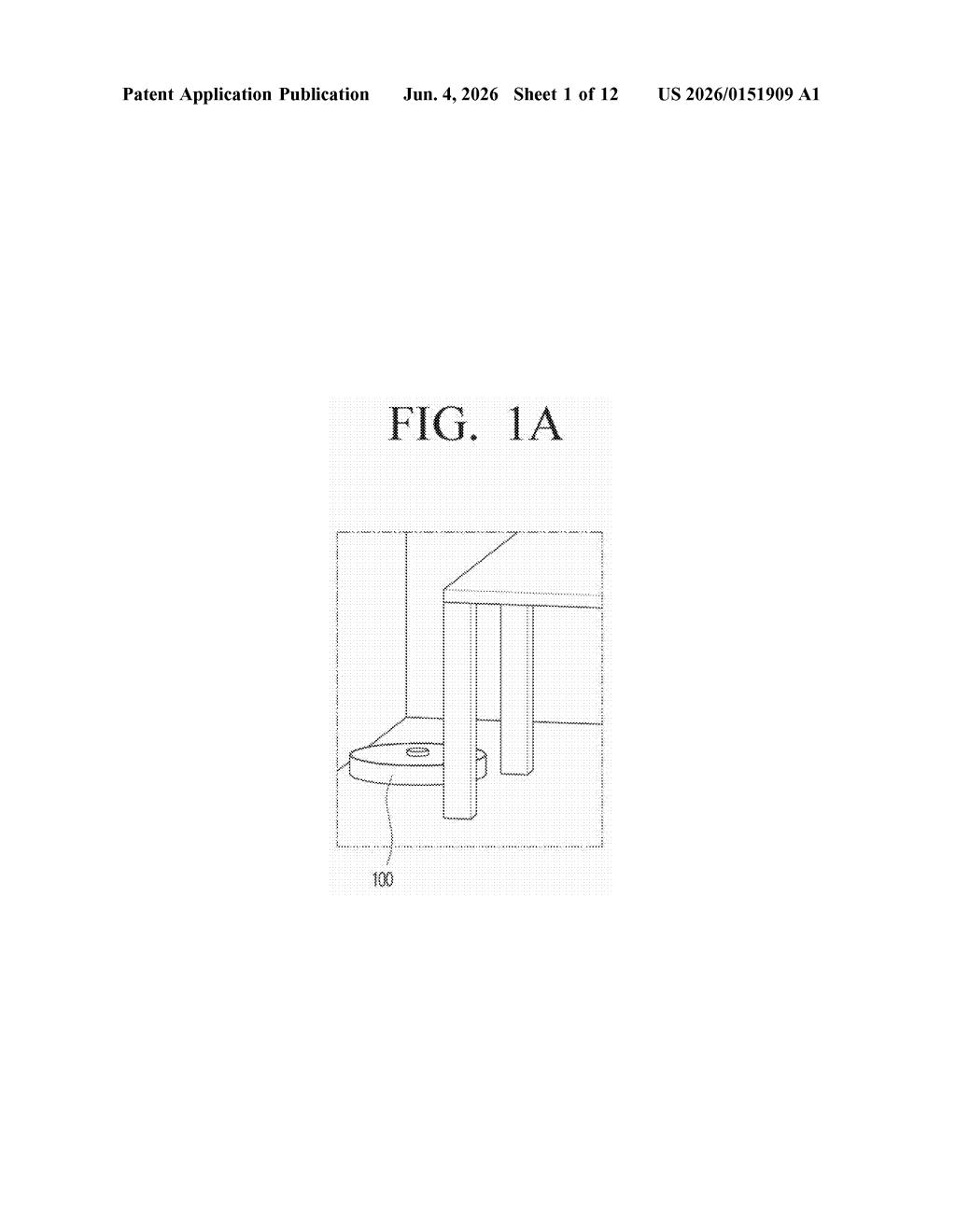
How Samsung's robot finds a way through crowded rooms
Imagine a delivery robot rolling through a busy office and hitting a bottleneck: a cluster of people, chairs, bags, and rolling carts all jammed together. A standard obstacle-avoidance system might just stop or try a single detour. Samsung's patented approach goes further.
When the robot detects a dense obstacle zone it can't just push through, it takes a full 3D scan of the area and then mentally slices that scan into horizontal layers — one at floor level, one at mid-height, one at the robot's full height, and so on. Any escape route that's clear on one layer but blocked on another gets thrown out.
What's left is a path that's actually clear all the way from the ground to the top of the robot's body — not just a gap that looks open from one angle. That final route is what the robot drives.
How the plane-slicing escape route system actually works
The system works in two sensing stages. First, while the robot is moving normally, it uses first sensing data (likely a forward-facing depth sensor or LiDAR) to flag when it's approaching an obstacle-dense area it can't navigate through.
Once that alert fires, the robot switches to a deeper scan: it collects 3D point cloud information (a dense map of millions of distance measurements that together form a 3D shape of the environment) using a second pass of its sensors.
The key step is what happens next. The robot divides that 3D point cloud into a plurality of horizontal planes based on its own physical height — essentially slicing the environment into stacked 2D maps at different elevations. For each slice, it calculates candidate escape routes.
The filter: any candidate route that is blocked in even one of those horizontal planes gets eliminated. The surviving routes — the ones clear across all height layers simultaneously — become the final escape routes the robot's driver is instructed to follow. This cross-plane validation is the core novelty: it ensures the robot doesn't try to squeeze through a gap that's open at floor level but blocked by a table overhang halfway up.
What this means for delivery and service robots in real spaces
Service and delivery robots are proliferating in spaces designed for humans — hospitals, hotels, warehouses, and office buildings — and those environments are full of obstacles that don't occupy a clean vertical column. A chair has legs at floor level but a seat and back jutting into space above. A person with a backpack might be passable at knee height but not at shoulder height. Traditional 2D occupancy-grid navigation doesn't capture any of that.
For Samsung, which has been building out its robotics lineup under the Samsung Bot umbrella, this kind of robust navigation in cluttered real-world spaces is a prerequisite for commercial viability. A robot that gets stuck or takes awkward detours every time a hallway gets busy isn't useful — and this patent is a direct attempt to solve that operational friction.
This is solid, practical robotics engineering — not a moonshot idea, but the kind of unglamorous navigation improvement that separates robots that work in the real world from ones that only work in demos. The multi-plane filtering approach is a clean solution to a genuine problem, and the fact that Samsung is patenting it suggests they're serious about deploying robots in messy, human-scale environments rather than just controlled warehouse settings.
There are more where this came from
We read every patent application Big Tech publishes and send you the ones worth knowing. Plain English, free, every week.
Want this weekly breakdown for a company we don't cover? Patentlyze Pro →