
Samsung Patents a Display That Reads Its Own Cable to Set Screen Identity
Every time you plug a cable into a monitor, the screen has to figure out what kind of connection it just got. Samsung's new patent wants that handshake to happen automatically, based on a quick electrical test at the port.
What Samsung's cable-detection display system actually does
When you connect a cable to a monitor today, the screen and the device on the other end go through a negotiation process to figure out what standards they both support. That process can fail, produce the wrong resolution, or require you to dig into settings menus to fix it.
Samsung's patent describes a display that reads a small voltage on a specific pin in its port the moment a cable is plugged in. Based on that voltage, it figures out whether the cable supports a particular communication standard, then sets its own identity information accordingly. It also sends a hot plug detect (HPD) signal, a standard electrical nudge that tells the connected device a display is ready and waiting.
In short, the screen decides what it should be, and tells the connected device what to expect, all before you've touched a single setting. The goal is a cleaner, more automatic connection from the first second.
… identify whether the cable is a cable of a first communication standard based on a voltage applied to a first pin in the communication interface …
Translation: It checks the voltage on a specific pin to figure out what type of cable was plugged in.
How the display reads pin voltage to pick its own settings
The patent describes a display apparatus with a communication interface (think: an HDMI or DisplayPort-style port), a screen, and a processor that runs a short identification routine as soon as a cable is connected.
The key step is reading the voltage on a specific pin in the interface. Different cable types, or cables supporting different communication standards, produce different voltage signatures on that pin. The processor uses that reading to determine which standard the cable supports, essentially asking the cable to identify itself electrically rather than waiting for a software handshake.
Once the cable type is known, the system sets identification information for the display, data that describes the screen's capabilities, like resolution and color depth, to whatever device is on the other end. Simultaneously, it sends an HPD (hot plug detect) signal, which is the standard electrical trigger that tells a connected computer or media player that a display has just become available.
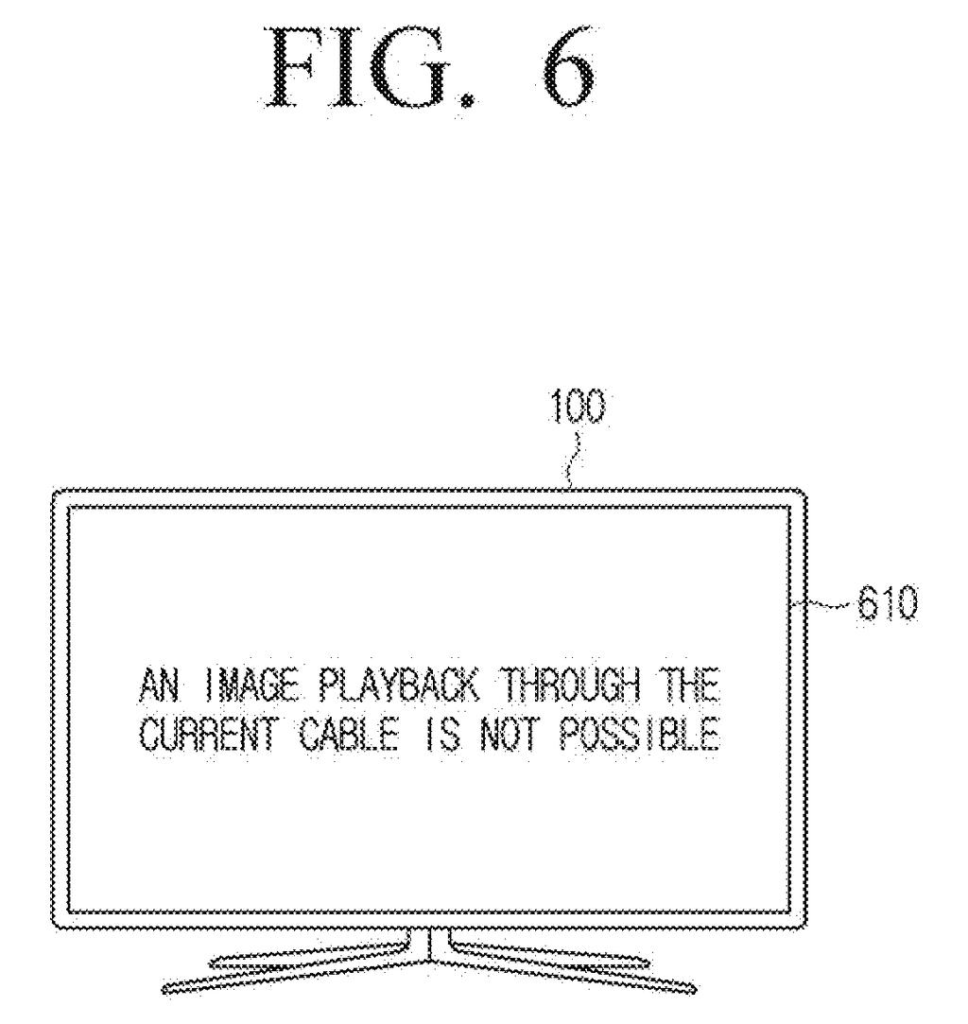
Finally, the display renders an image based on the identification profile it selected. The whole chain, from cable insertion to correct display configuration, is meant to run without any user input.
… set identification information for the display based on the communication standard supported by the cable …
Translation: The monitor updates its own identity to match the capabilities of the connected wire.
What this means for plug-and-play monitor setup
For everyday users, this targets one of the more annoying parts of monitor setup: plugging in a cable and getting the wrong resolution, a blank screen, or an error because the display and the source device couldn't agree on a standard. By letting the display take the lead, based on a real electrical reading rather than a software guess, Samsung is aiming to reduce those failed handshakes.
Samsung's run of display-interface filings suggests the company is systematically tightening the low-level connection logic in its screens. If this approach works in practice, it would be most noticeable in multi-cable environments like docking stations, KVM switches, or setups where users swap between a laptop and a gaming console on the same monitor.
Samsung's 92nd filing we've tracked in our display technology watchlist since May continues its focus on adaptive brightness, building on the room-light projector patent and the fingerprint-boost display patent.
Claim 1 is moderately broad. It covers any display apparatus that reads a pin voltage to identify cable type, sets display identification info based on that result, sends an HPD signal, and shows an image. That's a meaningful chunk of the plug-and-play detection workflow, not just a narrow sliver of it.
In practice, if granted as written, this claim could complicate how competitors implement automatic cable-type detection tied to HPD signaling. The link between voltage-based cable identification AND display ID-setting AND HPD transmission in one claim is what gives it reach. A rival could potentially sidestep it by detecting cable type through a different method, such as a data-layer handshake, but the electrical-pin-voltage path described here is a direct and common approach.
That said, prior art in display standards is dense. HDMI, DisplayPort, and USB-C specifications already define pin behaviors extensively, and patent examiners tend to scrutinize display-interface claims carefully. The granted scope may end up narrower than what's filed here.
Get our take in your Top Stories
Liked this breakdown? Add Patentlyze as a preferred source on Google, and our plain-English take shows up more often in your Top Stories the next time Samsung patent news breaks.
There are more where this came from
We read every patent application Big Tech publishes and send you the ones worth knowing. Plain English, free, every week.
The drawings
8 drawing sheets from US 2026/0260632 A1 · click any drawing to enlarge


Want this weekly breakdown for a company we don't cover? Patentlyze Pro →
Be the first to weigh in