
Samsung Files Patent for Foldable Screens That Put Less Touch Wiring at the Crease
Every time a foldable phone snaps shut, the hidden touch sensor at the crease takes a beating. Samsung's patent application tackles that by putting less of the sensor's wiring right where the screen bends.
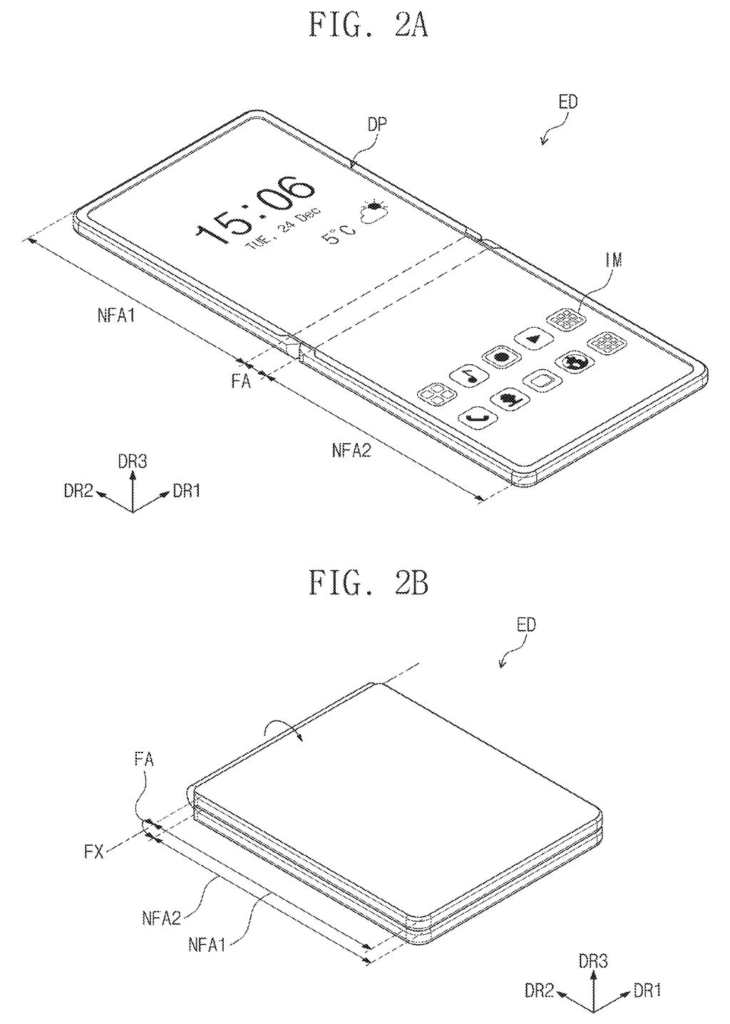
What Samsung's foldable touch layer changes
Ever wondered what happens to the invisible wiring inside a foldable phone each time you snap it shut? Under the glass sits a thin grid that senses your finger. The crease is where that grid gets bent and squeezed, day after day, and the filing says that stress can crack the layers around the wiring and dull your touch over time.
Samsung Display's fix is to place fewer of the grid's tiny connecting pieces in the part of the screen that folds. Compare a patch of crease with an equal-sized patch of flat screen, and the flat patch gets more of them. In one example, the flat area has about 224 connectors and the crease area about 148.
Fewer connectors could mean weaker touch sensing, so the patent also describes making up for it: sending faster signals to the crease area, or using thicker wires to reach it, so your taps still register cleanly.
… a number of a plurality of first bridge patterns among the plurality of bridge patterns overlapping the first region is greater than a number of a plurality of second bridge patterns among the plurality of bridge patterns overlapping the second region.
Translation: The flat part of the screen has more connector wires than the folding crease part.
How Samsung thins out touch wiring at the fold
Your screen senses touch with a thin grid of electrodes (conductive strips) layered on top of the display. In this filing, each strip running in one direction is built from a row of small sensing pads joined by bridge patterns (tiny jumpers that carry the signal from one pad to the next). The bridges sit on a different layer from the pads and connect to them through small holes.
The sensor is split into a flat region and an equal-area region that folds and unfolds. The claims require more bridges over the flat region than over the folding region, and one claim sets the ratio at about 1.5 times or more. The description gives an example of about 224 bridges versus about 148. Fewer bridges at the crease means fewer spots where metal presses against the layers above and below when the device folds, which the filing ties to cracking.
Fewer bridges could weaken sensing, so the filing describes several ways to compensate:
- Fewer, wider electrodes in the fold area (for example three narrow ones in the flat area versus two or one wider ones at the crease), or the same number of electrodes with fewer bridges on each.
- A faster driving signal for the fold area, such as about four signal cycles in the time the flat area's signal completes about three.
- Thicker trace lines (the wires that lead to the electrodes) for the fold area, which lowers their electrical resistance.
Why foldable phones could last longer with this
If you own a foldable phone, or are thinking about buying one, the crease is the part you worry about. A screen that keeps responding to your finger after a lot of folding is a big part of whether the phone still feels new in a couple of years. This patent application goes after that failure inside the touch layer itself, the thin sensor sitting on top of the display.
Samsung Display makes screen panels, so the idea is aimed at the manufacturing side. The filing doesn't name a specific device, and a patent application doesn't mean a product is coming. It does show where the company sees a weak spot: the hidden touch wiring under the glass, and how many pieces of it sit where the screen bends. The description says the same arrangement could apply to a second, smaller panel on a foldable device too.
Samsung's 95th filing we've tracked since May in our foldable phone patent watch follows work like the triple-fold edge guard and the twice-folding closed phone.
You would notice this fix mostly by not noticing anything. A crease that still registers every tap after long ownership is the whole benefit, and a dead or twitchy strip along the fold is the failure it aims to prevent.
The approach is plain engineering: put less metal under stress, then make the remaining wiring work harder with faster signals or thicker wires. Plain does not mean unimportant. The crease is where a foldable phone is most likely to show age, and a touch layer that holds up there matters more to an owner than another small jump in brightness or thinness.
The filing offers no test results, so how much longer a screen would last is unknown. Still, the reasoning is easy to follow, and it targets a problem foldable owners would recognize.
Get our take in your Top Stories
Liked this breakdown? Add Patentlyze as a preferred source on Google, and our plain-English take shows up more often in your Top Stories the next time Samsung patent news breaks.
There are more where this came from
We read every patent application Big Tech publishes and send you the ones worth knowing. Plain English, free, every week.
The drawings
15 drawing sheets from US 2026/0349569 A1 · click any drawing to enlarge


Show the other 7 sheets


Want this weekly breakdown for a company we don't cover? Patentlyze Pro →
Be the first to weigh in