
Samsung Patents a Fix for the GPS Signal Hiccups That Throw Off Your Location
GPS chips inside your phone are tracking more than just position, they're measuring the radio wave itself, down to fractions of a cycle. When that measurement glitches, your location goes haywire. Samsung's new patent targets exactly that problem.
What Samsung's carrier phase fix actually does for GPS
Your phone's GPS works by measuring radio signals from satellites. The most precise way to do that is to count the waves themselves as they arrive, like counting ripples passing a point in the water. But sometimes that count gets disrupted, a building blocks the signal for a moment, or the chip resets, and the tally jumps, giving your phone a false reading of where you are.
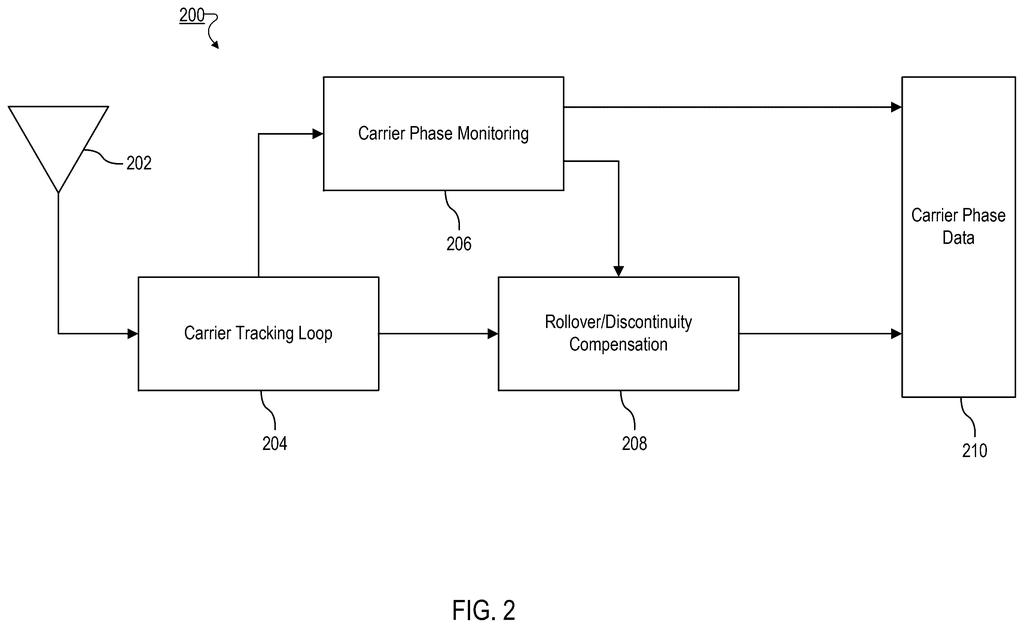
Samsung's patent describes a system that watches for these sudden jumps in the wave count, keeps a running record of every disruption, and then adds them all back into the measurement to produce a corrected result. Think of it like a step counter that notices when you bumped the device and adjusts the total so it still reflects your actual steps.
The goal is a cleaner, more trustworthy position reading, especially useful in tricky environments like city streets or parking garages where signal interruptions happen constantly.
detecting, by a signal processing system, one or more carrier phase discontinuities associated with a raw carrier phase; compensating, by the signal processing system, the raw carrier phase based on an accumulation of each carrier phase discontinuity …
Translation: The system finds and fixes sudden jumps in the satellite signal data.
How the system detects and accumulates phase discontinuities
The patent covers what engineers call carrier phase measurements, a technique where a GPS receiver tracks the actual radio wave (the carrier) coming from a satellite, counting each full wave cycle as it arrives. This is far more precise than the basic timing method most people associate with GPS, but it's also more fragile.
The core problem the patent addresses is carrier phase discontinuities, sudden breaks or jumps in that wave count, often caused by signal blockages, multipath reflections (where the signal bounces off a building before reaching the antenna), or receiver resets. When a discontinuity happens, the running count is off, and any position calculation built on it inherits that error.
Samsung's method works in three steps:
- Detect each discontinuity as it occurs in the raw carrier phase stream.
- Accumulate a running total of every detected discontinuity, preserving the history of all jumps.
- Compensate the raw measurement using that accumulated total to produce a net corrected carrier phase output.
The claim language is intentionally broad: it does not specify how discontinuities are detected, only that they are detected and that their accumulation drives the correction. That framing leaves a wide implementation window.
… generating a net compensated carrier phase including the compensation to the raw carrier phase.
Translation: It then produces a smooth, corrected location signal for your device.
What this means for high-precision location on Samsung phones
High-accuracy GPS is no longer just a surveyor's tool. Features like lane-level navigation, indoor positioning, and augmented-reality overlays all depend on position precision measured in centimeters rather than meters. Carrier phase measurement is one of the few techniques that can get you there, but only if the signal stays clean, which it rarely does in everyday use.
For Samsung device owners, a working implementation of this could mean navigation that holds its position through a tunnel or between tall buildings instead of drifting. Samsung's steady investment in on-device positioning suggests this is part of a longer effort to close the gap with dedicated GPS hardware using the sensors already inside a Galaxy phone.
This is the 227th Samsung filing we've tracked in cell phone coverage since May, adding to work like one on AI and GPS and one on fold-tuned vibration.
Claim 1 is strikingly broad. It covers any method that detects carrier phase discontinuities, accumulates them, and applies a compensating correction, full stop. There are no restrictions on the detection algorithm, the type of satellite signal, or the hardware doing the work. That scope is either a strength or a weakness depending on what the patent office decides, but it means Samsung is staking out the concept of accumulation-based phase correction in general, not a specific implementation of it.
In practice, that breadth would make it harder for competitors to ship any carrier phase correction system that relies on accumulated discontinuity tracking without running into this claim. Accumulated-offset correction is a fairly natural engineering approach to this problem, so the prior art search will be the real test of whether this survives as written.
The underlying technology is real and useful. Carrier phase GPS is genuinely difficult to keep continuous in consumer hardware, and a method that reliably tracks and repairs those breaks would improve a lot of everyday navigation. Whether the claim is specific enough to be granted, or broad enough to survive challenge if it is, is a separate question entirely.
There are more where this came from
We read every patent application Big Tech publishes and send you the ones worth knowing. Plain English, free, every week.
The drawings
9 drawing sheets from US 2026/0267007 A1 · click any drawing to enlarge


Want this weekly breakdown for a company we don't cover? Patentlyze Pro →