
Samsung Patents a Fix for Thumbnails That Don't Match the Photo You Took
You tap the shutter, check the thumbnail, then watch a different-looking photo replace it. Samsung's patent application builds both from the exact same frame to close that gap.
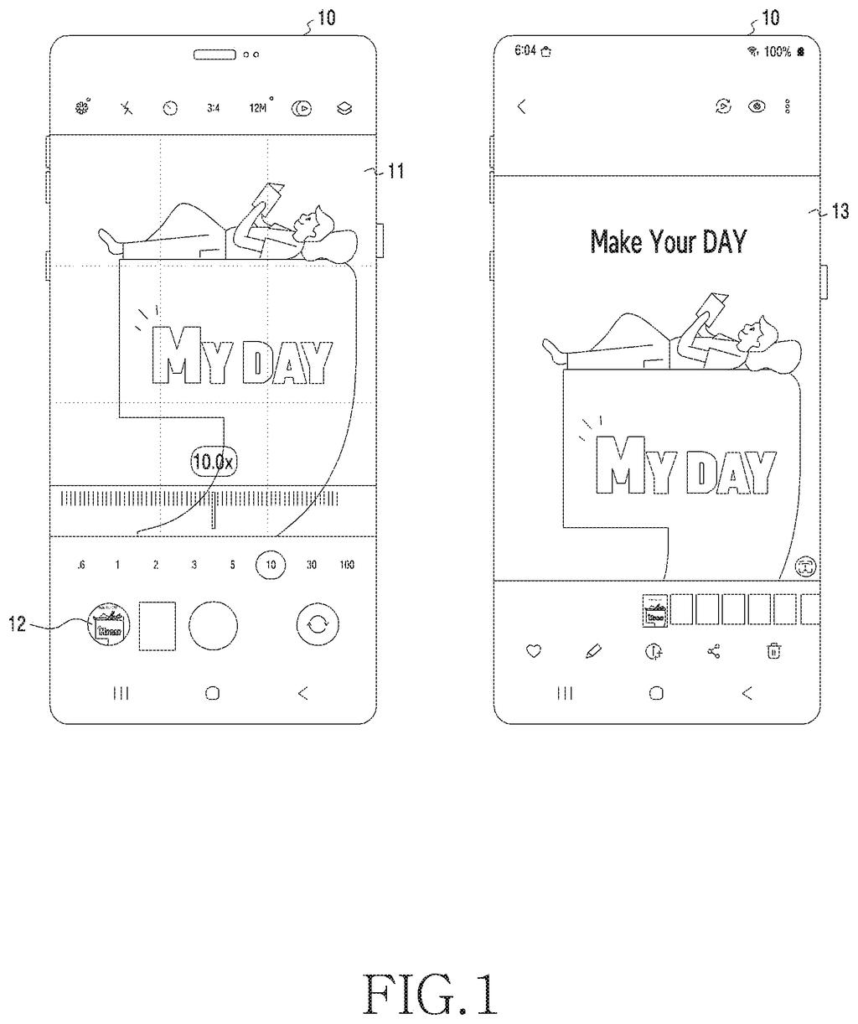
What Samsung's one-frame photo preview does
Imagine you tap the shutter on a phone camera, glance at the thumbnail, and think you nailed the shot. A moment later the finished photo swaps in, and your friend's eyes are closed, or the dog has wandered out of frame. Nothing was wrong with the camera. The quick thumbnail and the final photo simply came from two different moments.
Samsung's patent application fixes that mismatch by building both from the same single frame. The camera grabs one detailed frame when you press the button. It makes a quick, lower-quality copy for the screen right away, then spends a little longer on a polished version and swaps it in over the thumbnail.
The trick matters because the chip that makes fast previews only understands one standard way of arranging color. Newer sensors use a different arrangement, so the patent adds a step that translates the data first.
… obtain first draft image data by applying the second image signal of the first frame to the image signal processor, obtain first capture image data by demosaicking the first image signal of the first frame, and replace the first draft image data with the first capture image data.
Translation: The device quickly creates a low quality preview and then swaps it out for the actual high quality photo.
How one raw frame feeds both preview and photo
Most phone camera sensors put tiny red, green and blue filters over their light-catching pixels in a standard layout called the Bayer pattern. Newer high-resolution sensors use a non-Bayer pattern (the filing names tetra, nona and hexadeca) where blocks of 4, 9 or 16 neighboring pixels share one color, which helps in dim light. The catch: the phone's hardware image signal processor (ISP, a dedicated chip built for speed and low power) only understands Bayer data, and redesigning it costs a lot of time and money.
So after you press the shutter, the patent runs this flow:
- The sensor outputs one frame in its native non-Bayer pattern.
- The phone converts that frame to Bayer, either by binning (merging same-color pixels, such as turning 50 megapixels into 12.5) or remosaicking (rearranging colors and estimating the new values, possibly with an AI model).
- The converted frame goes through the hardware ISP to make a quick draft, which is up-scaled if binning shrank it.
- Separately, the original frame is demosaicked (turned from raw color dots into a full-color image) in software, along with cleanup such as noise removal, to make the final photo.
- The final photo replaces the draft.
The filing says binning suits full-resolution shots, while remosaicking suits zoomed shots that use only the center of the sensor, or frames under 12 megapixels. For multi-frame merging, the first frame is the reference and the others are lined up to it before demosaicking.
What this means for Samsung's camera phones
For you, the payoff is small but useful: the thumbnail that pops up right after you shoot would show the same moment as the saved photo, so you can trust a quick glance before putting the phone away. You get that speed without waiting for the full processing to finish.
For Samsung, the bigger point is cost. The filing says a high-resolution sensor with a non-Bayer layout can beat a Bayer one in dim light, and that building a new hardware chip to handle it takes a large amount of time and money. Translating the data in software lets a phone keep its existing fast chip while still using those sensors.
Samsung's 165th filing we've tracked since May joins earlier applications on faster shadow and highlight capture and cameras reading stacked words in our camera sensor push.
The road to a shipping feature is short. The filing adds no new hardware: it reuses the phone's existing fast photo chip and does the extra translation work in software. It also says sensors with this color layout are already built into devices, so the main ingredient exists.
What has to come first is a phone with one of those sensors and enough processing speed to run the translation without making you wait. Samsung would also have to tune when each shortcut applies, such as the 12 megapixel cutoff the filing mentions.
Verdict: a modest polish fix that could arrive as a camera software update on the right phone. You would mostly notice it by never seeing a mismatch again. Routine engineering, sensibly aimed.
Get our take in your Top Stories
Liked this breakdown? Add Patentlyze as a preferred source on Google, and our plain-English take shows up more often in your Top Stories the next time Samsung patent news breaks.
There are more where this came from
We read every patent application Big Tech publishes and send you the ones worth knowing. Plain English, free, every week.
The drawings
13 drawing sheets from US 2026/0352941 A1 · click any drawing to enlarge


Show the other 5 sheets


Want this weekly breakdown for a company we don't cover? Patentlyze Pro →
Be the first to weigh in