
Samsung Files Patent for a Screen That Corrects Its Colors as It Heats Up
Your phone screen can shift its colors as it warms up, and Samsung has filed a patent application to correct that. The fix is to feed a temperature reading straight to the chip that runs the display.
What Samsung's heat-aware display actually does
A phone sits on a car dashboard in the afternoon sun, its screen getting warmer by the minute. Heat changes how a display behaves, so the colors and brightness you see can shift without you noticing.
Samsung's filing describes a way to correct for that. A temperature sensor reads how hot the screen is and passes the number straight to the chip that runs the display. That chip then adjusts the electrical signals it sends to each pixel, so the picture stays closer to how it should look.
The sensor can be the same one that sits behind an ultrasonic fingerprint reader, which needs temperature readings of its own to work well. So one part does two jobs: it helps read your fingerprint and it helps keep your screen's colors accurate.
… one or more sensors configured to output sensing data by sensing a temperature of the display panel …
Translation: Built-in sensors constantly track how hot the screen is getting during use.
How the sensor feeds temperature to the screen
The filing covers a device with five parts: a display panel, a display panel driver (the chip that tells each pixel how bright to be), one or more temperature sensors, a sensor driver (a chip that turns raw sensor readings into usable numbers), and a device controller that sends the picture. The key move is that the sensor driver hands temperature data directly to the display driver.
That temperature number can take three forms:
- The absolute temperature of the panel.
- The change since an earlier reading (40° C then 30° C is a 10° C change).
- The gap between the panel and a preset reference temperature.
Timing is flexible. The reading can arrive in real time, each time a new frame starts, or when the screen switches between patterns, such as full white to full black. A small number like a temperature change can travel over a single wire, while a larger absolute reading can use three.
Inside the display driver, the temperature picks a matching grayscale lookup table (a conversion chart that swaps each requested brightness level for a corrected one). The filing also describes shifting the range of voltages sent to the pixels, which it says can cut power use. The sensors can sit in the border area next to the circuits that drive the screen.
… display panel driver is configured to output a driving signal to the display panel based on the temperature data, the input image data, and input control signal …
Translation: The system adjusts the picture signals based on the current temperature to keep colors accurate.
What this means for your phone's screen quality
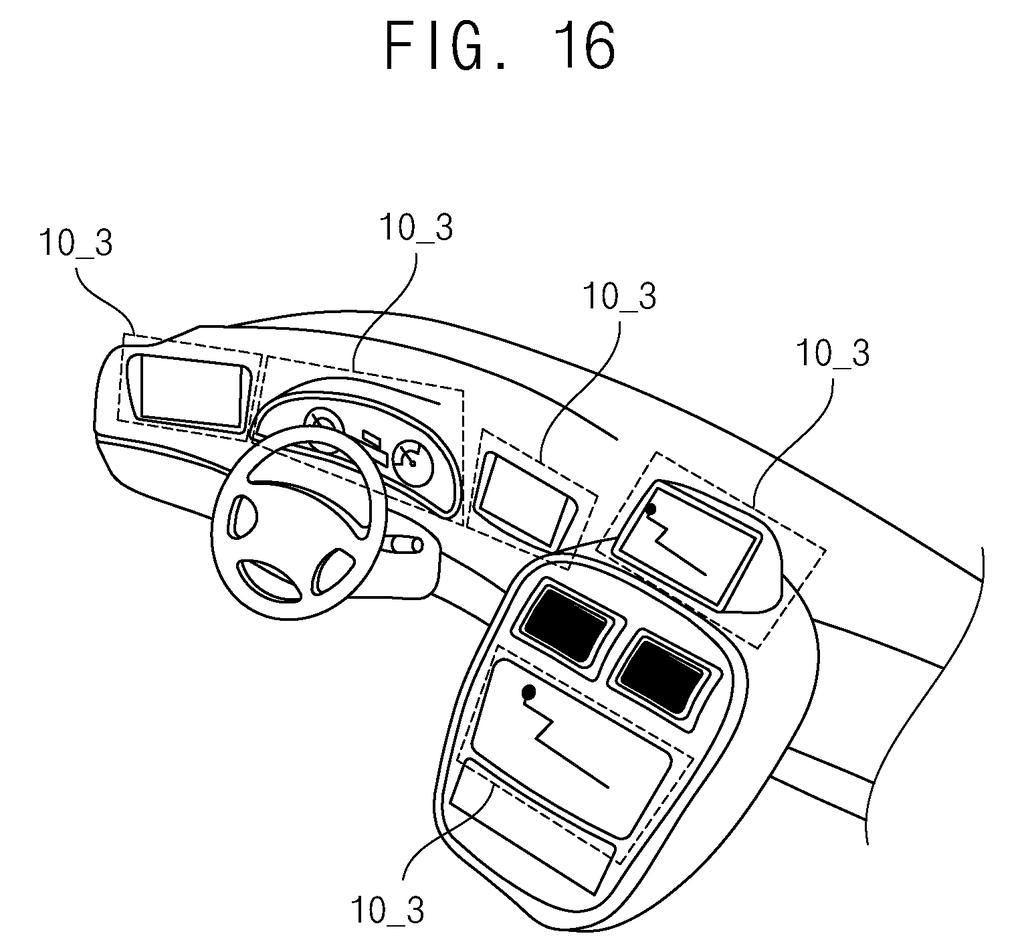
For you, the payoff would be a screen whose colors and brightness hold up as the device warms, whether that is a phone in a hot car, a smartwatch during a workout, or a dashboard display in summer. The filing lists phones, tablets, laptops, TVs, smart glasses, smartwatches and car displays as places this could go.
There is a cost angle too. By using a temperature sensor that an ultrasonic fingerprint reader already needs, a maker could skip some extra parts. The filing says some versions leave out a separate circuit that measures current in each pixel, which could allow a thinner screen border. It also says changing the voltage range with temperature may reduce power use. The patent gives no figures for any of these gains.
Samsung's 127th filing we've tracked in our display technology watchlist since May follows earlier work like the buckled watch band screen and the ring-sensing phone screen.
The cost of this design is a tighter link between two parts that used to live apart. If the screen's colors depend on a thermometer reading, a bad reading means bad colors, and that reading comes from a sensor built mainly for fingerprints. A few sensors along the border may also miss hot spots elsewhere on the panel.
The sharing trick works best on phones that already have an ultrasonic fingerprint reader. A device without one would have to add sensors just for this, which costs money and space.
The trade still reads as worth it. Reusing a part that is already inside the phone is a cheap way to fix a flaw you only notice when a screen looks off, though the filing offers no numbers to show how big the improvement is.
Get our take in your Top Stories
Liked this breakdown? Add Patentlyze as a preferred source on Google, and our plain-English take shows up more often in your Top Stories the next time Samsung patent news breaks.
There are more where this came from
We read every patent application Big Tech publishes and send you the ones worth knowing. Plain English, free, every week.
The drawings
12 drawing sheets from US 2026/0351164 A1 · click any drawing to enlarge


Show the other 4 sheets


Want this weekly breakdown for a company we don't cover? Patentlyze Pro →
Be the first to weigh in