
IBM
IBM · Security · Filed Nov 12, 2024 · USPTO published May 14, 2026 · May 14 release
IBM Patents a Secret Manager for Locking Down Cloud Workload Credentials
Every time a cloud app spins up, it needs passwords, API keys, and certificates — and those secrets are often the weakest link in the whole system. IBM's new patent tries to solve that by giving each cloud workload its own dedicated secret-keeper.
- Publication number
- US 2026/0135837 A1(US20260135837A1)
- Applicant
- INTERNATIONAL BUSINESS MACHINES CORPORATION
- Filed · Published
- Nov 12, 2024 · May 14, 2026
- Inventors
- Cheng-Ta Lee, David O'Connor, Mark Peters
- Status when we published
- Granted
- Document
- 20 claims
- US classification
- 713/153
- Examiner
- ALVARADO DAVID, DORIANNE (Art Unit 2499)
What IBM's cloud secret manager actually does
Imagine your company's cloud app needs a database password to start up. Right now, that password might travel through multiple systems before it reaches the app — and any one of those stops is a potential leak. IBM's patent describes a smarter handoff.
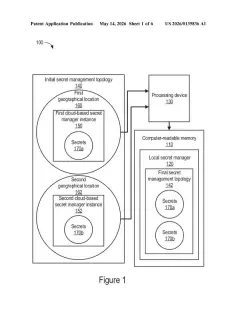
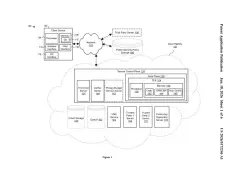
A component called a secret manager sits inside the cloud workload itself. When the host server sends a setup request, the secret manager grabs any sensitive information — passwords, tokens, API keys — and holds it in its own protected memory. The app never has to go hunting for its credentials from an outside system.
When the application actually needs that information, it asks the secret manager directly. The secret manager hands it over in a controlled, auditable way. The idea is that secrets stay inside a tight boundary rather than floating around where other processes — or attackers — might intercept them.
How the secret manager intercepts and stores credentials
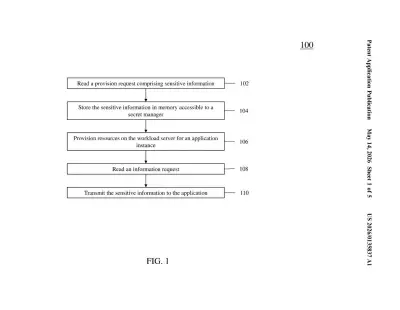
The patent describes a cloud workload architecture that centralizes credential handling through a dedicated secret manager component. Here's the basic flow:
- The host server sends a provisioning request — essentially a startup instruction — that includes sensitive information like credentials or configuration secrets.
- The secret manager reads that request and immediately pulls the sensitive data into memory that only it can access, isolating it from the broader workload environment.
- The secret manager then provisions resources on the workload server for an application instance, but without exposing the secrets to the provisioning process itself.
- When the application instance needs its credentials, it sends an information request to the secret manager, which then transmits the secrets directly to that specific instance.
The key design principle here is least-privilege isolation — the idea that sensitive data should only be readable by the exact component that needs it, for the shortest time necessary. By having a dedicated in-workload secret manager rather than relying on external secret stores alone, IBM's design tries to reduce the attack surface at the moment an app spins up, which is historically a vulnerable window.
What this means for enterprise cloud security posture
Cloud credential leaks are one of the most common causes of enterprise data breaches — and they often happen not because an attacker broke encryption, but because a secret traveled through too many hands on its way to an application. This patent addresses that problem at the workload layer, which is where IBM's enterprise customers actually run their sensitive jobs.
For IBM Cloud and its hybrid-cloud customers, a built-in secret manager at the workload level could simplify compliance with frameworks like SOC 2, HIPAA, and PCI-DSS — all of which require tight controls on how credentials are stored and transmitted. If IBM bakes this into its cloud platform tooling, it becomes a selling point for regulated industries that are already a core IBM customer base.
Source: US 2026/0135837 A1 at the USPTO (PDF). Full patent text and figures are in the official publication.
Get our take in your Top Stories
Liked this breakdown? Add Patentlyze as a preferred source on Google, and our plain-English take shows up more often in your Top Stories the next time IBM patent news breaks.
Add Patentlyze on Google
One click.
There are more where this came from
We read every patent application Big Tech publishes and send you the ones worth knowing. Plain English, free, every week.
More from IBM
All 470 IBM patents →
More in Security
All 341 Security patents →
Amazon
Amazon Patents a System That Forces Cloud Access Steps Into a Fixed Order
Microsoft
Microsoft Patents a System That Hunts Down Dangerously Flawed Code in the Cloud
Microsoft
Microsoft Patents a System That Auto-Purges Inactive User Credentials from Devices
Google