
Samsung Files Patent for a System That Reads Step-by-Step Process Data to Reconstruct What Happened
Samsung has patented a method that takes a series of time-ordered actions, converts them into a structured data format, and feeds them through a model to generate a summary or reconstruction of the overall process. It's an infrastructure patent, but it points toward automated quality control and process analysis.
What Samsung's action-sequence analyzer actually does
Imagine a factory line where dozens of steps happen in a specific order to produce a single product. Right now, a human inspector might review logs or video to figure out if something went wrong. Samsung's patent describes a system that does that automatically.
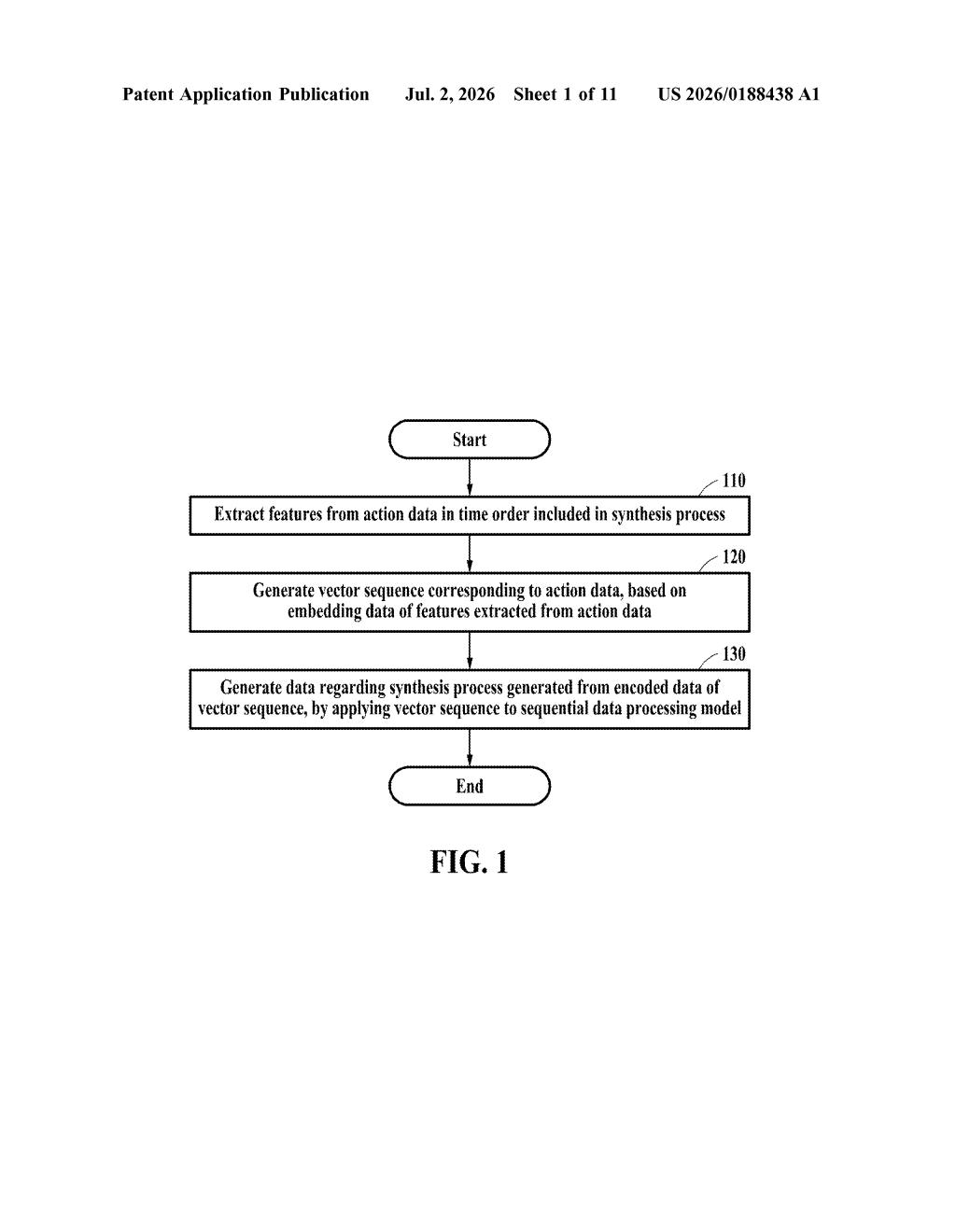
The system watches a sequence of actions as they happen in order, picks out the important characteristics of each step, and converts all of it into a compact numerical format. That package of information is then handed to a model trained to make sense of sequences, so it can generate a report or data summary describing what the overall process produced.
Think of it like a very attentive note-taker who watches every step of a cooking recipe, summarizes what was done, and then tells you exactly what dish came out. The goal is to let machines understand and describe multi-step processes without human review.
How the vector encoding and sequential model work together
The patent describes a three-stage pipeline for analyzing time-ordered process data.
- Feature extraction: The system pulls meaningful characteristics out of each action in the sequence. An "action" here means a discrete step in a larger process, like a chemical reaction stage or a manufacturing operation.
- Embedding and vector generation: Those features are converted into embeddings (numerical representations that capture meaning) and assembled into a vector sequence, essentially a list of numeric summaries, one per action, arranged in time order.
- Sequential model processing: The vector sequence is fed into a sequential data processing model (a type of model, similar to the kind used in language processing, that understands how order matters). The model produces encoded data, which is then used to generate a final output describing the synthesis process.
The term "synthesis process" is broad in the filing and could apply to chemical synthesis, semiconductor fabrication, or any multi-step production workflow. The claim language is intentionally abstract, which is typical for foundational process patents.
What this means for manufacturing and process monitoring
Samsung operates some of the largest semiconductor fabrication plants in the world, where thousands of precisely ordered steps produce chips. A system that can automatically encode and analyze those step sequences could flag deviations, predict defects, or generate process reports without human review. That has real cost and yield implications at scale.
Beyond manufacturing, the approach is general enough to apply to any domain where order matters: drug synthesis, battery production, or even software build pipelines. The patent itself doesn't name a specific product, but the industrial process monitoring angle is the most obvious fit given Samsung's core business.
This is a fairly abstract infrastructure patent and the claim language is broad enough that it's hard to pin down exactly what product it targets. It's not unimportant, but it reads more like a foundational filing to establish IP territory in sequential process analysis than a description of something close to shipping. Worth keeping an eye on if you follow Samsung's semiconductor or manufacturing technology, but it won't make headlines on its own.
Get our take in your Top Stories
Liked this breakdown? Add Patentlyze as a preferred source on Google, and our plain-English take shows up more often in your Top Stories the next time Samsung patent news breaks.
There are more where this came from
We read every patent application Big Tech publishes and send you the ones worth knowing. Plain English, free, every week.
Want this weekly breakdown for a company we don't cover? Patentlyze Pro →