
Intel Patents a Video Filter That Knows Which Parts of a Frame to Sharpen
Most video sharpening tools treat every pixel the same way, which means they accidentally sharpen things that were meant to look soft, like a blurred background. Intel's new patent tries to fix that by mapping a frame before touching it.
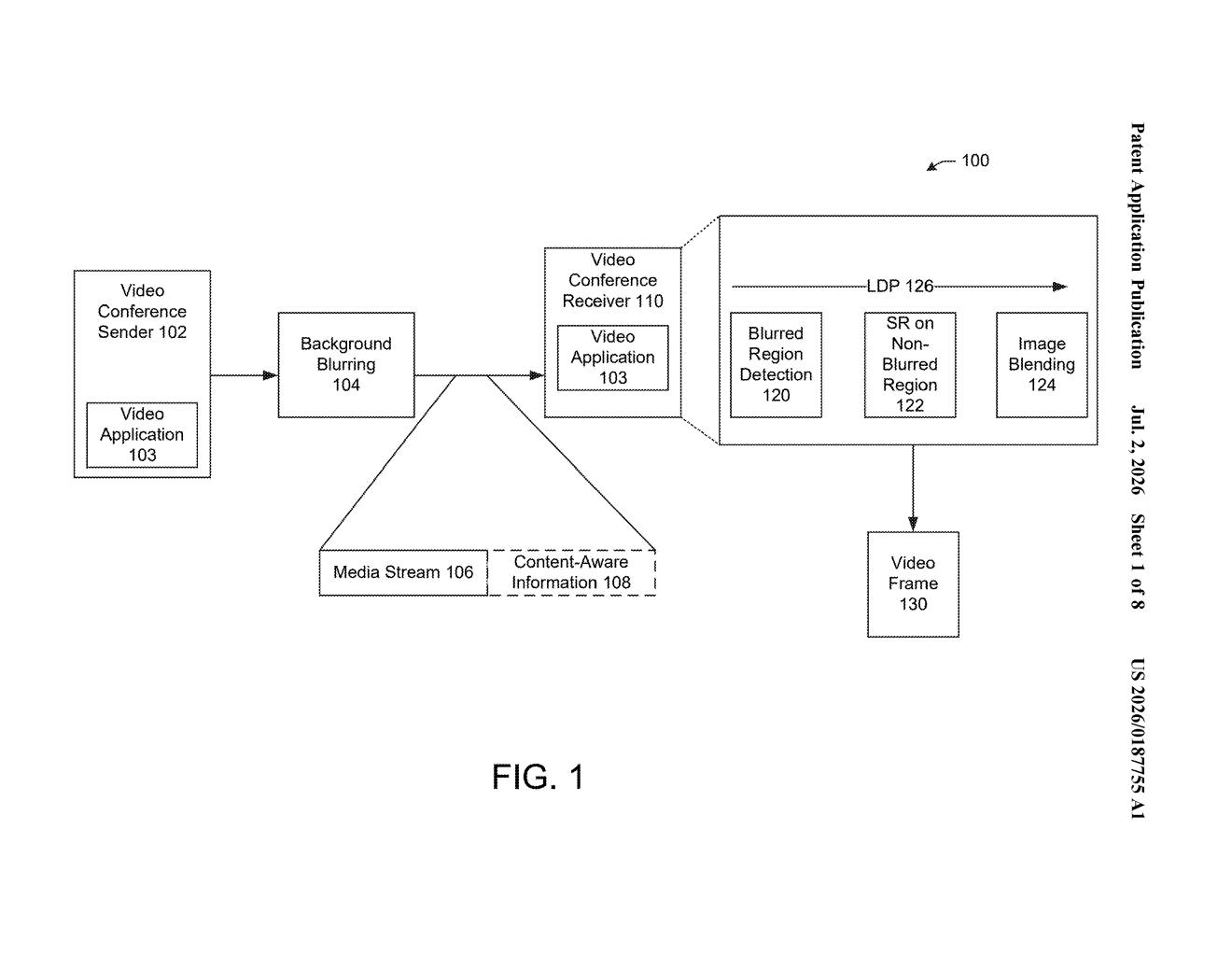
How Intel's video sharpening skips intentional blur
Imagine watching a video call or a streaming movie where the background is intentionally blurry to keep your eye on the subject. Most sharpening tools that run on your device don't know the difference between a blur that belongs there and a blur caused by poor video quality, so they often make things look worse by sharpening edges that should stay soft.
Intel's patent describes a system that first builds a kind of texture map of the entire video frame, noting which regions are genuinely blurry and which just look low-resolution. It then uses that map to guide two separate steps: boosting the detail in sharp areas while leaving intentionally blurry zones alone, and finally blending a low-quality and a high-quality version of the frame together.
The clever part is that the same map drives all three steps, so the device only has to analyze the frame once instead of three separate times. That saves processing time and, on a laptop or phone, battery life.
How the LDP map drives blur detection and upscaling
The patent centers on something called a Local Directional Pattern (LDP), a compact description of how pixel brightness changes in eight directions around each point in a frame. Think of it as a fingerprint for texture: flat regions get one fingerprint, sharp edges get another, and soft blurry regions get yet another.
Once that single LDP map is generated from a decoded video frame, the system routes it into three algorithms:
- Blur detection: the LDP helps identify regions that are genuinely blurry (low texture variation) versus regions that are sharp but low-resolution.
- Super resolution (AI-based upscaling that reconstructs fine detail): applied only to the non-blurry regions, so intentional soft-focus areas are not artificially sharpened.
- Image blending: the system merges a low-resolution and a high-resolution version of the frame, using the LDP to control how much of each version appears in different areas.
The key efficiency claim is that the LDP is computed once and shared across all three steps rather than each step independently analyzing the frame. The patent targets video received over a network and decoded on the receiving device, which is the typical scenario for video calls, cloud gaming, and streaming.
What this means for streaming video quality on Intel chips
For consumers, better post-processing at the device level means streamed video can look sharper without the sender needing to transmit a higher-quality signal. That matters most in low-bandwidth situations, where compression artifacts are common and every bit of recovery processing helps. If this ends up in Intel's graphics drivers or media engine, it could apply automatically to video calls and streaming apps without any setting the user has to touch.
For Intel specifically, the video post-processing pipeline is a battleground with AMD and Qualcomm, both of which have their own AI-based upscaling and sharpening features baked into their chips. A system that runs multiple quality steps from a single analysis pass is a meaningful efficiency argument, particularly for thin laptops and handheld devices where power budgets are tight.
This is a sensible incremental improvement to an already-crowded space: video super-resolution and sharpening are table stakes for any modern media-capable chip. The genuine technical contribution, sharing one texture map across multiple post-processing steps, is real but modest. Whether it produces a visible improvement over existing approaches depends entirely on implementation quality, which a patent cannot tell you.
Get our take in your Top Stories
Liked this breakdown? Add Patentlyze as a preferred source on Google, and our plain-English take shows up more often in your Top Stories the next time Intel patent news breaks.
There are more where this came from
We read every patent application Big Tech publishes and send you the ones worth knowing. Plain English, free, every week.
Want this weekly breakdown for a company we don't cover? Patentlyze Pro →