
Samsung Patents a Single-Signal Driver IC for Multi-Column LED Backlights
Samsung is trying to do more with less inside the backlight of an LCD display — specifically, driving two full columns of LED pixel ICs using a single source signal instead of one per column. It's a wiring-efficiency bet hiding inside a dry hardware patent.
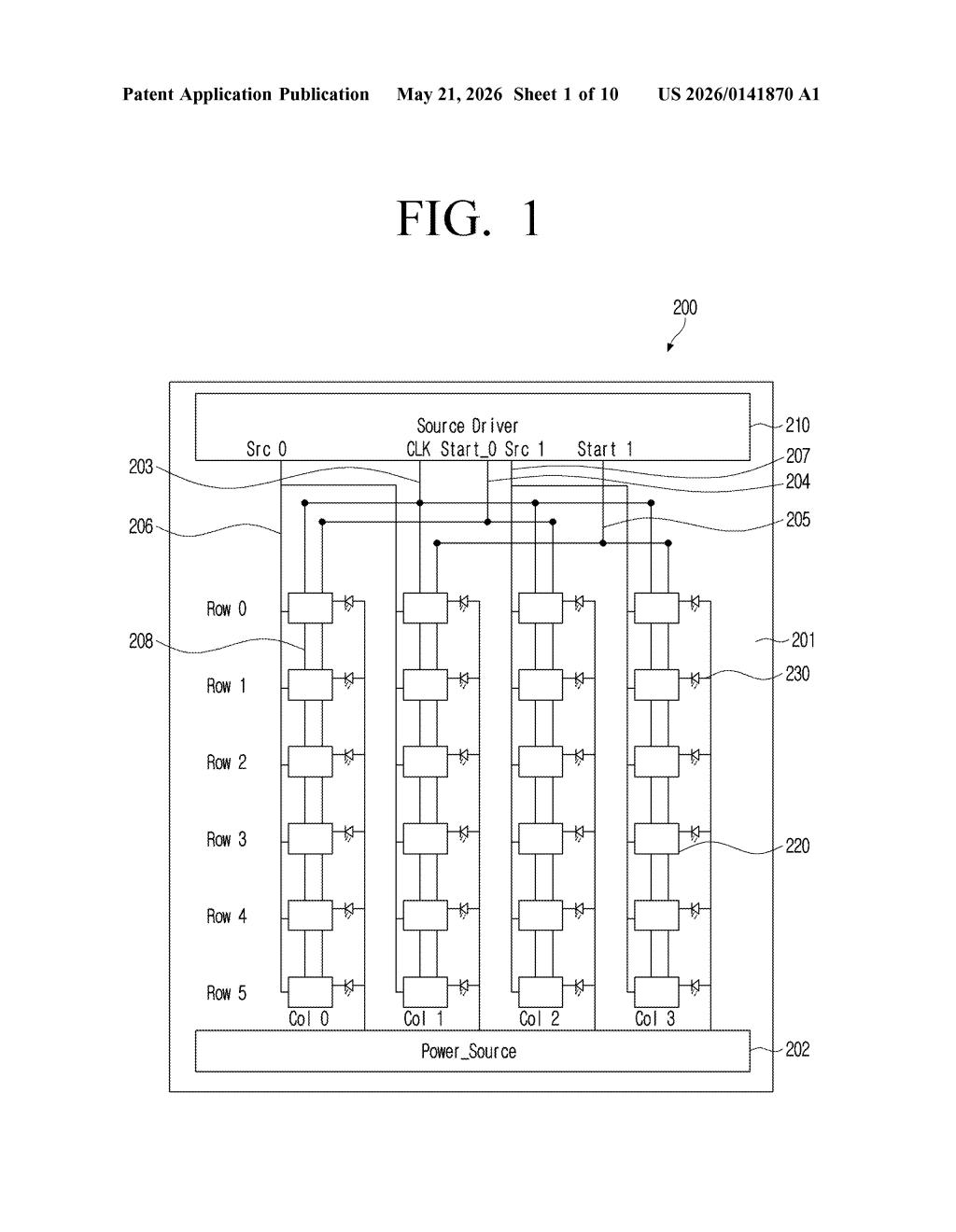
What Samsung's one-signal backlight driver actually does
Imagine the backlight behind your TV or monitor as a grid of tiny LED zones, each one individually dimmable so bright scenes look bright and dark scenes look dark. Normally, controlling each column of LEDs requires its own dedicated signal line — more columns means more wires and more chips.
Samsung's patent describes a smarter arrangement: a single driver chip that sends one source signal to cover two columns of pixel ICs in sequence, within the same time window. Those pixel ICs then each handle driving current to their respective LEDs.
For you, the viewer, this likely changes nothing visible. But behind the screen, it means fewer signal lines, a simpler driver layout, and potentially lower manufacturing cost — the kind of invisible efficiency work that quietly makes displays cheaper to build at scale.
How one source signal drives two pixel IC columns
The patent covers a local-dimming backlight architecture where a driver IC (a chip that sends timing and data signals) coordinates a grid of pixel ICs (smaller chips, each responsible for delivering driving current to one or more LEDs).
The key claim is that the driver IC uses one source signal to sequentially address pixel ICs in two separate columns — a first column and a second column — within a specified time period. Normally you'd expect a dedicated signal path per column; here, the timing is tight enough that a shared signal can service both without conflict.
The processor upstream generates control information derived from the input image — essentially a per-zone brightness map — and feeds that to the backlight unit. The driver IC then translates that map into current instructions dispatched to the pixel ICs across the grid.
- Display panel — renders the image
- Pixel ICs — deliver precise driving current to individual LEDs
- Driver IC — the central coordinator that sequences signals across columns
- Processor — generates per-zone brightness control data from the image
What this means for display panel design and cost
Local dimming is now table-stakes for premium LCD panels — it's how mid-range TVs fake decent contrast ratios without going full OLED. The more LED zones you pack in, the better the picture, but also the more driver circuitry you need. Samsung's approach of sharing one source signal across two columns is an incremental step toward denser zone grids without a proportional increase in wiring complexity.
For Samsung's display business — which supplies panels to its own TV and monitor lines as well as third-party brands — shaving driver IC count and signal traces matters at scale. This is engineering cost reduction, not a visual quality leap, but that's exactly the kind of work that decides who wins competitive panel bids.
This is a fairly narrow backlight-driver efficiency patent — the kind of low-level hardware optimization that won't make headlines but does compound meaningfully across millions of panel units. It's worth a mention if you follow display manufacturing economics, but don't expect a visible consumer payoff from this one specifically.
There are more where this came from
We read every patent application Big Tech publishes and send you the ones worth knowing. Plain English, free, every week.
Want this weekly breakdown for a company we don't cover? Patentlyze Pro →