
Sony Patents an AI That Fixes Game Visuals When You Switch to a Different Screen
When you move a game from a big TV to a phone or handheld, critical in-game items can become too tiny to see. Sony's new patent describes an AI that notices when that happens and fixes the image automatically.
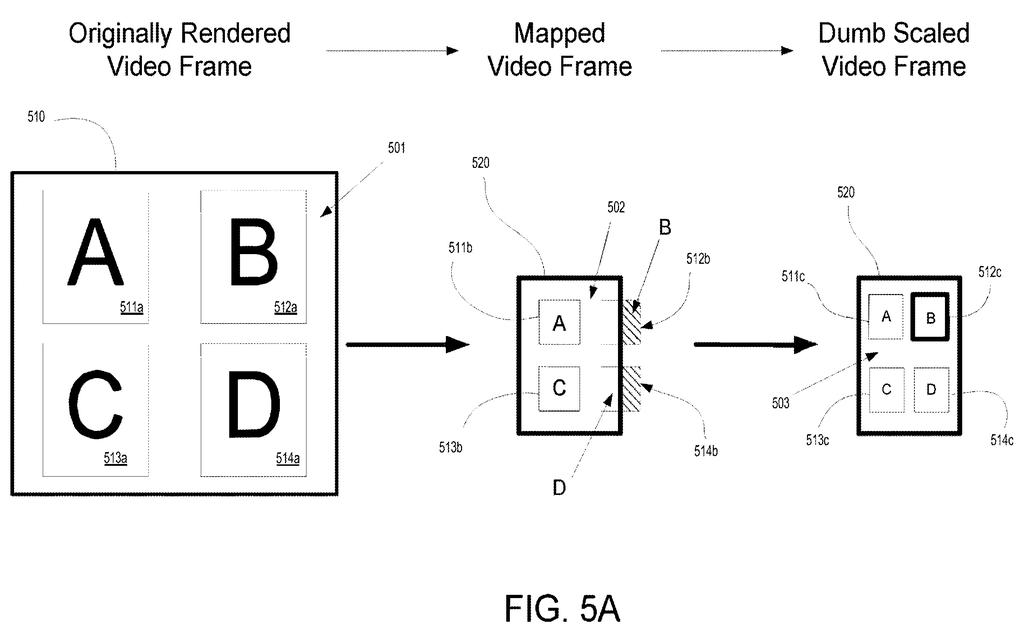
What Sony's cross-screen game fix actually does
Imagine you're playing a game on your TV and then move it over to a phone or a small handheld device. The screen is much smaller, so things get shrunk down. Sometimes a key item, like a health bar, a weapon, or a map marker, becomes too tiny to read. That's a real problem, especially mid-game.
Sony's patent describes a system that uses AI and computer vision (software that can "look" at images the way a person would) to scan each video frame, figure out what matters most in the current scene based on what's happening in the game, and then check whether those important elements are still visible enough after being scaled down.
If something important has gone below a visibility threshold, the system edits just that part of the frame to make it clearer, rather than redrawing the whole image. It's a targeted, automatic fix that happens in the background as you play.
… classifying an asset in the area of focus using a computer vision model implementing artificial intelligence; using the computer vision model, determining to present the asset on the target device; dumb-scaling the video frame to a smaller size …
Translation: The AI identifies important game objects and decides how to keep them visible when shrinking the image for a smaller screen.
How the AI spots and rescues important game objects
The patent covers a pipeline that kicks in whenever a game is being displayed on a device different from the one it was originally designed for, say, a PlayStation console sending a game session to a phone or handheld screen.
Here's how the process works step by step:
- Frame mapping: The system takes the video frame generated for the original screen and maps it onto the target device.
- Dumb-scaling: The claim uses the term "dumb-scaling," meaning a straightforward pixel shrink with no intelligence applied. This is the baseline resize that causes visibility problems in the first place.
- Area of focus detection: Based on game context rules (what's happening in the story or gameplay at that moment), the system identifies a region of the scene that matters most.
- AI classification: A computer vision model scans that region and classifies individual assets (objects, characters, UI elements) by importance.
- Threshold check: The system measures whether each important asset meets a minimum visibility standard after scaling.
- Targeted modification: If an asset falls below the threshold, the frame is adjusted locally so that specific element becomes clear enough, without redrawing everything else.
The AI model does double duty: it both identifies what matters and decides whether it should be shown clearly on the target device, making the whole process context-aware rather than a blanket image filter.
… determining an area of focus in a scene in the video frame based on a game context. The method including classifying an asset in the area of focus using a computer vision model implementing artificial intelligence. The method including determining that the asset is important in the game play …
Translation: The system uses AI to figure out which parts of the game screen are most important for the player to see.
What this means for PlayStation cross-device play
Sony has been pushing hard to make PlayStation games playable across more devices, including the PlayStation Portal handheld and potential mobile expansions. A system like this would let the company scale games to smaller screens without a team of engineers manually tuning every scene in every game for every device combination. That's a significant operational win when you're managing a library of hundreds of titles.
For players, the practical upside is that cross-device play becomes less of a visual compromise. You wouldn't have to squint at a tiny map marker or miss a storyline cue because it vanished when the screen shrank. Sony's gaming cross-device patents are part of a broader wave of filings visible in this week's Big Tech patents, where interactive entertainment companies are building the infrastructure to make one game work well on many screens.
That makes this Sony's fifth filing we've tracked since July in our GPU rendering race watchlist, following one on split server-console rendering and one on region-based video encoding.
Claim 1 locks in a specific sequence: scale the video frame to a new screen first, then use AI to find what broke, then fix it. That order is the claim. A system that uses AI before or during scaling, rather than after, would fall outside what this patent covers. That narrowness has a practical consequence.
Sony is staking out one particular repair workflow, not image adaptation in general. Anything the AI catches and corrects has to be an asset that already failed a visibility threshold on the mapped frame, which is a precise and limited trigger.
Where this pays off is game library maintenance. Checking every title across every screen size manually is slow and costly. If the system works as described, it automates that audit, which is a real engineering gain even if players never see it named in a feature list.
Get our take in your Top Stories
Liked this breakdown? Add Patentlyze as a preferred source on Google, and our plain-English take shows up more often in your Top Stories the next time Sony patent news breaks.
There are more where this came from
We read every patent application Big Tech publishes and send you the ones worth knowing. Plain English, free, every week.
The drawings
7 drawing sheets from US 2026/0249176 A1 · click any drawing to enlarge


Want this weekly breakdown for a company we don't cover? Patentlyze Pro →
Be the first to weigh in