
Sony Patents a System That Copies a Film Director's Camera Style for New Scripts
Sony is patenting a way to bottle a film director's visual signature, so that new scripts can be shot, automatically, in the style of Kubrick, Kurosawa, or whoever you pick.
What Sony's director-style camera generator actually does
You're putting together a short film and you want it to feel like a 1970s Scorsese thriller: tight close-ups during tense dialogue, wide tracking shots through crowds. Normally, capturing that feel takes years of studying the director's work and a lot of trial and error. Sony's new patent aims to automate that process.
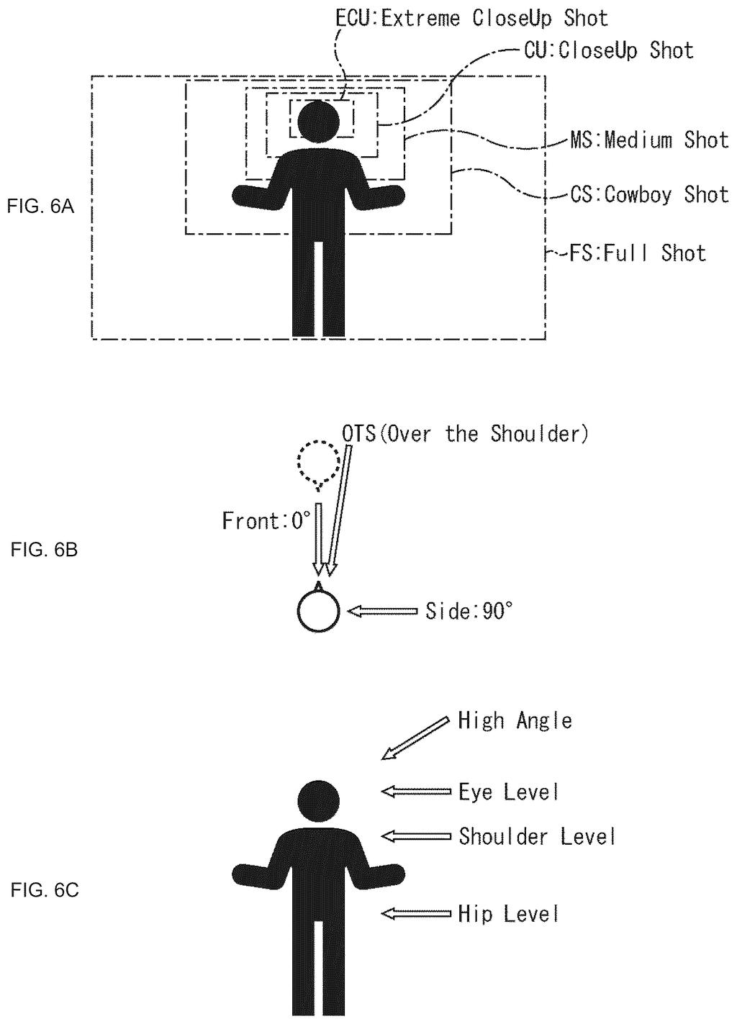
The system analyzes footage and scripts from a chosen director's back catalog, building a profile of how that director tends to move the camera. When you feed in your own script, the system uses that profile to generate a matching camera plan, shot type, angle, movement and all, tailored to your scenes.
The idea is that even amateur filmmakers or small production teams could punch above their weight creatively. You pick the directorial style you want, hand the system your script, and it hands back a shooting blueprint shaped by decades of cinematic choices you probably haven't studied.
… generates, from a video image and a script of a past image work belonging to a predetermined category, preset information in which various scores representing features of a past camerawork used in the image work under the category are registered …
Translation: The system analyzes older movies to measure and score the shooting style of a specific director.
How the system scores and recreates past camerawork
The patent describes two linked processing units working in sequence.
First, the preset processing unit ingests two inputs for a chosen director or category of filmmaking: the actual video footage of past works and the written scripts that accompanied them. It cross-references the two to extract "camerawork scores" (numerical values that describe things like how often close-ups appear during high-tension scripted moments, how fast the camera moves during action lines, or how framing shifts between characters in dialogue). Those scores are bundled into a preset profile tied to that director or category.
Second, the camerawork generation processing unit takes a brand-new script and pulls up the preset profile the user selected. It reads the new script's structure and content, then maps the stored camerawork scores onto the new material, generating a full camera plan that recreates the stylistic features of the source director without copying any specific shot directly.
Key components the claim covers:
- Extracting feature scores from paired video-and-script data
- Storing those scores as reusable preset information per category
- Applying the preset to a novel script to produce new camerawork instructions
The system is described as applicable to a video processing apparatus, meaning it could sit inside editing software, a production tool, or a standalone device.
… generates a new camerawork recreating the features of the past camerawork on the basis of a new script that is the script of an image work to be newly produced.
Translation: It then applies those exact camera habits to map out how a brand new script should be filmed.
What this means for AI-assisted video production
For independent filmmakers or small studios, hiring a director of photography who deeply knows a particular cinematic tradition is expensive. A tool that can translate a script into a culturally informed camera plan, even an imperfect one, lowers that barrier considerably. The more interesting question is what happens when the AI's camerawork suggestions become the default starting point: does that accelerate creativity or flatten everyone toward the same handful of canonical styles?
Sony sits at the intersection of cameras, content, and now AI production tools, so a patent like this fits a clear strategic direction. Filmmaking-style AI is one of the more contested areas among interesting tech patents right now, as hardware companies try to own the production workflow, not just the recording device.
Sony's ninth filing we've tracked in our AI photo editing race since July builds on earlier applications like one using your own photos and one splitting shadow and color.
The system pays a real price for how slick it looks. Directors with small or poorly recorded bodies of work will get thin, unreliable style profiles, and the tool will naturally favor filmmakers who have been studied the most, pushing results toward a narrow, Western-dominated menu of looks.
That bias matters because it shrinks the creative freedom the system claims to offer. The trade is only acceptable if Sony, or whoever rolls this out, actively tends the library of style options. Without that commitment, the smart scoring logic ends up reinforcing the same dominant aesthetic it was built to help users escape.
There are more where this came from
We read every patent application Big Tech publishes and send you the ones worth knowing. Plain English, free, every week.
The drawings
18 drawing sheets from US 2026/0247012 A1 · click any drawing to enlarge


Want this weekly breakdown for a company we don't cover? Patentlyze Pro →
Be the first to weigh in