
Sony Files Patent for an AI That Grades Game Trailers and Cuts the Weak Scenes
Sony has filed for an AI that watches a game video, predicts how popular it will be, and then cuts the scenes it thinks are holding it back.
What Sony's video-scoring AI actually does
Ever sat through a game trailer and wondered who decided to keep that slow, pointless minute in the middle? Sony has filed a patent application for a tool that would catch it before you ever saw it.
The idea: feed a video into an AI model that has studied lots of hugely popular videos, such as viral clips with millions of views. The model hands back a score estimating how well the video is likely to do. If the score is too low, the tool points to the part dragging it down, then trims or reshuffles the footage and gives you the edited version.
Sony's description focuses on video games: trailers, gameplay clips, even scenes still being built. Its own example is a boss battle that runs too long and earns a low score, so the designer knows to tighten it up.
providing video data as input to a video analysis model, wherein the video analysis model comprises a machine learned model; obtaining, as output from the video analysis model, at least one score parameter for the video data; altering the video data based on the at least one score parameter to generate altered video data; …
Translation: The system feeds video into an AI, gets scores back, and automatically edits the footage based on those results.
How the model grades and trims a game clip
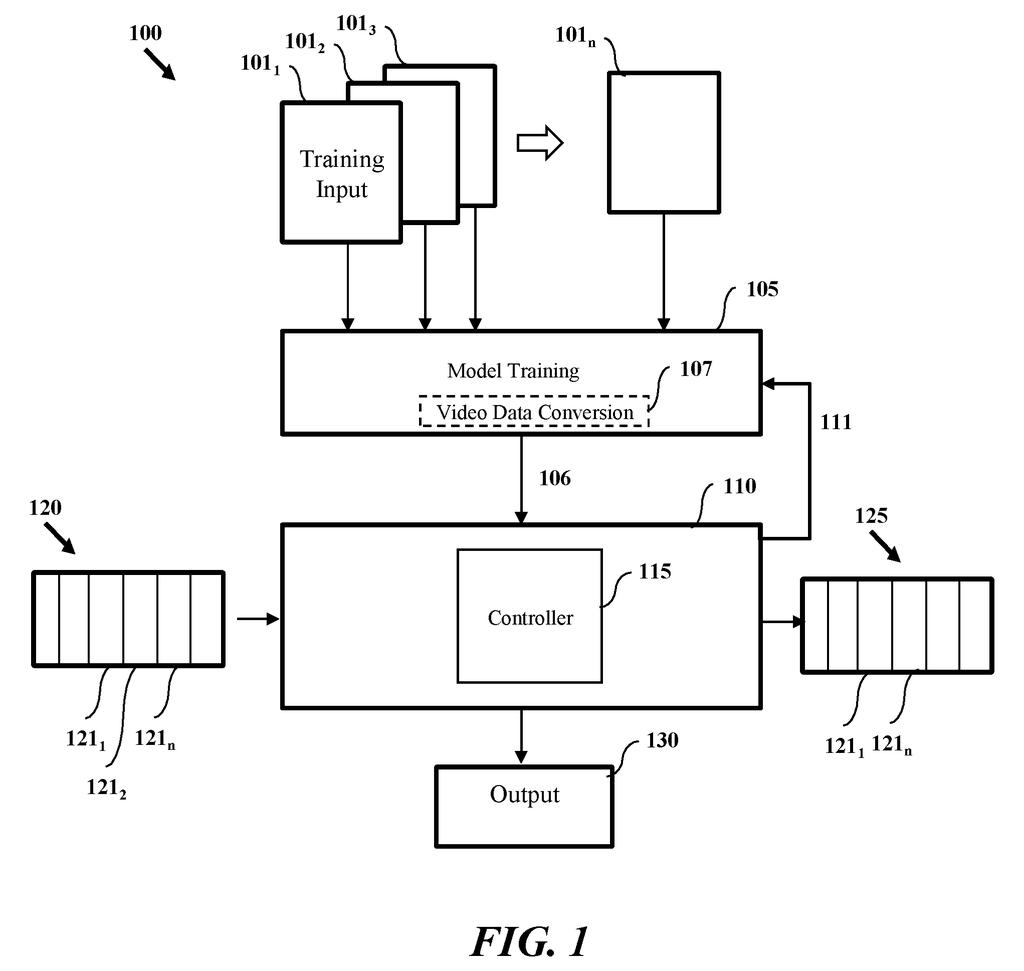
The core claim is simple. A video goes into a machine-learned model (an AI system trained on examples instead of hand-written rules), and the model returns at least one score parameter. The system then alters the video based on that score and outputs the new version.
The filing describes several pieces that make the scoring work:
- The video can be turned into a text description, or into vectors (long lists of numbers that capture what is in the footage), so it can be compared with other videos.
- The model can compare the video against reference videos with a high popularity rating. The more similar they are, the better the score. The description mentions a dot product, a simple math step that measures how alike two lists of numbers are.
- The score can include tag words describing the content, plus flags for stretches of predicted high or low popularity.
If the score falls below a set threshold, the model can name the element responsible, such as an object that shows up in certain frames. The edit can then remove or rearrange frames, or change the length of a scene.
During training, view counts, downloads and shares are used as weights, so videos that drew bigger audiences count for more. The output can also be a simple label: +1 for a video likely to be highly viewed, -1 for everything else.
Analysis of game titles and game design may be performed during design to ensure that game scenes will have a high likelihood of user interest. Embodiments may also include modifying gameplay and gameplay storylines, and evaluating game promotional videos.
Translation: Developers can use the tool early on to check if players will actually care about certain scenes and storylines.
What this means for game trailers and studios
If you work on a game, the pitch is a quicker reality check. The filing says showing early drafts to a small test group often fails to reflect the audience a game is meant for, and that gathering the right group is hard. A scoring tool that runs on a console or a computer could flag a weak scene or a sagging trailer before release.
For you as a player or viewer, the effect would show up indirectly: tighter trailers, shorter cutscenes, boss fights trimmed to match what popular videos tend to look like. The flip side is that a system trained on what is already popular may nudge everything toward the same pacing. The filing says the same scoring could apply to movie trailers and to video in general.
Sony's 28th filing we've tracked in Enterprise AI since May follows earlier applications like one letting plain-English set game options and one on a play-style-aware companion.
The scoring piece is close to shippable. It needs no new hardware and could run on a phone, a console, or a server, so the shortest path to a real product is a review tool that watches footage and flags slow stretches for a human editor to fix.
The automatic editing piece asks for more. A model trained on view counts and likes has to exist first, and this document offers no evidence that its popularity guesses are reliable. A low-scoring scene might be building tension.
The realistic first version puts a person in charge, with the software suggesting cuts and a human deciding. That version is easy to picture shipping. Whether the scores are trustworthy enough to act on is the question this filing leaves open.
Get our take in your Top Stories
Liked this breakdown? Add Patentlyze as a preferred source on Google, and our plain-English take shows up more often in your Top Stories the next time Sony patent news breaks.
There are more where this came from
We read every patent application Big Tech publishes and send you the ones worth knowing. Plain English, free, every week.
The drawings
4 drawing sheets from US 2026/0321005 A1 · click any drawing to enlarge


Want this weekly breakdown for a company we don't cover? Patentlyze Pro →
Be the first to weigh in