
Sony Patents an Electromagnetic Scanner That Decides How Hard to Look
Most sensors blast the same number of signals at every frequency and hope for the best. Sony's new patent describes a system that monitors its own results in real time and adjusts how many times it needs to fire each frequency to get a reliable reading.
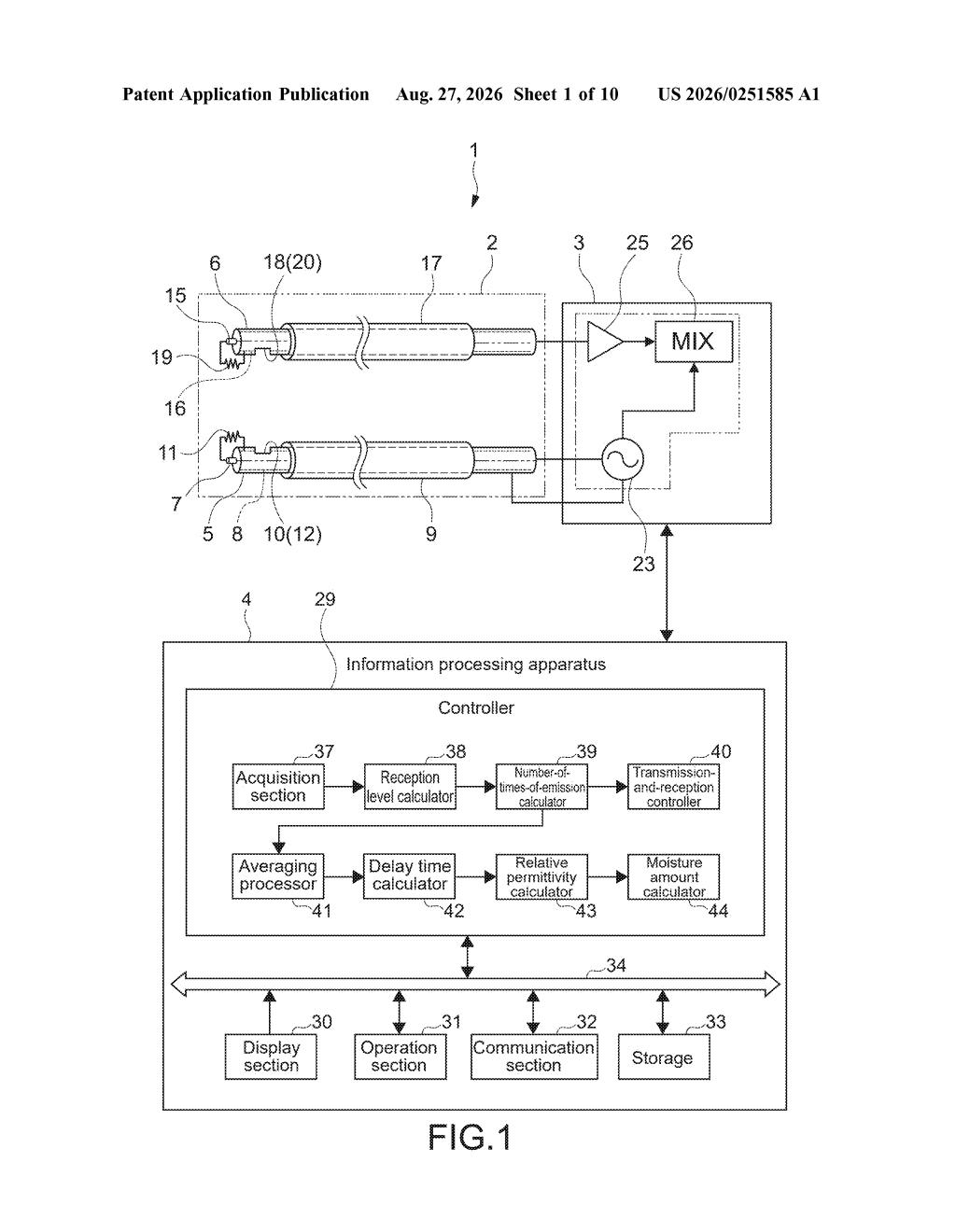
How Sony's sensor figures out when to keep scanning
Today's electromagnetic sensors typically fire signals at an object a fixed number of times at every frequency, whether or not that many readings are actually needed. That wastes time and energy on frequencies that already produced clean data, while potentially under-measuring others that are harder to read through the material.
Sony's patent describes a sensor that watches its own incoming data as it works. After each pass, it calculates how many more times it needs to send each frequency to reach a reliable result, and only runs those extra passes. Some frequencies may need very few repeats; others might need more.
The upshot for you: a device built on this approach could complete a scan faster, use less power, or fit more measurements into the same time window, all without trading away accuracy.
… a calculator that calculates a necessary number of times of emission for each of the plurality of electromagnetic waves on a basis of a result of the detection performed by the detector, the necessary number of times of emission being a certain number of times of emission that is necessary for measurement.
Translation: The device automatically determines how many times it needs to scan an object based on the initial results it receives.
How the calculator sets per-frequency emission counts
The patent covers a three-part sensor system built around an emitter, a detector, and a calculator.
The emitter sends out electromagnetic waves at multiple different frequencies toward whatever object is being measured. Electromagnetic waves span a broad spectrum; depending on the frequency chosen, they can pass through skin, fabric, food, industrial materials, and more. The detector picks up those waves after they travel through the target.
- The calculator analyzes the detector's output after each emission round.
- It then computes a necessary number of times of emission for each individual frequency, meaning the minimum number of additional signal pulses still needed to produce a statistically reliable measurement.
- Frequencies that already have clean, consistent readings stop early; noisier or harder-to-read frequencies continue.
The core idea is that different frequencies behave differently when passing through the same object. Some penetrate easily and return a strong, consistent signal quickly. Others scatter more or produce weaker returns and need more passes to average out the noise. By treating each frequency independently instead of applying one fixed rule to all of them, the system can allocate measurement effort where it is actually needed.
This makes it possible to perform measurement efficiently with a high degree of accuracy when sensing is performed using an electromagnetic wave.
Translation: This method allows the scanner to be both fast and precise by adjusting its effort based on the object being measured.
What adaptive sensing means for Sony's sensor business
Electromagnetic sensing shows up in more consumer devices than most people realize: non-contact glucose monitors, food composition checkers, material quality scanners, and industrial inspection tools all depend on sending waves through objects and reading what comes back. Any of those applications benefits from a sensor that can reach its accuracy target faster or with less power draw.
Sony has a long-standing sensor hardware business, and patents like this one suggest continued investment in making that sensing infrastructure more efficient at a fundamental level. Sony's approach here sits alongside a wave of new Big Tech patents targeting adaptive sensing and measurement methods across health, industrial, and consumer electronics.
This is the 17th Sony filing we've tracked since July in our self-driving sensing race watch, following one on a flash-recovery sensor and one on parking spot previews from nearby cars.
The cost of this design is trust. Instead of scanning every object the same number of times every time, the sensor decides mid-process when it has seen enough, and that self-assessment can be wrong. If it misjudges a noisy or ambiguous reading and stops too early, the final measurement is less reliable than a slower, dumber sensor that simply runs the full course regardless.
Whether that trade is worth it depends on how often the self-assessment fails in real conditions, because that is precisely where it is most likely to fail. For a company shipping sensors across millions of devices, cutting unnecessary scan cycles saves real money, and the efficiency argument holds up in clean, predictable environments.
The open question is whether the stopping rule holds up when conditions are messy, because a sensor that occasionally trusts itself too soon is harder to rely on than one that is simply slower.
Get our take in your Top Stories
Liked this breakdown? Add Patentlyze as a preferred source on Google, and our plain-English take shows up more often in your Top Stories the next time Sony patent news breaks.
There are more where this came from
We read every patent application Big Tech publishes and send you the ones worth knowing. Plain English, free, every week.
The drawings
10 drawing sheets from US 2026/0251585 A1 · click any drawing to enlarge


Want this weekly breakdown for a company we don't cover? Patentlyze Pro →
Be the first to weigh in