
Sony Patents a System That Copies Your Vision Settings Across Every App
If you adjust text size or color contrast in one app, Sony's new patent would carry those settings over to every other app automatically, without you lifting a finger.
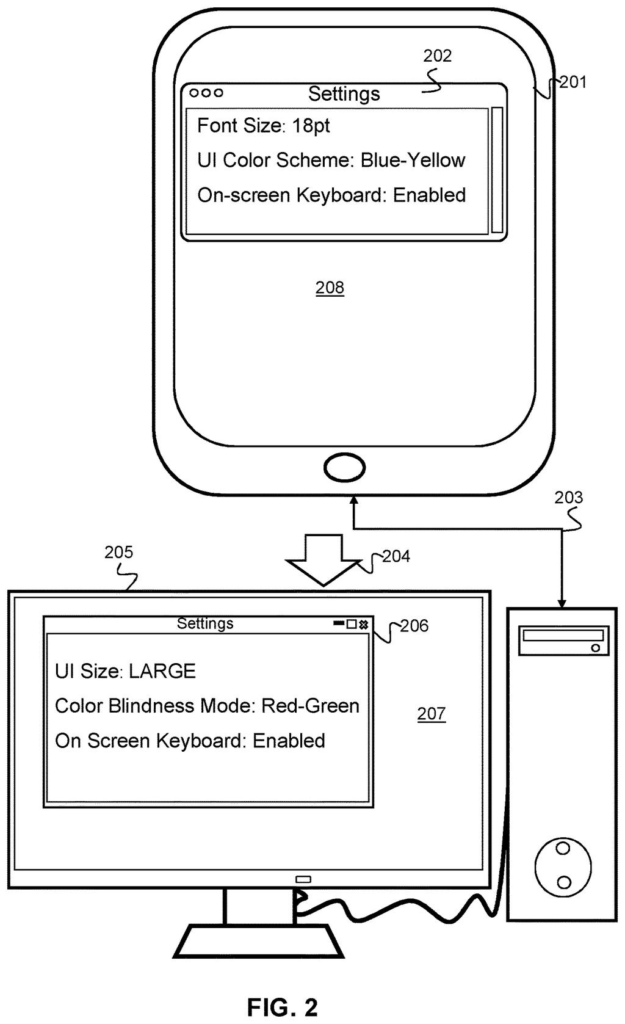
How Sony's auto vision-setting transfer actually works
A gamer sits down to play, but the text is too small to read and the colors blur together. They dig through menus, adjust contrast, bump up font size, and finally get it right. Then they open a second app and start over from scratch.
Sony's patent targets exactly that moment. The idea is that once you've told one app how you need visuals to look, a system running in the background figures out how to translate those preferences into the language of every other app on your device. Different apps don't all use the same sliders or setting names, so the system does the translation work for you.
The result: your color and text adjustments follow you from app to app without you having to remember what you changed or repeat the process every time you launch something new.
… mapping a value of the vision setting for the second application to a value of the vision setting for the first application; modifying the vision setting for the first application based on the mapping; and rendering visuals for the first application tailored to the vision setting of the second application …
Translation: The system translates your visual preferences from one app and applies them directly to another.
How Sony maps settings between apps of different types
The patent describes a method for automated vision setting importation, where a device acts as a translator between two apps that store accessibility preferences in different formats.
Here's what happens step by step:
- A second app (say, a game) requests a vision setting, like high-contrast mode or enlarged text, from the system.
- The system identifies the corresponding setting in a first app (say, the console's main interface) that maps to what the second app needs.
- Because the two apps use different setting types (one might call it 'contrast level,' another 'color intensity'), the system maps the value from one format to the other rather than copying it blindly.
- The translated value is then applied to the second app, which renders its visuals using the adjusted setting.
The key technical wrinkle is the disparate types problem. Two apps almost never store accessibility settings in identical formats. A brightness slider that runs 0-100 in one app might only go 0-10 in another. The patent's mapping step handles that conversion so the end result looks consistent to the user.
The system is described as running on a first device and coordinating between applications, which fits the PlayStation console model where a system shell and individual games run side by side.
A first application running on a first device requests a vision setting for a second application. A vision setting of the first application running on a first device is determined to correspond to the vision setting for the second application.
Translation: An app looks at how another program is configured and automatically adopts those same visual adjustments.
What this means for PlayStation accessibility
For anyone who relies on accessibility settings, the constant re-configuration problem is one of the most tiresome parts of using any device. Every app reset, system update, or newly downloaded game can send you back to square one. Sony's approach would treat your vision preferences as a persistent profile the platform carries forward, rather than something each app owns independently.
This fits a broader push by PlayStation to close accessibility gaps that have historically been an afterthought in game design. If the system works as described, a player with low vision or color blindness would configure their preferences once and trust the console to handle the rest, which is a concrete, everyday payoff. Big Tech patent news regularly surfaces accessibility-focused filings like this one, where the competitive pressure on gaming platforms to serve disabled players is reshaping how consoles are built from the inside out.
That makes this Sony's 376th filing in our Sony coverage since May, adding to work like the electrical-disturbance sensor and the variable-light lens.
For anyone who relies on enlarged text, high contrast colors, or colorblind filters to play comfortably, the current reality is re-entering the same preferences from scratch every time they launch a new game. This patent describes a system where those settings travel automatically from one app to another, so the adjustment happens before the player ever notices it needs to happen. That invisible handoff is where this matters.
The person who benefits most is not someone who tinkers with settings for fun, but someone for whom skipping that step means the difference between playing and not playing. Whether Sony ships this as a meaningful, reliable feature depends entirely on how well it handles the messiness of translating one game's options into another's.
If it works, most users will never think about it, which is exactly the point.
Get our take in your Top Stories
Liked this breakdown? Add Patentlyze as a preferred source on Google, and our plain-English take shows up more often in your Top Stories the next time Sony patent news breaks.
There are more where this came from
We read every patent application Big Tech publishes and send you the ones worth knowing. Plain English, free, every week.
The drawings
8 drawing sheets from US 2026/0249180 A1 · click any drawing to enlarge


Want this weekly breakdown for a company we don't cover? Patentlyze Pro →
Be the first to weigh in