
Meta
Meta · AR / VR · Filed Apr 1, 2026 · USPTO published Oct 8, 2026 · Oct 8 release
Meta Patents Smart Glasses That Combine Their Microphones to Cut Through Noise
Meta's patent has nearby glasses and headsets pool what they hear, so the person seated next to the noisy kitchen can still make out the speaker.
- Publication number
- US 2026/0310401 A1(US20260310401A1)
- Applicant
- Meta Platforms Technologies, LLC
- Filed · Published
- Apr 1, 2026 · Oct 8, 2026
- Inventors
- Syed Shakib Sarwar, Vamsi Krishna Ithapu, Vladimir Tourbabin, Nils Thomas Fritiof Lunner, Ennio Salemi, Hao Jiang
- Status when we published
- Waiting for an examiner
- Document
- 20 claims
- US classification
- 381/56
- Parent application
- Claims priority from a provisional application 63783447 (filed Apr 4, 2025)
What Meta's shared-microphone glasses actually do
Put several people wearing headsets or smart glasses around a noisy cafeteria table and each device hears the room differently. The seat near the kitchen picks up clattering dishes, while a seat across the table catches the speaker cleanly. On top of that, if every device tries to clean up the sound on its own, they all burn battery doing the same job.
Meta's patent application has the devices pool what they hear. One of them collects the recordings from the others, blends them into a single cleaner version, and sends that back out so everyone hears it. Because the work is done once for the group, the other devices can save power.
The job can also pass from one device to another over time, so no single pair of glasses runs dry first.
detecting, by an audio sensor communicatively coupled to the computer of a first device, a first instance of an audio signal from an environment external to the first device, the first device being communicatively coupled to a second device that receives a second instance of the audio signal …
Translation: One device listens to outside sounds while connected to a second device doing the same thing.
How one device cleans up audio for the group
The filing describes a software framework that lets nearby wearable devices, such as glasses or headsets, work as a team on sound. A first device picks up a sound from the room with its own microphone. It then receives a second recording of that same sound from a second device, processes both together into a modified audio signal, and sends the result to the second device to play.
To combine the recordings, the filing lists several steps:
- Compare when each recording arrived and how loud it was.
- Line the two recordings up in time.
- Merge them with techniques such as beamforming (combining several microphones to favor sound from one direction), adaptive noise cancellation, dereverberation (removing echo), voice-activity detection (spotting when someone is talking), or source separation (pulling one voice apart from others).
The output could be cleaner speech or a live translation of what a speaker is saying. The description adds that the processing device could also use camera, motion or head-direction data from other devices to work out who is speaking.
One device is chosen to do the work. That job can stay put for a while or be handed to another device based on battery level, signal quality, or connection quality. An outside server can optionally help too.
… generating by the first device, using the first instance of the audio signal and the second instance of the audio signal, a modified audio signal, and transmitting the modified audio signal to the second device for output.
Translation: The device combines both audio recordings to create a cleaner sound and sends it back out.
What this means for noisy rooms and live translation
If you have ever strained to follow a conversation in a loud restaurant, you know the problem. Your glasses only hear what is near your head. With this approach, they could borrow clearer recordings from people sitting closer to the speaker, and a live translation could be produced once and shared with a whole group instead of every pair of glasses running its own.
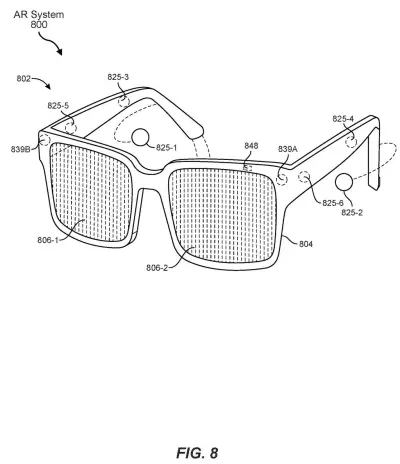
It also speaks to a basic limit of wearables: small batteries and little room to shed heat. Letting one device do the heavy lifting and rotating the job could stretch everyone's battery. The filing names smart glasses and VR headsets as example devices. It is a patent application, so it describes an idea, with no product promised.
Meta's 70th filing we've tracked since May in our smart glasses patent watch follows work like fitness tracking through sensors and one beam tracking eyes and room.
Source: US 2026/0310401 A1 at the USPTO (PDF). Full patent text and figures are in the official publication.
Get our take in your Top Stories
Liked this breakdown? Add Patentlyze as a preferred source on Google, and our plain-English take shows up more often in your Top Stories the next time Meta patent news breaks.
Add Patentlyze on Google
One click.
There are more where this came from
We read the new patents from Big Tech, carmakers and more and send you the ones worth knowing. Plain English, free, every week.
The drawings · 16 sheets
16 drawing sheets from US 2026/0310401 A1 · click any drawing to enlarge


Show the other 8 sheets


More from Meta
All 192 Meta patents →
More in AR / VR
All 718 AR / VR patents →
Meta
Meta Patent Lets Smartwatch Users Trigger Smart Glasses Camera With a Tap
Meta
Meta Patent Lets Pinch-and-Twist Wrist Gestures Control Smart Glasses Volume
Meta
Meta Patents an Adjustable Hinged Nose Bridge for Smart Glasses
Meta
No comments yet