
Sony Patents a Way to Control a Camera Using Gestures From a Headset
Sony has filed a patent for a system that lets your head-mounted device, think AR glasses or a VR headset, control a nearby camera just by detecting gestures from the wearer. The twist: the system also reads what the camera is already doing before deciding what to change.
What Sony's gesture-to-camera control actually does
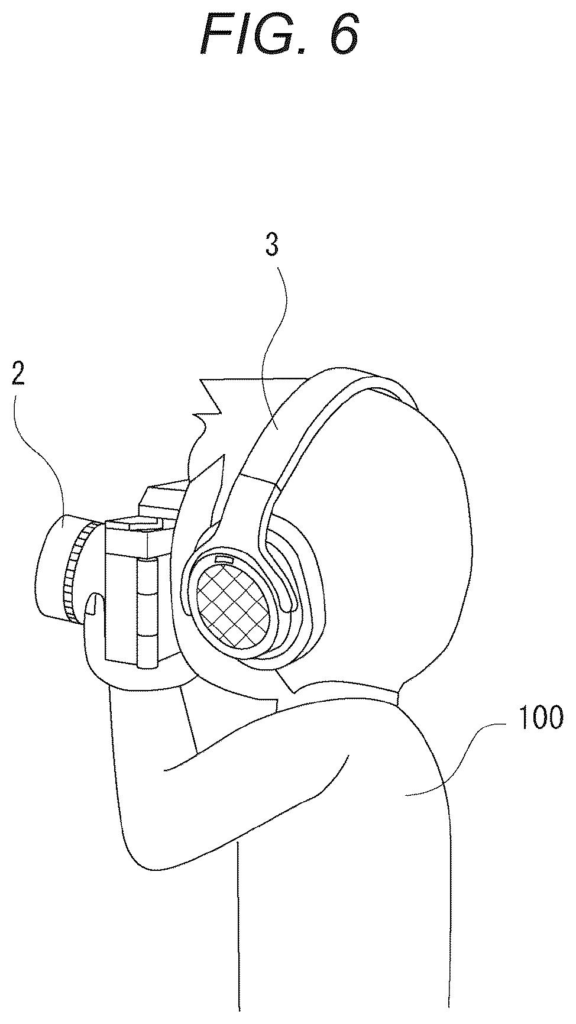
Ever tried to take a photo without touching your camera, maybe because your hands are full or you're mid-action? Sony's patent describes a setup where a head-mounted device (glasses, goggles, or a similar wearable) watches for gestures you make and then uses those gestures to operate a separate camera.
The key detail is that the system doesn't just react to your gesture in isolation. It first checks the current state of the camera, whether it's recording, idle, zoomed in, or something else, before deciding what to do. That means the same gesture could trigger different actions depending on what the camera is already up to.
For everyday users, this could mean starting or stopping a recording with a nod or a hand wave, all without fumbling with a phone or remote. The camera and the headset talk to each other, so your body becomes the controller.
… controls at least an operation of an imaging apparatus on a basis of gesture information indicating a gesture detected by a head-mounted device mounted on a head of a user …
Translation: A headset tracks your hand movements to control a nearby camera.
How the headset gesture and camera state combine
The patent describes an information processing apparatus (a processing unit that could live in the headset, a phone, or a separate device) that sits between a head-mounted wearable and an imaging apparatus (a camera, camcorder, or similar device).
It takes in two streams of information at once:
- Gesture information: the specific movement or pose detected by the head-mounted device, such as a nod, a hand sign, or a head tilt.
- Imaging apparatus state information: a live read of what the camera is currently doing, for example whether it is recording video, standing by, or actively focusing.
The control unit combines those two inputs and uses them together to decide which camera command to send. This context-aware approach (checking state before acting) means the same gesture doesn't blindly repeat the same command every time. If the camera is already recording, a gesture might stop it; if it's idle, the same gesture might start it.
The patent is broad in scope: it covers any head-mounted device, any imaging apparatus, and any kind of gesture, without locking in a specific product form or gesture vocabulary.
What this means for hands-free photography and filming
For people who film or photograph while doing something physical (athletes, musicians, surgeons, or anyone with occupied hands), a reliable gesture-based shutter trigger has obvious appeal. Current workarounds like voice commands or Bluetooth remotes each have their own failure modes. A headset that already knows what you're doing has a natural advantage as a camera controller.
That said, Sony's track record in imaging-control patents is worth keeping in mind: the company holds a wide range of camera and wearable interaction filings, so this sits inside a larger pattern rather than standing alone. The practical payoff depends entirely on how well gesture detection actually works in a real wearable product.
Sony's 32nd filing we've tracked in the AR glasses race since July follows one on blurry edge fixes and one projecting images onto the eye, adding another piece to its AR lens work.
Claim 1 covers any setup where a head-mounted device reads a user's gesture and checks the camera's current condition, then uses both pieces of information together to control the camera. The claim leaves almost everything else open: the type of headset, the specific gesture, the particular camera, the nature of the control. That is a very wide fence.
In practice, that breadth means a lot of real products could fall inside it. Any wearable that factors in what a camera is already doing before responding to a gesture would need to reckon with this claim if it stands.
Whether it stands is a real question. The two-input logic, gesture plus camera state, is the entire invention as written, and reviewers will press hard on how new that actually is given how long context-aware controls have existed in everyday electronics. A narrower version surviving review is the more realistic outcome.
There are more where this came from
We read every patent application Big Tech publishes and send you the ones worth knowing. Plain English, free, every week.
The drawings
25 drawing sheets from US 2026/0299702 A1 · click any drawing to enlarge


Want this weekly breakdown for a company we don't cover? Patentlyze Pro →
Be the first to weigh in