
Sony Files Patent for a Robot Pet That Borrows Tricks Other Robots Learned
Sony wants your robot dog to stop repeating itself, so it hooks the robot up to a server that remembers what thousands of other robot pets did and which moves their owners loved. The robot can then borrow the best ideas.
What Sony's robot dog patent actually does
You walk through the door and your robot dog greets you with the same wag, the same head tilt, the same little bark it did on day one. By week three, the charm has worn off.
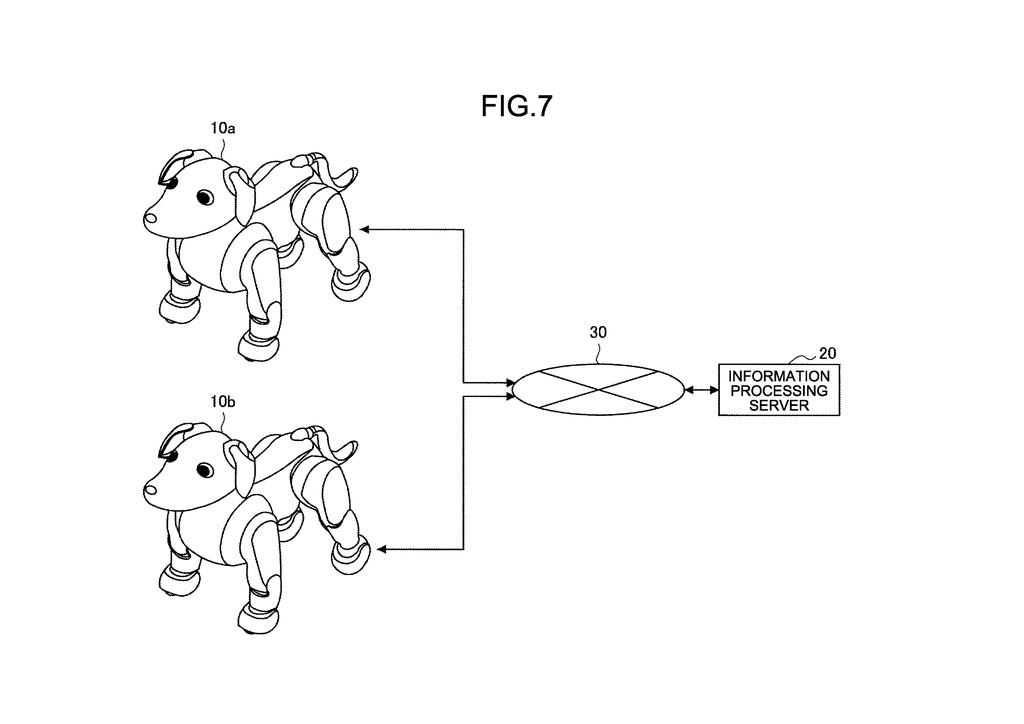
Sony's patent tries to fix that by letting your robot learn from other robots. Each robot reports what its sensors are picking up (who is around, what is going on, how you reacted to its last move) to a server. The server keeps a shared log of what many robot pets did in similar moments, and which moves their owners liked. It then sends back a suggestion, along with the instructions for pulling it off.
Your robot still makes the final call. It weighs the suggestion against its own ideas and decides what to do.
… determine a recommended behavior for the subject autonomous mobile object based on (i) a log of behaviors collected from a plurality of autonomous mobile objects and (ii) the information related to the circumstances of the subject autonomous mobile object, and transmit the recommended behavior to the subject autonomous mobile object …
Translation: The server figures out what the robot should do next by looking at past actions taken by many other robots.
How the robot and server trade behavior tips
The filing describes a dog-shaped robot with cameras, microphones, touch sensors and joints in its legs, head, ears and tail. From that sensor data, the robot estimates its circumstances: is the owner in the room, is it dark, is the battery running low. It sends a summary of those circumstances to a server.
The server holds a log of behaviors gathered from many robots. Each entry ties together an estimated situation, the behavior the robot chose, and the owner's reaction. Using that log plus the summary, the server picks a recommended behavior. It can also send control sequence data, which is the recipe for the move: how each joint should rotate over time, what the eyes should show, and what sound to play.
The robot then plans its own behavior with that recommendation in mind. In one dependent claim, it chooses among its own candidate behaviors and the recommended one based on how reliable each looks. In another, it also weighs competing needs, like staying charged versus pleasing its owner.
The claims and description also cover several extras:
- Estimating how much the owner loves the robot from their reactions, and using that to choose recommendations
- Sending the owner a maintenance notice when a part keeps throwing error messages
- Sharing well-liked moves only with a group the owner picks, such as friends
- Sharing newly learned object names, and fixing speech the robot misheard by running the recording through several recognition programs
… based on the circumstances that are estimated and multiple sets of needs that are opposed to each other, determine the behavior to be executed by the autonomous mobile object …
Translation: The system decides the robot's actions by weighing its current surroundings against competing desires.
Why a robot pet needs new tricks over time
If you own a robot pet, this is about keeping it from going stale. Instead of waiting for the company to ship new tricks, your robot could pick up moves that went over well in other homes. It could also warn you when a leg motor starts acting up, before the robot breaks down.
There is a trade-off. The design depends on a server that receives summaries of what your robot senses, along with recordings of commands it failed to understand. The filing is a continuation of a family first filed in Japan in 2017, so the idea has been circulating for years. Whether it ever shows up in a product is not something the patent tells us.
Sony's 39th filing in the robotics work we cover since May adds to a run that includes robot arms rerouting mid-motion and drones avoiding fast objects.
The problem here is real for this kind of product. A robot pet costs real money, and its whole appeal is that it feels alive. A loop of the same few reactions ruins that within weeks, and Sony says as much in its own filing: repetitive behavior makes owners lose interest.
Sharing what other robots learned fits that problem well, because fresh material is exactly what a single robot cannot produce alone. The reliability check, where the robot can turn down a suggestion, keeps it from behaving like a puppet on a string.
The cost is the flow of home data to a server, including recordings of what you said. Anyone buying a robot like this would reasonably want to know what gets uploaded and who can see the moves shared with a friend group.
Get our take in your Top Stories
Liked this breakdown? Add Patentlyze as a preferred source on Google, and our plain-English take shows up more often in your Top Stories the next time Sony patent news breaks.
There are more where this came from
We read every patent application Big Tech publishes and send you the ones worth knowing. Plain English, free, every week.
The drawings
39 drawing sheets from US 2026/0339298 A1 · click any drawing to enlarge


Show the other 31 sheets


Want this weekly breakdown for a company we don't cover? Patentlyze Pro →
Be the first to weigh in