
Adobe Patents a Region-Aware Image Editing System That Encodes Objects Separately
Adobe is patenting an approach to AI image editing that treats individual objects in a photo as independently editable encoded units — letting you transform a specific thing in a scene without rewriting the whole image from scratch.
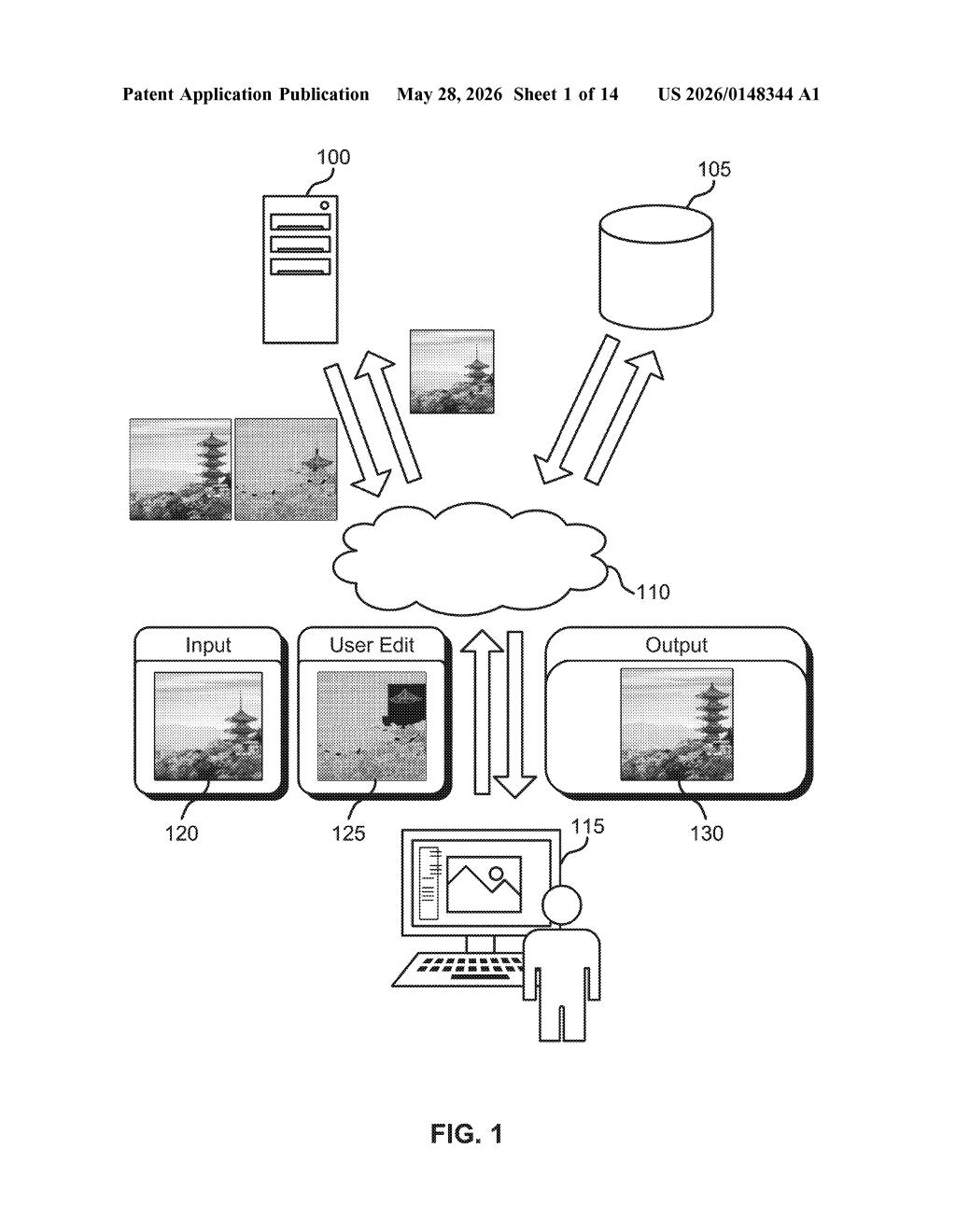
What Adobe's encoded image element editing actually does
Imagine you took a photo of a living room and you want to swap out the couch — not describe the whole room again to an AI, just grab that couch and change it. Today's AI image editors often regenerate the entire image or require careful masking and prompting. Adobe's patent describes a cleaner approach.
The system takes your photo, focuses on a specific region (say, that couch), and encodes it into a compact representation called an image element. You can then apply a transformation to that element — changing its color, shape, or style — and the AI's decoder regenerates just that part of the scene with the modification baked in.
The key idea is that each region of your image gets its own encoded token, so edits stay local and controlled. You're not rewriting the whole scene prompt — you're tweaking a discrete piece of the model's internal representation of your photo.
How the encoder-transformer-decoder pipeline works
The patent describes a pipeline built around a standard encoder-decoder image generation model — think of the encoder as a translator that converts pixels into abstract math, and the decoder as the artist who turns that math back into pixels.
Here's what makes this different from typical diffusion-based editing:
- The encoder processes a specific region of the image (not the whole thing) and produces a first encoded image element — a compact internal representation of the object in that region.
- A transformation is applied directly to that encoded element. This transformation encodes the desired modification — rotation, recoloring, style change, whatever — at the latent level before any pixels are generated.
- The decoder then synthesizes an edited image using the transformed element, producing a result where the object in that region reflects the change while the rest of the scene is preserved.
The approach sidesteps a common problem with generative models: when you ask them to change one thing, they often inadvertently change everything. By isolating the editable element at the encoding stage and operating on it before decoding, the model has a much tighter handle on what should and shouldn't change. The claim language also implies multiple regions could be encoded as separate elements, suggesting composable, multi-object edits.
What this means for AI-powered photo editing tools
For Adobe Firefly and products like Photoshop's generative fill, controllability is the ongoing challenge. Users want surgical edits — change the shirt color, not the lighting. This patent describes an architectural approach that could make those edits more reliable by working at the representation level, not just through masking or text prompting.
From a competitive angle, Adobe is staking out IP in how you structure an editing model's internals — not just the outputs. If encoded image elements become a standard building block for controllable generation, having this patent gives Adobe leverage over anyone else building similar region-based editing pipelines.
This is solid, focused IP in a real problem area: keeping AI image edits local and predictable. It's not a flashy consumer feature announcement — it's Adobe quietly locking down an architectural approach to controllable generation that could underpin the next generation of Firefly editing tools. Worth tracking, especially as competitors like Google and Stability race toward similar region-aware editing systems.
There are more where this came from
We read every patent application Big Tech publishes and send you the ones worth knowing. Plain English, free, every week.
Want this weekly breakdown for a company we don't cover? Patentlyze Pro →