
Samsung Patents a Way to Sync Garbage Collection Across Multiple SSDs
Every SSD periodically stops to do housekeeping — and when multiple drives do it at different times, your system stutters unpredictably. Samsung's new patent tries to fix that by getting all your drives to clean up at the same time.
What Samsung's synchronized SSD cleanup actually does
Imagine you have two SSDs in your PC or server. Every so often, each one pauses its normal work to do internal cleanup — reorganizing data so there's room for new writes. This is called garbage collection, and when it happens, your drive temporarily slows down. The problem? When you have multiple drives, they each decide on their own when to do this cleanup, so slowdowns hit at unpredictable, staggered moments.
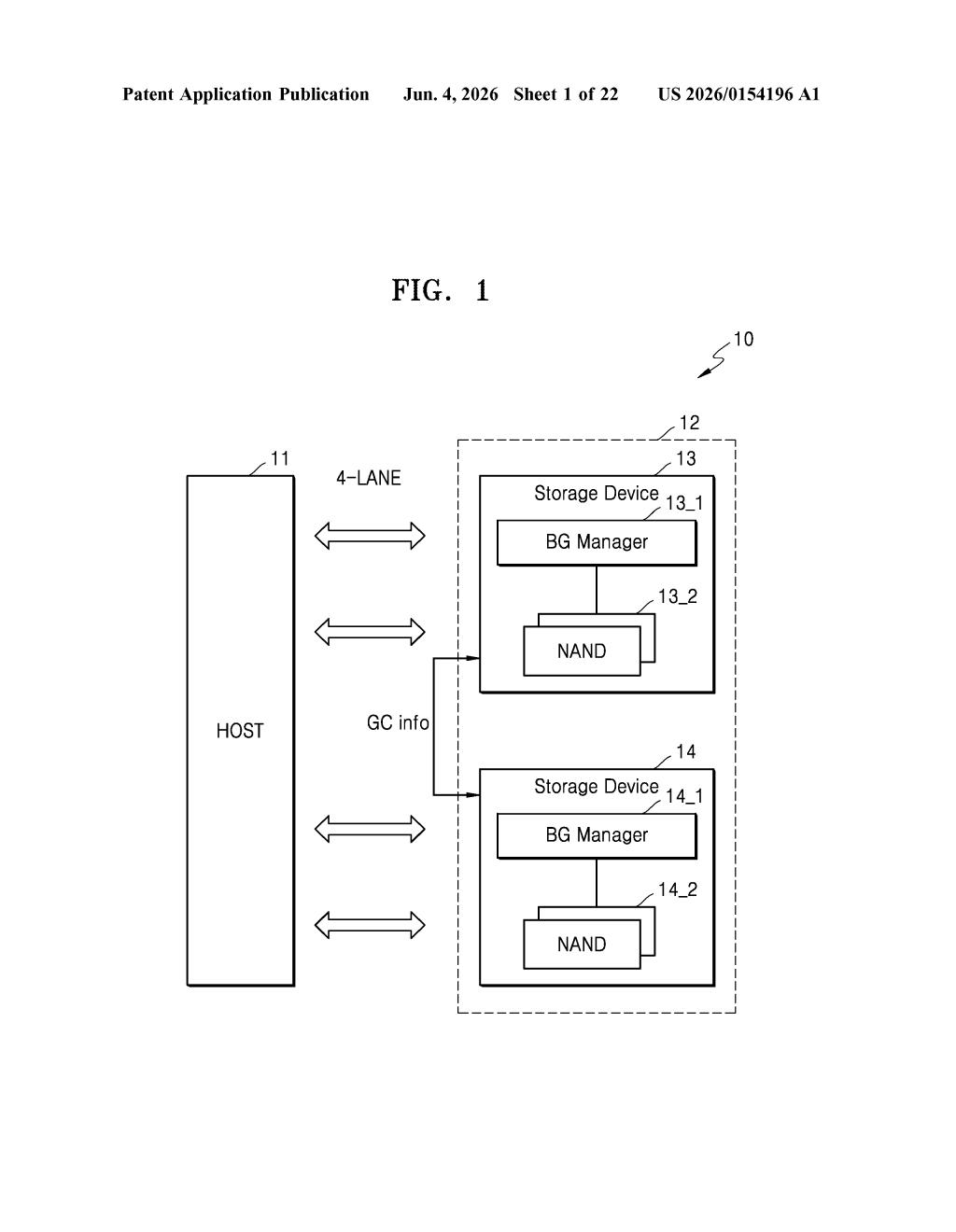
Samsung's patent describes a way to make drives coordinate their cleanup schedules through the host system. When the first drive starts its garbage collection, it piggybacks a small notification onto the data it sends to the host. The host then passes that signal along to the second drive, which kicks off its own cleanup at the same time.
The result: instead of random, scattered slowdowns, both drives slow down together — once — and then both come back up to full speed together. For servers running lots of drives, this kind of coordination could make storage performance much more predictable.
How GC timing signals travel between Samsung's storage devices
The patent describes a storage system where two or more SSDs share background-operation timing information by piggybacking metadata onto normal data transfers through the host.
Here's the flow the patent lays out:
- The first storage device triggers a garbage collection (GC) operation — the process of erasing and reorganizing NAND flash memory blocks to free up writable space.
- While sending regular data to the host, the first device embeds GC information (essentially a status flag about what background work it's doing) inside that outgoing data stream.
- The host receives this bundled data and forwards it — including the embedded GC signal — to the second storage device.
- The second device extracts that GC metadata and uses it to synchronize its own garbage collection, starting its cleanup cycle to overlap with the first device's.
The patent also notes that while a background operation is running, each device adjusts its performance level — essentially throttling how aggressively it responds to host requests — based on what the shared background-info signal says. This means both devices can throttle in a coordinated, predictable way rather than independently and randomly.
What this means for multi-drive storage performance
Multi-drive storage setups — from enterprise NVMe arrays to consumer RAID configurations — suffer from what you might call janky stutter: because each drive manages its own internal housekeeping independently, slowdowns arrive in an unpredictable, overlapping pattern that's hard for the host system to plan around. Coordinated GC means the system can treat the performance dip as a single, predictable event instead of a series of random ones.
For Samsung, which sells both consumer SSDs (the 990 Pro line) and enterprise storage solutions, this kind of firmware-level coordination is a differentiator that doesn't require new hardware — it's a protocol and signaling improvement. If this makes it into shipping firmware, dense NVMe configurations in data centers and high-end workstations would be the most obvious beneficiaries.
This is genuinely useful infrastructure work, not a flashy headline grabber. The insight — that drives can use the host as a message-passing relay to coordinate their internal schedules — is elegant precisely because it doesn't require a new communication bus or direct drive-to-drive link. Whether Samsung can standardize this signaling across its product lines is the real execution question.
There are more where this came from
We read every patent application Big Tech publishes and send you the ones worth knowing. Plain English, free, every week.
Want this weekly breakdown for a company we don't cover? Patentlyze Pro →