
Tesla Patents a Rear Wing That Hides Until the Car Needs It
Tesla's latest patent describes a rear wing that stays completely hidden inside the car's bodywork until the car's computer decides it needs more grip or less drag, then raises and tilts itself automatically.
What Tesla's pop-up rear wing actually does for drivers
Ever watched a sports car and wondered why some have big rear wings while others look totally clean? That wing creates downforce, pressing the car into the road at high speed for better grip, but it also creates drag that slows you down when you don't need it.
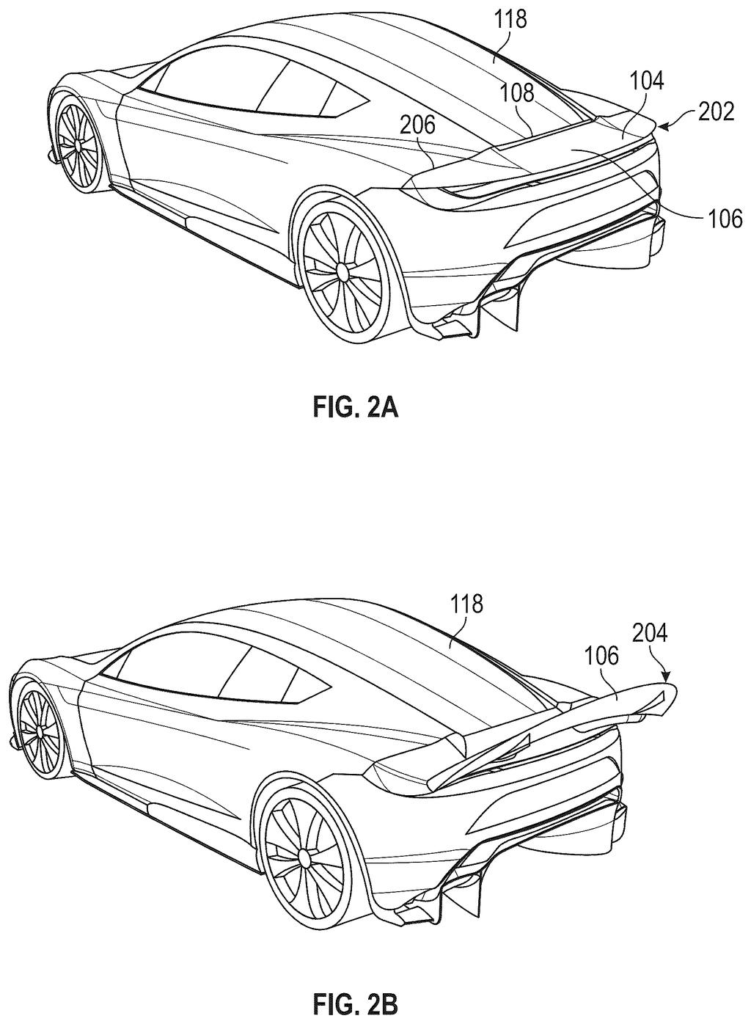
Tesla's new patent describes a rear wing that solves both problems at once. When you're cruising normally, the wing sits completely flush with the car's rear body panel, invisible. A hidden slat piece tucks underneath so you'd never know it was there. When the car decides it needs more traction or aerodynamic help, the whole wing rises up and then tilts to exactly the right angle, all without you touching anything.
The car's computer makes those decisions in real time, reading your speed, steering input, and other driving data. The patent also mentions safety features to protect pedestrians or objects if the wing makes contact, which is a detail regulators increasingly care about.
a stowed position in which the main wing element blends with a rear panel of a vehicle and the leading edge slat element is concealed under the rear panel of the vehicle …
Translation: When not in use, the spoiler tucks away completely flush with the car body.
How the wing deploys, tilts, and reads driving conditions
The patent describes a multi-element wing assembly made up of two parts: a main wing element and a leading edge slat (a secondary aerodynamic surface that sits in front of the main wing, similar to what you see on aircraft). Together they produce more downforce than a single-piece wing of the same size.
A deployment mechanism physically raises the entire assembly away from the car body. In its stowed position, the main wing blends with the rear panel so cleanly it disappears, while the slat hides underneath the body. Once deployed, a separate rotation mechanism tilts the whole wing to adjust its angle of attack (the angle at which air hits the wing surface, which controls the balance between downforce and drag).
A controller manages both mechanisms together in real time, reading vehicle operating parameters like:
- Current speed
- Steering angle or cornering load
- Braking events
- Driver or drive-mode inputs
The patent also highlights safety features designed to handle impacts, either absorbing a collision or allowing the wing to give way rather than rigidly resist. That addresses real-world regulatory concerns about deployable external components.
The wing assembly provides enhanced aerodynamic performance while maintaining vehicle styling and incorporating safety features for impact protection.
Translation: It improves high speed handling without ruining the look or failing pedestrian safety tests.
What this means for Tesla performance car buyers
For a driver, the payoff is a car that handles better at speed without looking like a race car in a parking lot. Active aerodynamics have existed on cars like the Porsche 911 Turbo and some McLarens for years, but they tend to be expensive and visible. A system that completely conceals the wing at rest is a different proposition, one that fits Tesla's preference for clean exterior styling.
Several Tesla filings on active aerodynamics this year suggest this is part of a broader push toward vehicles that automatically tune their own physics rather than asking the driver to choose a mode. The safety-impact language in the patent is worth noting too: it signals Tesla is designing for regulatory approval, not just engineering novelty, which makes production more plausible.
Tesla's 36th filing in our Tesla coverage since May adds to a pattern that includes a blind spot camera reader and a map of still objects.
The wing tucks flat against the car when you don't need it and rises automatically when you're pushing hard through corners. You never touch a button, and the car in your driveway looks clean.
The safety piece matters more than it sounds. The wing is built to behave predictably if it gets hit, which is what allows a feature like this to pass the tests required to reach a real car rather than staying on a concept.
Most drivers would simply feel better grip at speed and never think about the mechanism delivering it. That's the intended outcome, and it's a reasonable measure of whether something like this actually works.
There are more where this came from
We read every patent application Big Tech publishes and send you the ones worth knowing. Plain English, free, every week.
The drawings
15 drawing sheets from US 2026/0285418 A1 · click any drawing to enlarge


Want this weekly breakdown for a company we don't cover? Patentlyze Pro →
Be the first to weigh in