
Intel Patents Technology That Gives AI Tasks Faster Direct Access to Chips
Intel has filed a patent for a scheduling system that lets AI workloads skip the usual software middleman and talk directly to hardware resources. It's an infrastructure play, and a fairly dry one.
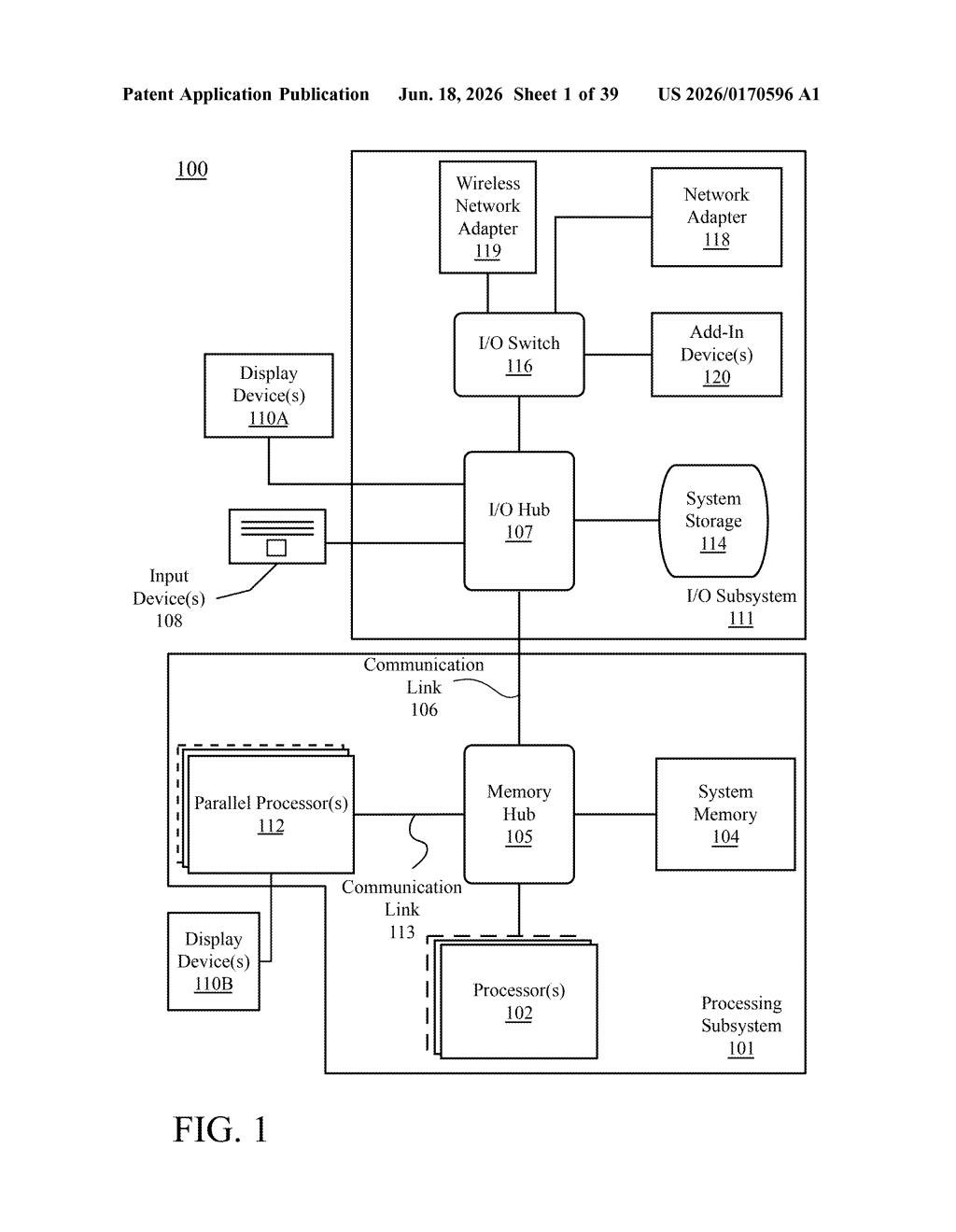
What Intel's AI workload scheduler actually does
Imagine a busy airport where every flight has to check in through a single overworked desk before getting a gate. That bottleneck slows everything down even when gates are sitting empty. Intel's patent describes a way to cut out that desk.
The idea is that AI processing jobs — called workloads — can be handed directly to the hardware doing the computing, rather than being routed through extra layers of software. A piece of logic built into the system decides who gets access to the hardware and when.
In plain terms, Intel is trying to make the line shorter so AI jobs get processed faster and more efficiently. It's not a flashy feature you'd ever see on a spec sheet, but this kind of low-level scheduling work is what determines how well a chip actually performs under real conditions.
How the hardware scheduling logic routes AI jobs
The patent describes an apparatus for workload scheduling — a hardware-plus-logic system designed to manage how AI computation jobs are queued and executed.
The core components are:
- One or more clients — the software or applications submitting AI jobs to be processed
- Processing units — the actual hardware doing the computation (think AI accelerator cores or similar silicon)
- Scheduling logic — the decision-making layer that determines which client gets access to which hardware resource, and when
The key claim is direct access: rather than going through a general-purpose operating system scheduler or a software abstraction layer, clients are granted hardware access more immediately. This reduces the overhead — the wasted time and compute — that accumulates when software has to broker every single transaction between an AI job and the chip running it.
It's worth noting that the first 20 claims of this patent have been canceled, which is a normal part of the patent prosecution process — it often means the scope is being narrowed or rewritten before a final grant.
What this means for AI chip efficiency at scale
For Intel, this is part of a broader effort to make its AI accelerator lineup — including products like Gaudi — more competitive with Nvidia's GPU ecosystem, where low-latency scheduling is a known advantage. Getting AI workloads to hardware faster, with less software friction, directly affects throughput in data centers running large model inference or training jobs.
For end users, this kind of change is invisible but consequential: it's the difference between a cloud AI service that responds in 80 milliseconds versus one that takes 200. Intel is working at the plumbing level, and that's exactly where chip performance races are often won or lost.
This is a routine infrastructure patent covering scheduling logic that Intel almost certainly already has working in some form internally. The canceled claims make it harder to assess the final scope, and the abstract is notably thin on technical detail. It's not worth watching closely unless you follow Intel's AI accelerator roadmap specifically.
There are more where this came from
We read every patent application Big Tech publishes and send you the ones worth knowing. Plain English, free, every week.
Want this weekly breakdown for a company we don't cover? Patentlyze Pro →