
Samsung Patents a Wrist-Gesture System for Controlling Nearby Electronics
Samsung is working on a way to let a wearable device, think a smartwatch or ring, act as a gesture-based remote control for other electronics. No app tapping, no voice commands, just a deliberate wrist flick.
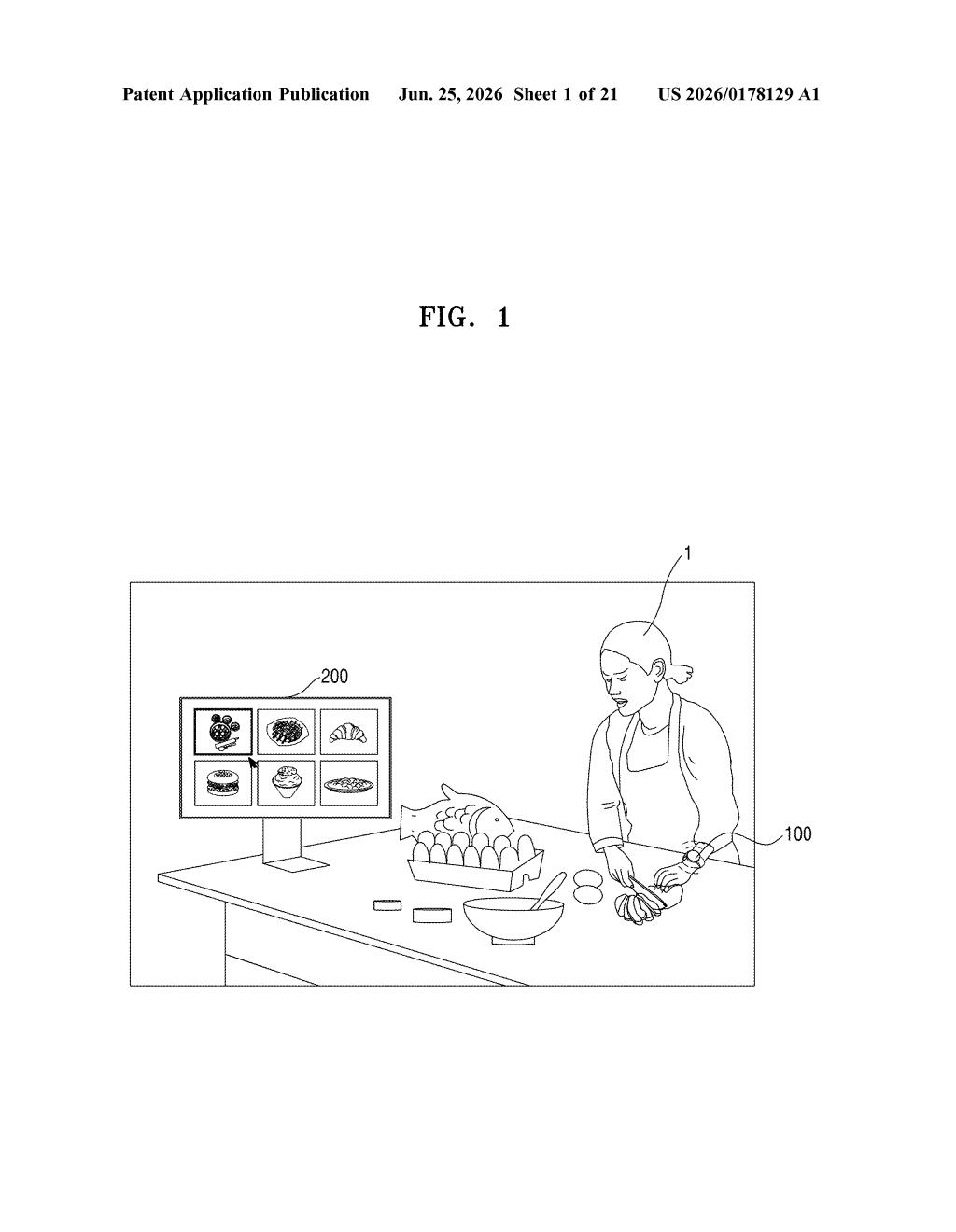
What Samsung's gesture-based remote control actually does
Imagine you're watching TV and want to turn up the volume without reaching for the remote. According to this Samsung patent, a future wearable like a smartwatch could let you do exactly that with a quick, intentional hand gesture.
The system works in two steps. First, you make a specific "trigger" gesture to tell the wearable you're about to give a command, so it doesn't misread every time you scratch your nose. Then, a second motion combined with the direction your wrist is pointing tells the wearable which device you're targeting and what you want it to do.
The wearable then sends a command wirelessly to that device to carry out the action. Think of it like pointing a TV remote, except your wrist is the remote and there are no buttons to press.
How the wearable reads motion and direction to pick a command
The patent describes a two-stage gesture recognition pipeline running on a wearable device (such as a smartwatch or similar sensor-equipped wearable).
- Stage 1 - Trigger gesture: The wearable's onboard sensors (likely accelerometers and gyroscopes) watch for a predefined "first motion" that acts as an activation signal. This prevents the system from accidentally firing commands during normal arm movement.
- Stage 2 - Command gesture: Once activated, the wearable reads a "second motion" alongside the direction the wearable is facing (its orientation in space). The combination of motion type and facing direction maps to a specific operation on a specific device.
- Command transmission: The wearable sends a corresponding control command wirelessly to the target electronic device, which then executes the action.
The facing-direction component is particularly interesting. It implies the system can distinguish between multiple devices in the same room: pointing your wrist toward a TV versus a speaker, for example, could route the same gesture to different devices or trigger different functions.
What this means for Samsung's Galaxy Watch lineup
For Samsung, this is a natural extension of what the Galaxy Watch already does with its Double Pinch gesture (used to answer calls or control media). This patent pushes that concept further, making the wearable a general-purpose remote for any compatible Samsung device in the room, not just the paired phone.
For you as a user, the practical upside is hands-free or low-friction control over TVs, smart home devices, or appliances when your hands are full or a traditional remote is out of reach. The bigger picture here is Samsung tightening the connection across its Galaxy ecosystem, where your watch, phone, TV, and home devices all speak the same gestural language.
This is a logical incremental step for Samsung's ecosystem, not a flashy leap forward. The two-stage trigger-then-command design is smart because it solves the false-positive problem that makes always-on gesture control annoying in practice. Whether it ships as a polished feature or stays a niche toggle in the Galaxy Watch settings menu will depend entirely on Samsung's execution.
There are more where this came from
We read every patent application Big Tech publishes and send you the ones worth knowing. Plain English, free, every week.
Want this weekly breakdown for a company we don't cover? Patentlyze Pro →