
Samsung Patents a System That Sends AI Tasks to the Fastest Available Chip
Not all computing tasks are created equal — some are math-heavy, others constantly shuffle data in and out of memory. Samsung's latest patent describes a way to automatically route each type of task to the processor cores best suited to handle it, squeezing more performance out of the same chip.
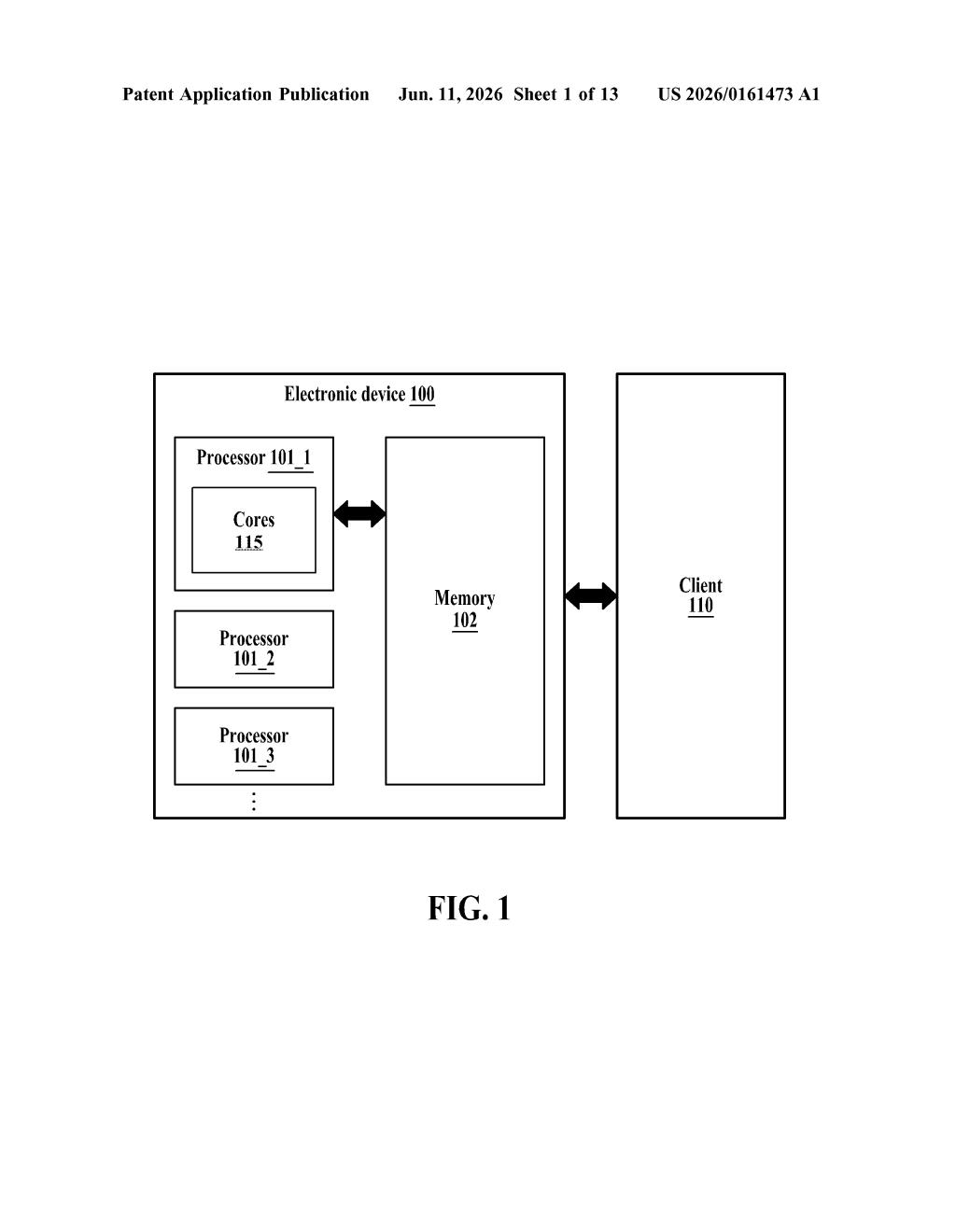
How Samsung splits heavy vs. memory-hungry tasks across cores
Imagine your phone is running an AI feature — say, real-time photo enhancement. Part of that job is doing intense number-crunching; another part is constantly loading and unloading image data from memory. If both tasks compete for the same processor cores, they slow each other down.
Samsung's patent describes a system that recognizes which tasks fall into which category — compute-heavy (lots of math) versus memory-heavy (lots of data shuffling) — and then assigns them to cores in a pre-planned ratio designed specifically for that combination. Instead of all cores doing everything, each core handles what it's actually good at.
The result is that the processor works more like a well-organized assembly line than a crowded kitchen with too many cooks. You'd notice this as faster AI responses, smoother performance, or better battery life — depending on how Samsung applies it.
How the core allocation ratio gets matched to fused functions
The patent describes a processor architecture that groups tasks into what Samsung calls fused functions — pre-configured pairings of two task types:
- Compute-bound functions: tasks where the math itself takes longer than loading the data (e.g., matrix multiplications common in AI inference)
- Memory-bound functions: tasks where pulling data in and out of memory is the bottleneck (e.g., reading large activation tables or weight matrices)
When the device needs to run a task, it first checks whether that task matches one of the pre-catalogued fused function patterns. If it does, the processor applies a core allocation ratio — a preset formula for how many cores should handle the compute-heavy side versus the memory-heavy side.
Critically, this applies to independent input batches — meaning separate chunks of data that don't depend on each other's results. That independence is what makes it safe to split them across different core groups simultaneously without causing errors.
This kind of workload-aware scheduling (directing tasks based on what they actually demand from hardware) is especially relevant for the neural network operations that power on-device AI features.
What this means for AI performance on Samsung devices
On-device AI is getting more demanding, and chipmakers are under pressure to deliver better performance without simply adding more cores or burning more battery. A system that pre-matches task types to core configurations can reduce the wasted time cores spend waiting — either for math to finish or for data to arrive — which is one of the main reasons AI workloads run slower than they theoretically should.
For Samsung Galaxy users, this could translate to snappier AI camera processing, faster on-device translation, or more efficient background tasks — all without requiring a bigger chip. It's the kind of low-level optimization that rarely makes a spec sheet but shows up clearly in real-world use.
This is solid, unglamorous chip-scheduling work — the kind of optimization that actually matters for making AI feel fast on a phone without destroying battery life. It's not a headline feature, but if Samsung ships this in Exynos or its NPU stack, it could meaningfully close the gap with Apple's tightly integrated chip-software stack. Worth filing.
There are more where this came from
We read every patent application Big Tech publishes and send you the ones worth knowing. Plain English, free, every week.
Want this weekly breakdown for a company we don't cover? Patentlyze Pro →