
AMD Patents a GPU That Switches Graphics Cores On and Off Per App
AMD is patenting a way for its GPUs to quietly spin up or down their own graphics cores depending on what you're running — so a spreadsheet doesn't burn the same power as a AAA game.
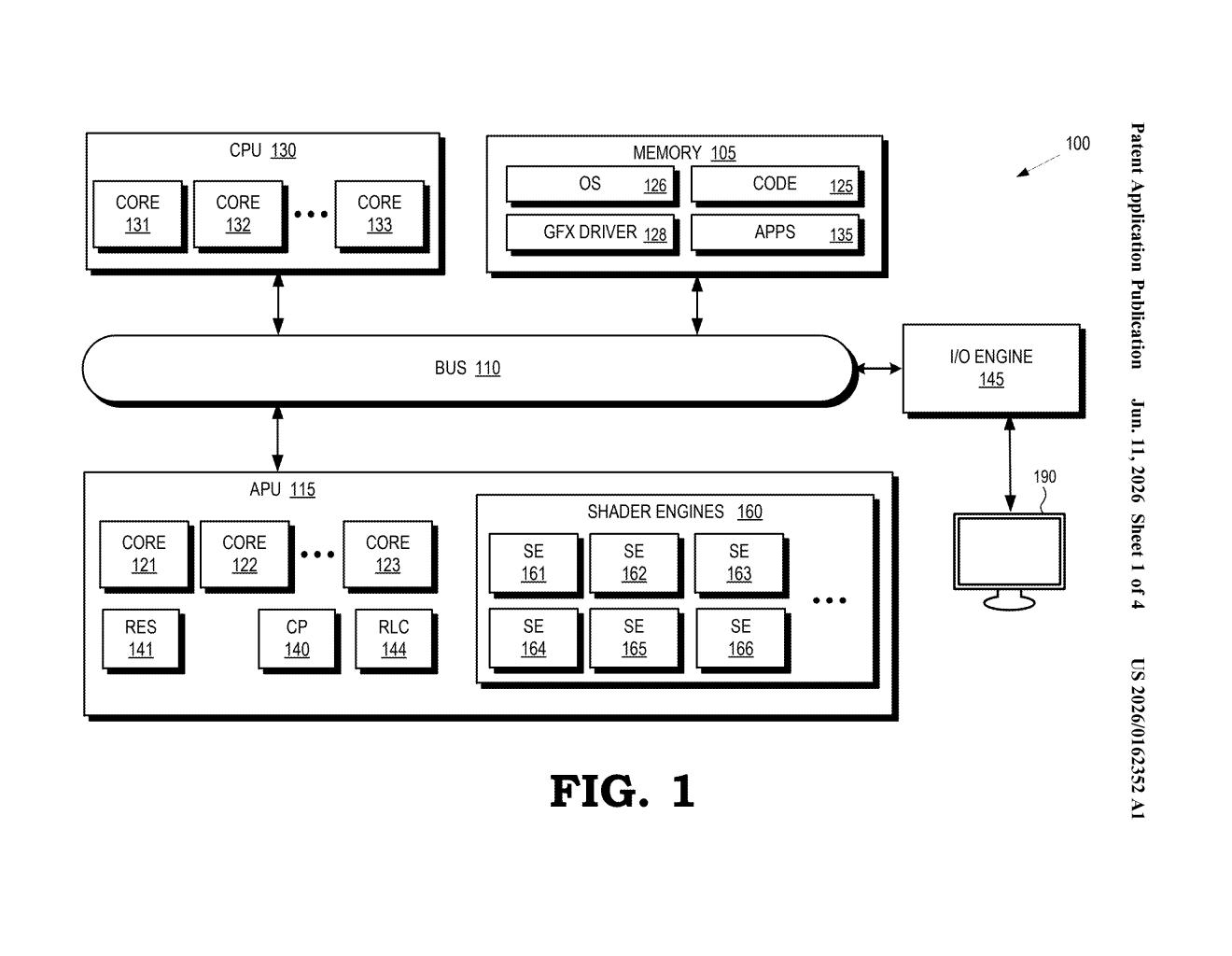
What AMD's per-app GPU power scaling actually does
Think about how your laptop fan ramps up when you open a game but stays quiet while you're browsing the web. AMD's patent applies that same idea directly inside the graphics chip itself.
Instead of running all of the GPU's graphics-processing cores at full tilt all the time, this system looks at which app is in the foreground and activates only as many cores as that app actually needs. A video player might wake up a small slice; a demanding 3D game wakes up the whole chip. The selection can also respond to power limits — if your laptop is running on battery or in a quiet thermal mode, the chip holds back automatically.
The result is a GPU that's constantly right-sizing itself. You get more battery life during light work, and the full performance headroom is still there the moment you need it — without you having to touch any settings.
How AMD's driver decides which shader engines to activate
Modern AMD GPUs contain multiple shader engines — the clusters of cores that handle the heavy math behind rendering images and running 3D simulations. Normally, power management happens at a coarse level: the whole chip clocks up or down together. This patent describes a finer-grained approach where individual shader engines can be selectively activated or deactivated at runtime.
The driver receives instructions from a running application and checks that app against a stored application profile — essentially a lookup table that says how many shader engines a given program typically needs. Based on that profile, the driver sets the number of active engines to match the workload rather than leaving them all on.
Two additional triggers can also change the active count:
- A second application coming into the foreground with its own profile (e.g., switching from a browser to a game)
- A change in the system power configuration — such as unplugging from AC power, entering a battery-saver mode, or hitting a thermal limit
The patent covers the logic for both scaling up and scaling down, meaning the system can respond in either direction dynamically — more engines when demand rises, fewer when it falls — without requiring a full driver reload or user intervention.
What this means for laptop and handheld AMD graphics
This matters most for AMD-powered laptops and handheld gaming PCs — devices like the Steam Deck's successors or thin-and-light machines where every watt of GPU power has a direct cost in battery life and heat. If the GPU can shed unused shader engines during light tasks, the chip runs cooler and quieter without any tradeoff when gaming begins.
For desktop users the gains are more modest, but the patent still points to AMD building more granular workload-aware power controls into its GPU driver stack. Over time, that kind of per-app intelligence could narrow the efficiency gap between discrete graphics cards and the power-optimized integrated chips Apple and Qualcomm have made central to their silicon stories.
This is unglamorous but genuinely useful engineering. Fine-grained GPU power gating is one of the clearest remaining levers AMD has to close the efficiency gap with Apple Silicon on battery life, and the per-app profile approach is smarter than a blanket power limit. It's worth paying attention to, especially if AMD's next mobile APU generation ends up shipping with it.
There are more where this came from
We read every patent application Big Tech publishes and send you the ones worth knowing. Plain English, free, every week.
Want this weekly breakdown for a company we don't cover? Patentlyze Pro →