
Microsoft Patents a Hidden Chat Channel That Only Meeting Organizers Can See
Ever wished you could whisper to your co-host mid-meeting without the whole room watching? Microsoft is patenting exactly that — a private chat thread woven directly into a meeting that only organizers and presenters can see.
What Microsoft's organizer-only chat actually does
Picture this: you're co-hosting a big all-hands meeting and something goes sideways with the agenda. Right now, your only options are to send a frantic text outside the app or hope your co-host notices your pained expression on camera.
Microsoft's patent describes a private chat thread built into the meeting itself — visible only to people with designated roles like organizer or presenter. Attendees join the same call but never see this side channel. No awkward context-switching, no separate group text to set up beforehand.
The system is also designed to surface this organizer chat automatically inside the meeting window, so you don't have to go hunting through menus mid-call. You'd access it directly from the meeting interface, the same way you'd pull up a regular chat — it just happens to be invisible to everyone else in the room.
How two meeting objects keep the private thread locked down
The patent describes a two-object architecture that controls who can read and write to which message thread.
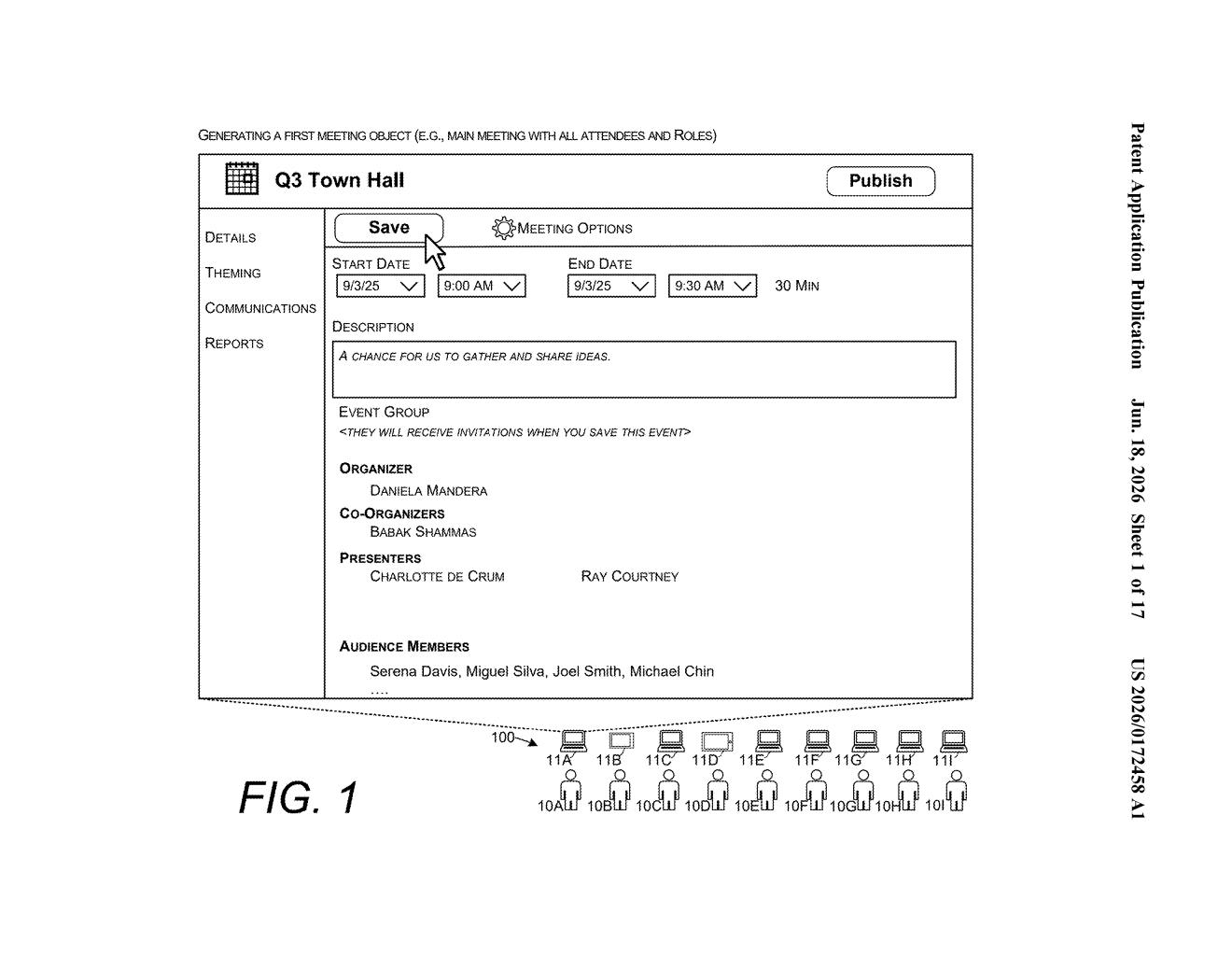
When a meeting invite is created, the system generates a first meeting object — essentially a data record that defines every participant and their role (organizer, presenter, attendee). From that, it automatically spins up a second meeting object containing only the users flagged as organizers or presenters. This second object carries strict permissions: only those subset users can send or receive messages on the private thread.
A data structure (think of it as a link or bridge record) ties the two meeting objects together. During the live call, the system consults that link to decide what each person's meeting interface shows. Organizer devices get the private thread displayed inline. Everyone else's interface stays clean — they never see the thread, and can't interact with it.
- First meeting object: full participant list with role definitions
- Second meeting object: organizer/presenter subset with restricted permissions
- Data structure: the bridge that lets the live meeting surface the right thread to the right people
The private thread also exists outside the meeting itself — organizers can access it before the call starts, making it useful for pre-meeting coordination too.
What this means for Teams users running large meetings
For anyone who regularly runs webinars, town halls, or large team meetings, this solves a genuinely annoying coordination problem. Today's tools — including Microsoft Teams — don't have a clean native way to give organizers a shared back-channel that lives inside the meeting. People cobble together workarounds with side texts or separate group chats, which means juggling multiple windows mid-call.
This patent points toward a Teams feature that would make meeting production feel more like a broadcast control room. If it ships, you'd get a dedicated space to coordinate last-minute changes, troubleshoot tech issues, or flag questions — all without breaking the flow of the meeting for your audience.
This is one of those patents where the idea is obvious in retrospect — of course organizers need a private back-channel — but the implementation details (two meeting objects, a linking data structure, role-gated permissions) suggest Microsoft has thought through the plumbing carefully. It's not a flashy concept, but it's the kind of quality-of-life fix that actually changes how you run a meeting. Worth watching for a Teams rollout.
There are more where this came from
We read every patent application Big Tech publishes and send you the ones worth knowing. Plain English, free, every week.
Want this weekly breakdown for a company we don't cover? Patentlyze Pro →