
Nvidia Patents a Multi-Sensor System for Automatically Controlling a Self-Driving Car's Lights
Knowing when to switch on your headlights sounds trivial — until you're a self-driving car navigating a tunnel, an overcast highway, and a sunlit intersection all in the same trip. Nvidia's latest patent describes a way to make that call automatically, using multiple sensors that cross-check each other.
How Nvidia's self-driving cars decide when to turn on their lights
Imagine a self-driving car approaching a dim parking garage mid-afternoon. The sky outside is still bright, but the inside of the garage is dark. A single light sensor mounted on the car might get confused — reading the overall brightness as "daytime" and keeping the headlights off even though the car and its cameras really need them on.
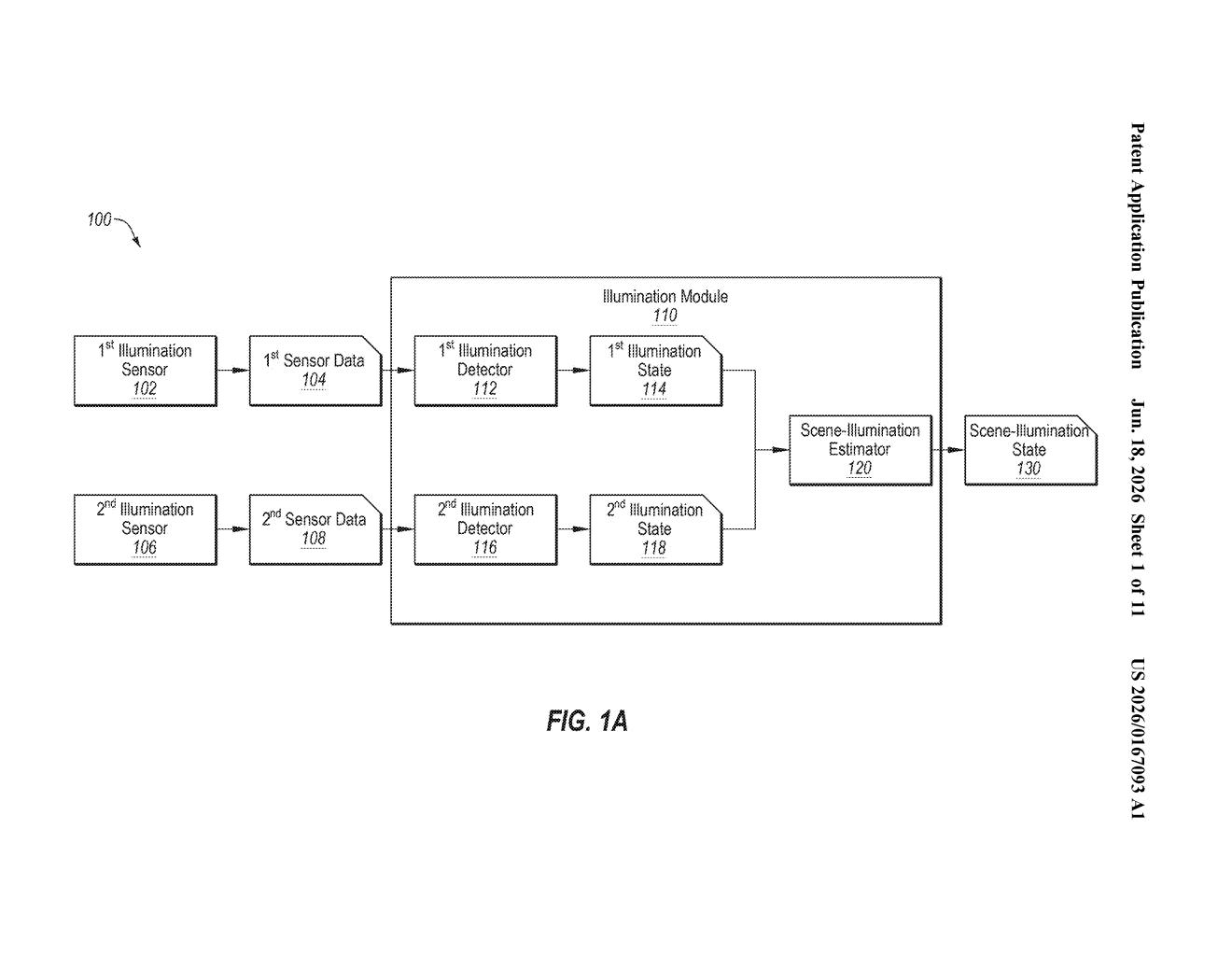
Nvidia's patent tackles this by using two or more separate light sensors on the vehicle, each measuring the brightness of the surrounding environment independently. The system then combines those readings to figure out the true lighting situation — something Nvidia calls the "scene illumination state" — and uses that to decide whether to turn lights on, off, or adjust their intensity.
The goal is to give autonomous vehicles a more reliable way to handle the kind of tricky, mixed-lighting situations that confuse simpler systems. Better lighting decisions also help the car's own cameras see more clearly, which matters for everything from lane detection to spotting pedestrians.
How two sensors combine to read scene brightness
The patent describes a vehicle-mounted system that reads ambient light using at least two external illumination detectors — think of them like a pair of light meters placed at different spots on the vehicle. Each sensor independently produces an "illumination level" reading for the area around the car.
Those two readings are then compared or combined to arrive at a scene illumination state — a single assessment of whether the environment is bright, dark, or somewhere in between. Using two sensors instead of one adds redundancy: if one sensor is temporarily blinded by a direct light source (like oncoming headlights), the other can still provide a usable reading.
Once the system has a scene illumination state, it feeds that into a control loop that manages one or more lights on the machine — whether headlights, running lights, or other lighting components. The patent also lists an extensive on-chip hardware stack backing this up:
- Deep learning accelerators and vision engines for processing sensor data
- Image signal processors and camera engines for interpreting visual input
- Safety controllers to ensure decisions meet redundancy requirements
- GPUs and CPUs for general compute and orchestration
While the patent speaks broadly about "machines," the sensor types and hardware lineup point squarely at autonomous or semi-autonomous vehicles.
What this means for autonomous vehicle safety at night
Lighting control might sound like a solved problem — cars have had automatic headlights for decades — but autonomous vehicles have a higher bar to clear. Their onboard cameras and perception systems are sensitive to lighting in ways human eyes aren't: too little light and object detection degrades; too much glare and lane markings wash out. Getting lighting right isn't just about legal compliance, it directly affects how well the car can see.
Using two sensors to cross-check each other is also a nod to the functional safety standards (like ISO 26262) that autonomous vehicle systems must meet. A single-point sensor failure shouldn't cause the lights to behave unpredictably. For Nvidia's DRIVE platform, which powers a growing number of automakers' autonomous systems, baking reliable lighting logic directly into the chip architecture is a sensible move.
This is quiet but practical engineering — not the kind of patent that makes headlines, but exactly the sort of thing that separates a safe autonomous system from a mediocre one. Lighting control is a real edge-case problem in AV development, and the multi-sensor redundancy approach is genuinely sensible. Don't expect a product announcement, but do expect something like this to show up in Nvidia's DRIVE platform documentation eventually.
There are more where this came from
We read every patent application Big Tech publishes and send you the ones worth knowing. Plain English, free, every week.
Want this weekly breakdown for a company we don't cover? Patentlyze Pro →