
Samsung's New Patent Fixes the Mismatched Tiles on Giant LED Video Walls
Ever noticed how a big LED video wall sometimes looks like it was assembled from mismatched parts — some tiles brighter, some with a slight color shift? Samsung's new patent is specifically designed to fix that.
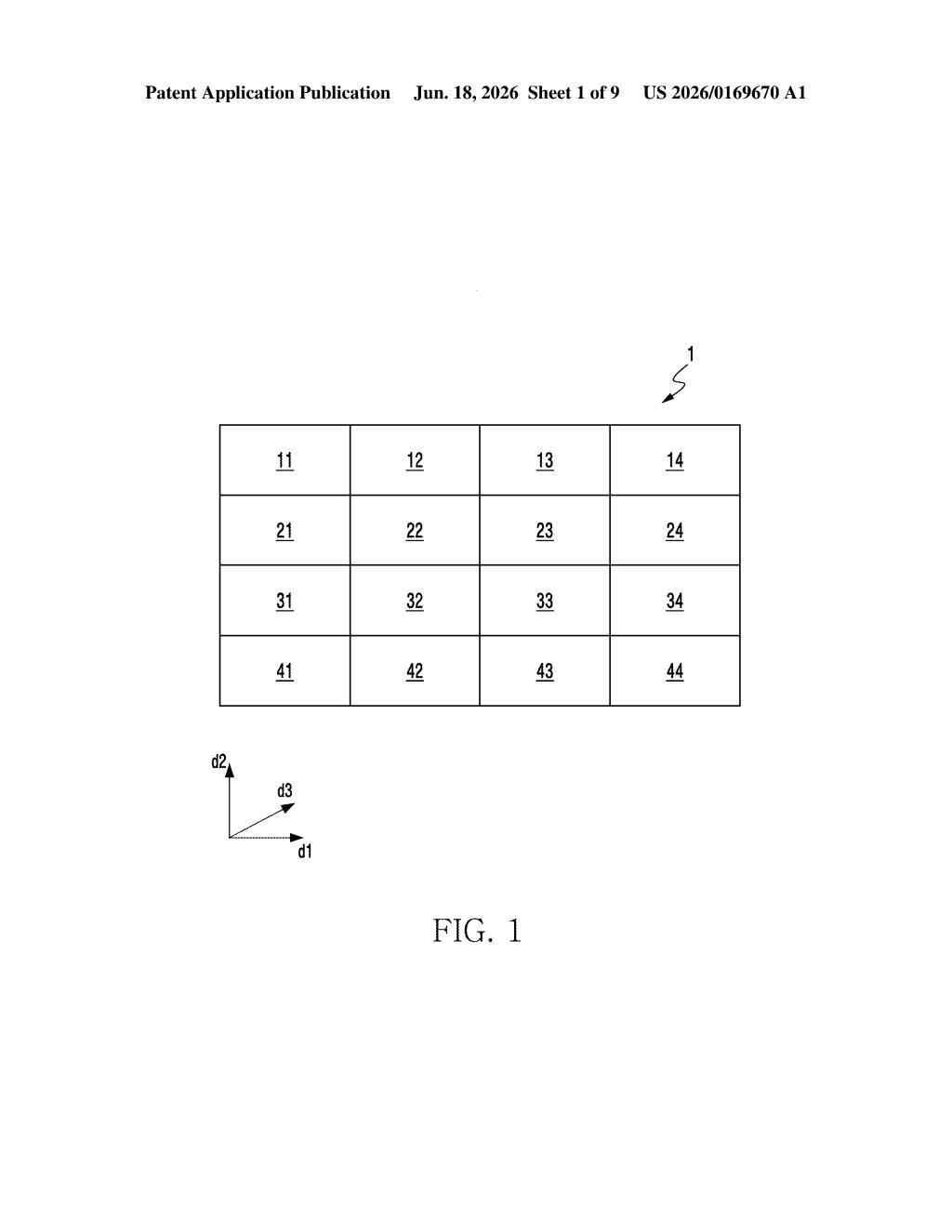
What Samsung's angle-matching display grid actually does
Imagine a giant display wall built from dozens of individual screen tiles — the kind you see in sports arenas, retail stores, or broadcast studios. Each tile is manufactured separately, and no two are exactly identical. So when you look at the wall from an angle, some tiles might look slightly blue while others look slightly yellow. The result is a screen that looks more like a checkerboard than a single cohesive image.
Samsung's patent describes a way to sort and arrange those tiles so that any color or brightness shift you see when viewing from an angle changes gradually and evenly across the whole wall — rather than jumping randomly from tile to tile. Think of it like arranging paint swatches from lightest to darkest so the transition looks intentional, not chaotic.
The key idea is measuring each tile's color or brightness from two different viewing angles, calculating the difference, and then placing tiles so those differences progress smoothly across the display. The viewer gets a much more consistent picture regardless of where they're standing.
How Samsung sorts panels by their viewing-angle drift
The patent covers a modular display device — a large screen built from multiple individual display panels (called modules) tiled together. The core problem it addresses is called viewing-angle variance: the fact that a display panel's color and brightness can look different depending on whether you're looking at it straight-on versus from the side.
Each module gets two measurements of the same optical characteristic (such as color temperature, luminance, or white balance):
- A reading taken from a first direction (typically straight ahead)
- A reading taken from a second direction (an off-axis angle)
The difference between those two readings is the module's angular drift score. Samsung's method then arranges the modules in the assembled wall so that those drift scores change at a specified rate or less — meaning no two neighboring tiles have a dramatically different angular behavior. The shift across the wall becomes gradual enough that the human eye reads it as natural variation rather than a manufacturing defect.
The approach is essentially a sorting and placement algorithm applied at the factory or installation stage, rather than a real-time software correction. It works by controlling the physical arrangement of hardware, not by adjusting pixel values electronically.
What this means for stadium screens and retail LED walls
Large-format modular displays are everywhere — from the LED ribbons wrapping NBA arenas to the video walls behind TV news anchors to the massive outdoor billboards in Times Square. Keeping them looking consistent is a constant headache for installers, because panel-to-panel variation is unavoidable at scale. A fix baked into the assembly process rather than bolted on as a post-install calibration hack is genuinely useful.
For Samsung, which sells display hardware to venues, broadcasters, and enterprises through its commercial display division, this kind of manufacturing-level quality control is a real competitive differentiator. If your screens look more uniform out of the box, you win the installation contract. Viewers benefit too — you get a more consistent image whether you're in the front row or the nosebleeds.
This is a focused, practical patent that solves a real and well-known problem in commercial display installation. It's not flashy AI — it's the kind of careful manufacturing process work that actually determines whether a $500,000 LED wall looks great or looks cheap. Worth paying attention to if you follow the commercial display market.
There are more where this came from
We read every patent application Big Tech publishes and send you the ones worth knowing. Plain English, free, every week.
Want this weekly breakdown for a company we don't cover? Patentlyze Pro →