
Google Patent Reveals Robotaxis That Predict Open Parking Spots Before They Fill
Finding a parking spot is hard enough for a human driver. For a self-driving car that needs to hold position without circling the block forever, it's a genuinely difficult coordination problem. Waymo's new patent tackles it by turning the entire fleet into a shared set of eyes.
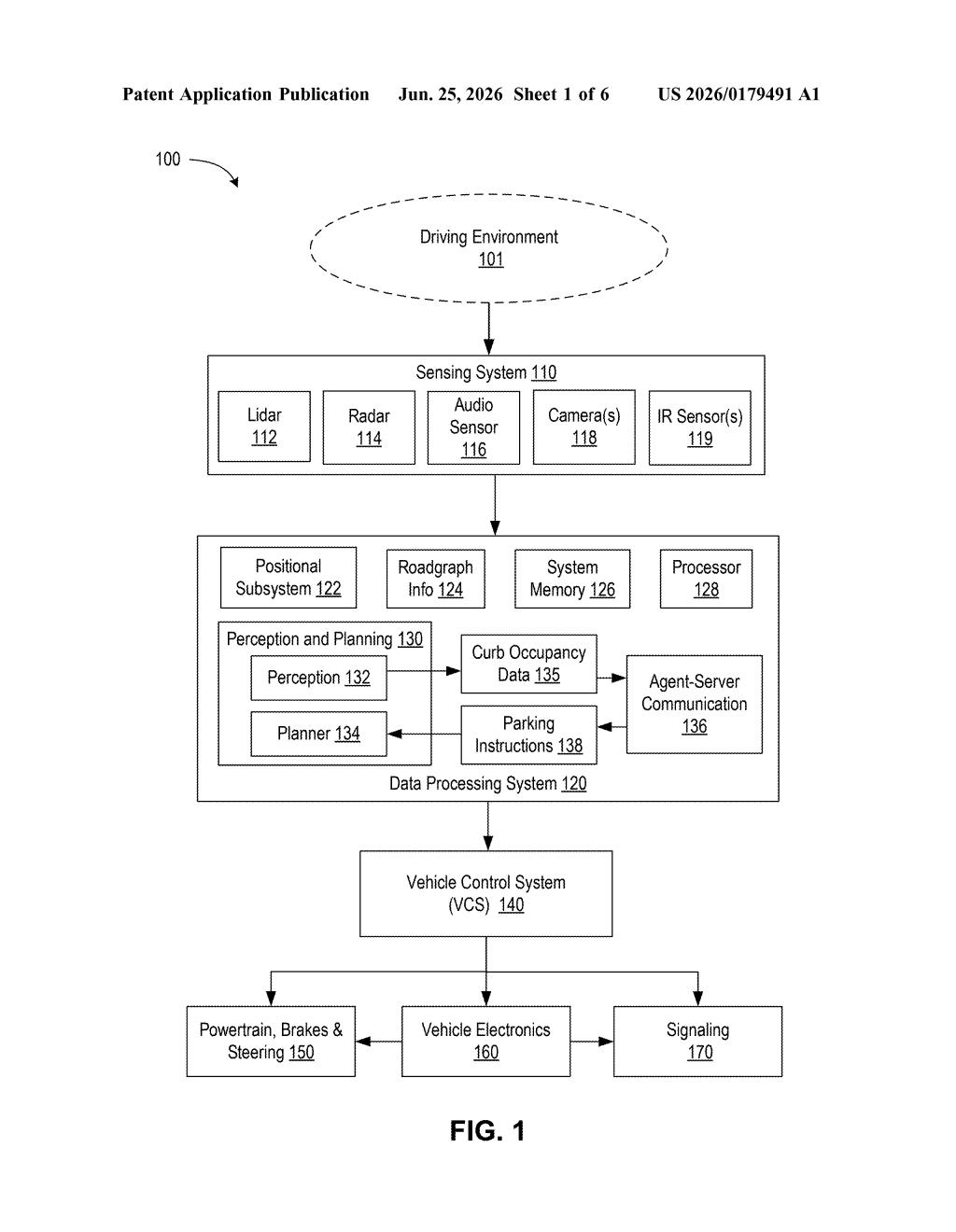
How Waymo's robotaxis share parking intelligence
Imagine trying to park in a busy downtown area, but instead of just driving around hoping to spot an open space, your car could check what every other Waymo vehicle in the area had seen in the last few minutes. That's roughly the idea here.
Waymo's system has each robotaxi in the fleet report back what its sensors spotted near the edges of the road: parked cars, objects blocking curbs, open stretches of space. That data feeds into a shared live map of parking availability across the whole service area. The system also pulls in historical patterns, so it knows, for example, that a particular block tends to clear out around 6 p.m.
Putting those two data sources together, the system calculates the odds that a specific parking spot will still be empty by the time a vehicle arrives. Then it sends the car to the spot most likely to actually work out. It's less about reacting to what's open right now and more about predicting what will still be open in a minute or two.
How the fleet builds a live parking map in real time
The patent describes a central system that continuously ingests sensor reports from every Waymo autonomous vehicle operating in a given area. Each vehicle contributes two key pieces of information: what objects it detected near the edge of the road (parked cars, delivery trucks, cones, people standing at curbs), and how well its sensors could actually see that edge at the time.
That second piece, called edge visibility data, is important. If a vehicle's sensors were partially blocked by a bus, the system knows to treat that report as incomplete rather than assuming the space was empty. This helps prevent the map from being polluted by false "open spot" signals.
The live occupancy map gets updated continuously as new reports come in. The system then combines that live picture with historical parking availability data (essentially, patterns from past days and times) to calculate a probability score for each parking space. The score represents how likely that space is to remain unoccupied within a specific window of time.
Based on those probability scores, the system routes an individual vehicle to the best available candidate. The whole loop, from sensor report to routing decision, is designed to run across a fleet simultaneously, not just for a single car trying to park on its own.
What this means for robotaxi pickup and drop-off
For Waymo's commercial robotaxi service, parking and curbside positioning are practical bottlenecks. A car that can't reliably find a spot to pull over when a passenger needs to be dropped off, or when the vehicle needs to wait between rides, creates real delays and inefficiencies. A fleet-wide prediction system directly reduces the time each car spends searching.
The broader implication is that fleets of autonomous vehicles can be more valuable than individual ones, not just because there are more of them, but because they share information in ways a single car never could. This patent formalizes that idea for a very specific, everyday problem. It also signals that Waymo is thinking carefully about the urban infrastructure layer, not just the driving itself.
This is a practical, unsexy patent that solves a real problem Waymo faces every day in San Francisco and Phoenix. It won't make headlines the way a new sensor or a self-driving safety claim would, but parking logistics are a genuine operational bottleneck for robotaxi fleets. The fleet-as-sensor-network concept here is well-suited to Waymo's specific advantage over single-car competitors.
There are more where this came from
We read every patent application Big Tech publishes and send you the ones worth knowing. Plain English, free, every week.
Want this weekly breakdown for a company we don't cover? Patentlyze Pro →