
Google Patents a System That Reads Streaming Audio to Target Ads at You
Google has filed a patent for a system that converts the audio you're streaming into text, searches that text against a database of ad transcriptions, and inserts the best-matching ad directly into the stream. It's essentially keyword targeting, applied to sound.
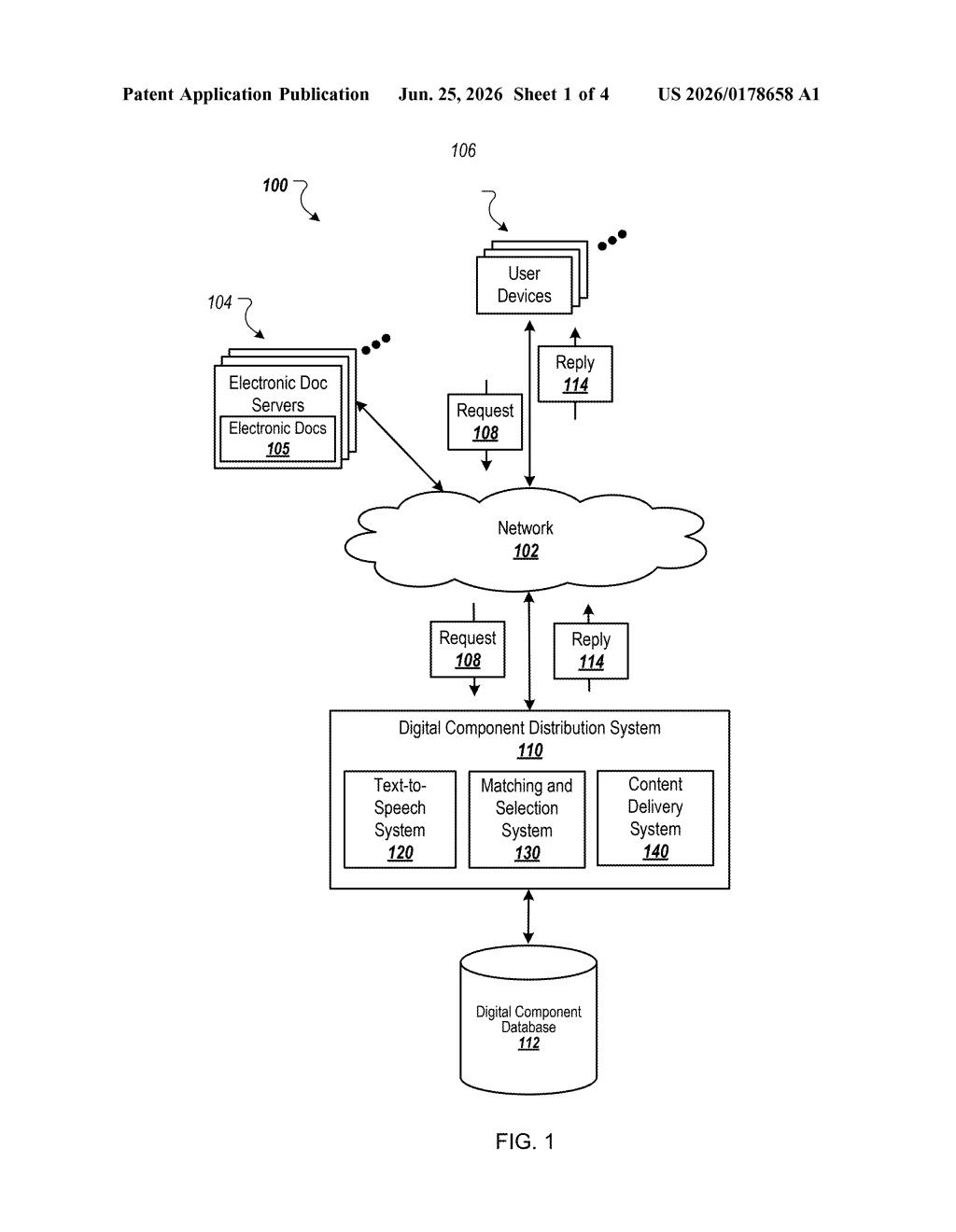
How Google's audio-to-ad matching actually works
Imagine you're listening to a podcast about running, and partway through, the host mentions trail shoes. A system in the background has been turning everything the host says into text, searching that text against a library of audio ads, and finding the one whose transcript best matches the conversation. That ad then gets dropped into a natural break in the episode, feeling almost like it belongs there.
That's what this Google patent describes. The trick is that the system works on audio transcriptions rather than the raw sound, so it can use the same kind of text-search tools that already power web advertising. It converts both the streaming content and the candidate ads into text, then matches them like a search engine matching a query to a result.
There's also a built-in protection mechanism: the system can recognize inaudible tones (sounds you can't hear) embedded in the stream. Any words spoken between two of those tones get blocked from the matching process, which lets broadcasters or rights holders mark certain segments as off-limits for ad targeting.
How inaudible tones carve out 'exclusion zones' in transcripts
The patent describes an end-to-end pipeline for inserting audio ads into streaming media using text as the matching layer.
- Step 1 - Ad transcription: An audio ad (called a "digital component") is converted to text and stored in a searchable database.
- Step 2 - Content transcription: Incoming streaming audio (a podcast, radio show, etc.) is also converted to text in real time.
- Step 3 - Exclusion zone removal: If the stream contains inaudible tones (high-frequency or out-of-band signals the listener can't perceive), any speech between a pair of those tones is flagged as an "exclusion zone" and stripped from the content transcript before matching. This lets content owners protect specific segments from being used for targeting.
- Step 4 - Matching: The remaining transcript text is searched against the ad database. When a match is found between the content's words and an ad's transcription, that ad is selected.
- Step 5 - Insertion: The original audio ad is inserted into a designated slot in the stream, creating what the patent calls an "augmented content stream."
The key insight is that by converting audio to text first, Google can apply its existing, highly developed text-search and ad-matching infrastructure to audio without building an entirely new audio-similarity system.
What this means for podcasts, music, and streaming privacy
For advertisers, this is a path to contextual audio targeting at scale. Rather than targeting by show genre or listener demographics, ads could be matched to the specific words being spoken at any given moment, much like how display ads already track what articles you read.
For listeners, the inaudible-tone exclusion system is notable. It suggests a mechanism where podcasters or broadcasters could, in theory, mark sensitive or private content as off-limits. But those tones have to be embedded by someone with control over the stream, and most listeners would have no way of knowing whether any protection is in place or not. If this ships in a real product, the privacy implications are worth watching closely.
This is a genuinely consequential patent, not just incremental ad-tech. Extending keyword-level ad targeting from text to spoken audio is a significant expansion of the surveillance advertising model. The exclusion-zone mechanism is a thoughtful engineering addition, but it's also a reminder that the default here is full transcription of everything you listen to. Worth paying attention to.
There are more where this came from
We read every patent application Big Tech publishes and send you the ones worth knowing. Plain English, free, every week.
Want this weekly breakdown for a company we don't cover? Patentlyze Pro →