
Meta Files Patent for Wristband Combining EMG Muscle Tracking and Heart Rate Monitoring
Meta wants to put two very different body sensors in the same wristband capsule and make sure they never step on each other's readings. That's trickier than it sounds.
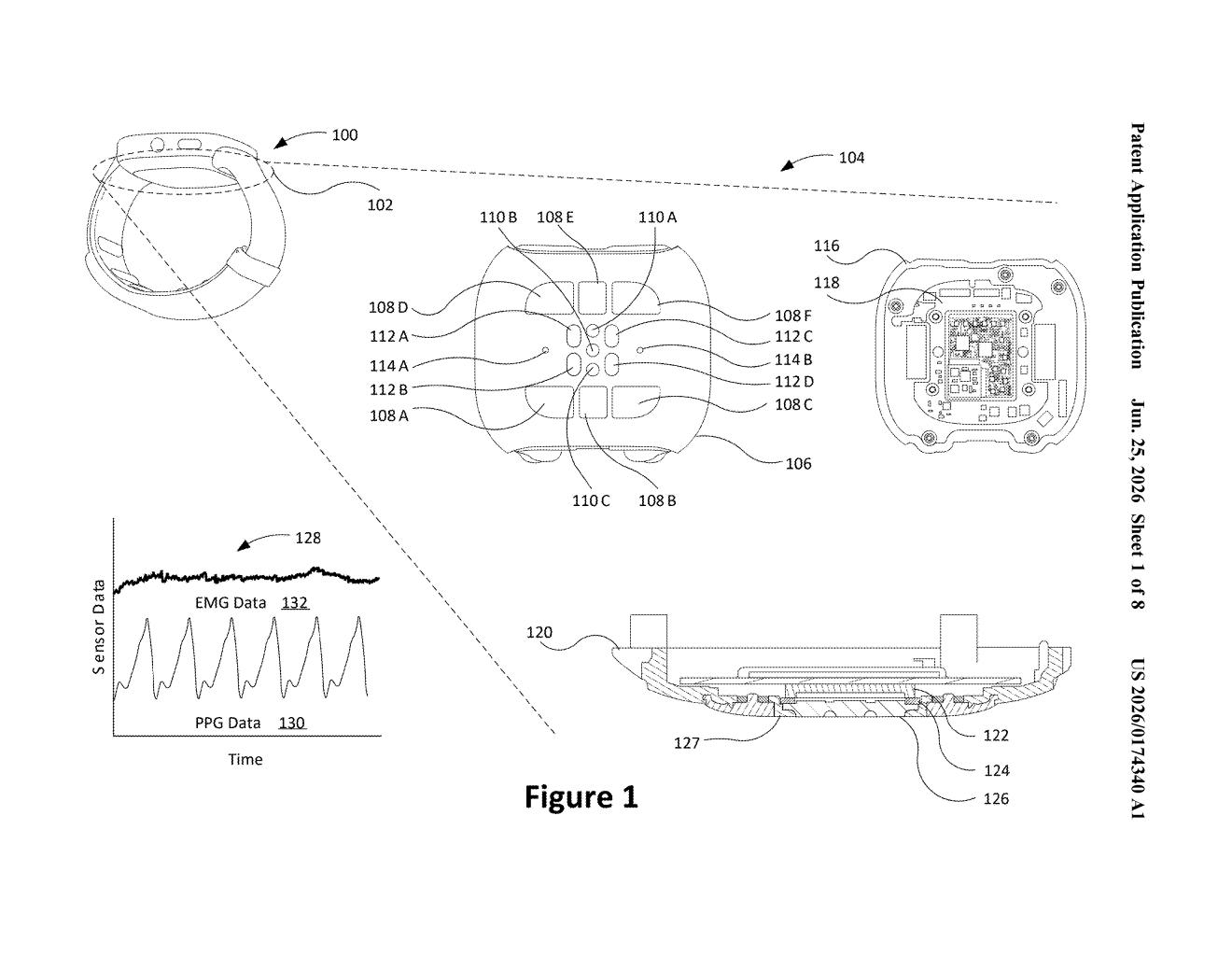
What Meta's dual-sensor wristband actually does
Imagine a fitness tracker that doesn't just count your heartbeats but also knows which finger you just twitched. Those two jobs require very different kinds of sensing, and usually they get in each other's way electrically.
Meta's patent describes a wrist-worn device that runs both sensors at the same time, inside the same small housing. One sensor listens for tiny electrical signals your muscles produce when they move (that's the EMG part). The other shines light through your skin to track blood flow and measure your heart rate (that's the PPG part, the same basic tech in most smartwatches today).
The key claim is that neither sensor messes up the other's readings. Your heart rate data stays clean while muscle signals are being recorded, and vice versa. For Meta, which is building wrist controls for its AR glasses, getting both pieces of data simultaneously and accurately is the whole point.
How the EMG and PPG sensors avoid interfering with each other
The patent describes a wearable capsule (think a small pod that sits against your wrist) containing two sensors that normally cause problems when paired together.
The first is an electromyography (EMG) sensor, which detects the tiny electrical voltages your muscles generate when they contract. Meta's AR wristband research has long focused on EMG as a way to read finger and hand gestures without the user having to hold anything.
The second is a photoplethysmogram (PPG) sensor, the same light-based technology that Apple Watch and Fitbit use to estimate heart rate. PPG works by shining an LED through the skin and measuring how light absorption changes as blood pulses through your vessels.
The core engineering problem: EMG picks up very low-level electrical signals, and the light-emitting components in a PPG system can introduce electrical noise that corrupts those readings. The patent's central claim is that the device reads both signals at the same time with no cross-contamination between them. The bottom of the capsule is designed to rest directly on the user's skin, keeping both sensors in consistent contact for reliable readings from both systems simultaneously.
What this means for Meta's neural wristband ambitions
Meta has publicly talked about its neural wristband as the primary controller for its AR glasses, and EMG gesture detection is central to that vision. Adding reliable heart rate monitoring into the same capsule makes the device genuinely useful as a standalone health tracker, not just an AR input device. That dual purpose could matter a lot for convincing people to wear something that is, at its core, a peripheral for a headset most people don't own yet.
The practical challenge Meta is claiming to solve here is real. Mixing electrical and optical sensing in a tight package without interference is an actual hardware design problem. If the patent reflects shipping hardware, it suggests Meta's wristband team has moved from gesture-only demos toward a device that can sit comfortably alongside your Apple Watch on the same wrist, doing things your Apple Watch can't.
This is a focused, specific engineering patent rather than a broad concept grab, which makes it more credible as a sign of real product progress. The non-interference claim between EMG and PPG is exactly the kind of detail that shows up in filings when a team has actually built and tested something. Meta's AR wristband has been in development for years, and this filing suggests the hardware is getting refined toward a real consumer device.
There are more where this came from
We read every patent application Big Tech publishes and send you the ones worth knowing. Plain English, free, every week.
Want this weekly breakdown for a company we don't cover? Patentlyze Pro →