
Nvidia Patents an AI Pre-Screen That Makes Video Files Smaller Before They're Compressed
Before a video even gets compressed, Nvidia's new patent wants an AI to clean up each frame so the compressor has an easier job, squeezing out more savings without making the picture look worse.
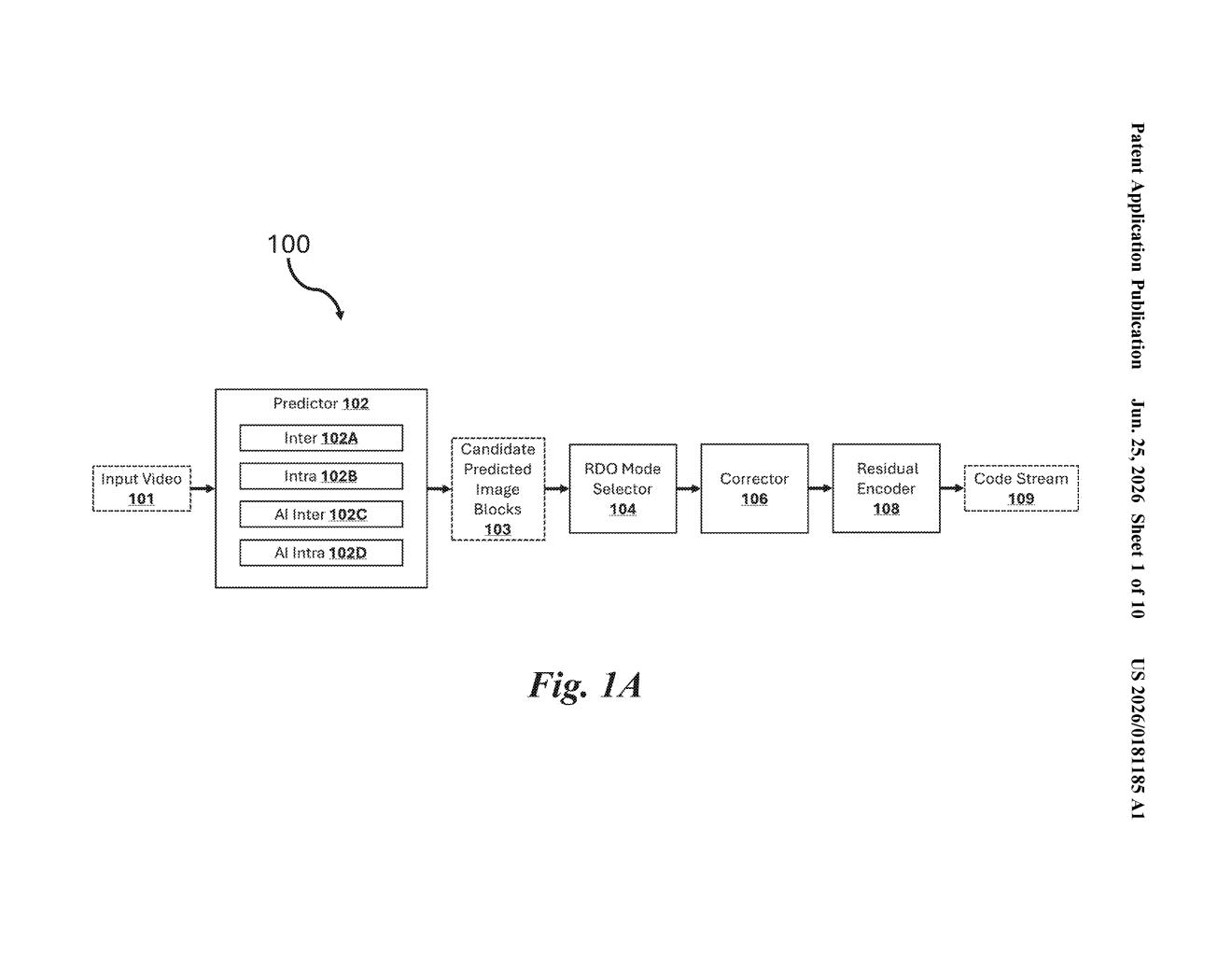
What Nvidia's AI prefiltering does to video files
Imagine you're about to vacuum-pack a suitcase full of clothes. If you fold everything neatly first, it all fits better. Nvidia's patent applies the same idea to video: before the compressor even touches a clip, a small AI network tidies up the image blocks inside each frame so they compress more efficiently.
The AI is trained to find the sweet spot between two competing goals: keeping the picture looking good (quality) and keeping the file as small as possible (size). By learning that balance during training, it knows exactly which details to smooth over and which to protect.
The result is that your video player gets a smaller file to download or stream, but the picture on screen looks roughly the same as if no compression shortcut had been taken.
How the prefiltering network balances quality and file size
Standard video compression works by predicting what each block of pixels should look like based on nearby frames, then only storing the difference (called residuals) between the prediction and reality. The smaller the residuals, the less data you need to store.
Nvidia's patent inserts a learned prefiltering network, a small neural network, into that pipeline before the prediction step. It takes a pool of candidate predicted blocks and enhances them, giving the encoder better-looking options to pick from. The encoder then chooses whichever candidate (original or enhanced) leads to the smallest residuals.
The network is trained with a joint loss function that penalizes two things at once:
- Distortion, how much the image degrades visually
- Rate, how many bits it takes to store the result
By optimizing both simultaneously during training, the network learns to make tradeoffs that a hand-coded rule never could. The final encoded output is a standard codestream (the compressed data file), so playback requires no special decoder on the viewer's end.
What this means for streaming and real-time video
Video compression is one of the most computationally expensive things the internet does at scale. Streaming services, video-call platforms, and game-streaming tools all burn enormous resources encoding footage. A prefiltering step that meaningfully reduces the residuals a compressor has to store could translate directly into lower bitrates, which means less bandwidth cost and faster load times for you as a viewer.
Nvidia sits at the center of both AI training hardware and real-time video encoding (its GPUs power much of the world's game streaming via NVENC). A patented AI compression layer fits naturally into that stack, potentially showing up in future versions of Nvidia's encoder software or cloud-streaming infrastructure.
This is a real engineering bet, not a flashy concept. Prefiltering before compression is a known research direction, but training the filter end-to-end with a joint rate-distortion loss is the specific trick that makes it practical. If Nvidia can ship this inside NVENC or a cloud-encoding pipeline, the bandwidth savings at scale would be significant. Worth watching.
There are more where this came from
We read every patent application Big Tech publishes and send you the ones worth knowing. Plain English, free, every week.
Want this weekly breakdown for a company we don't cover? Patentlyze Pro →