
Samsung Patents an AI System That Reconstructs Radio Signals to Clean Up Network Interference
Every wireless call or data session rides on the network's ability to measure how distorted the radio signal got in transit. Samsung is patenting an AI-based approach that rebuilds those signals from scratch to get a much cleaner read on interference.
What Samsung's AI channel estimator actually does
Imagine you're talking on the phone and the signal bounces off buildings, gets mixed up with other people's calls, and arrives at the cell tower slightly garbled. The tower has to figure out exactly how garbled things got, so it can correct for it and deliver a clear connection. That measurement process is called channel estimation, and it's one of the trickier problems in wireless networking.
Samsung's patent describes a smarter way to do this. Instead of relying on short "pilot" signals that phones broadcast specifically for testing purposes, the system uses the actual data the phone just sent. It takes that data, decodes it, and then rebuilds what the original radio signal should have looked like. With that reconstructed signal in hand, it compares it against what actually arrived and gets a precise picture of all the distortion and interference in the channel.
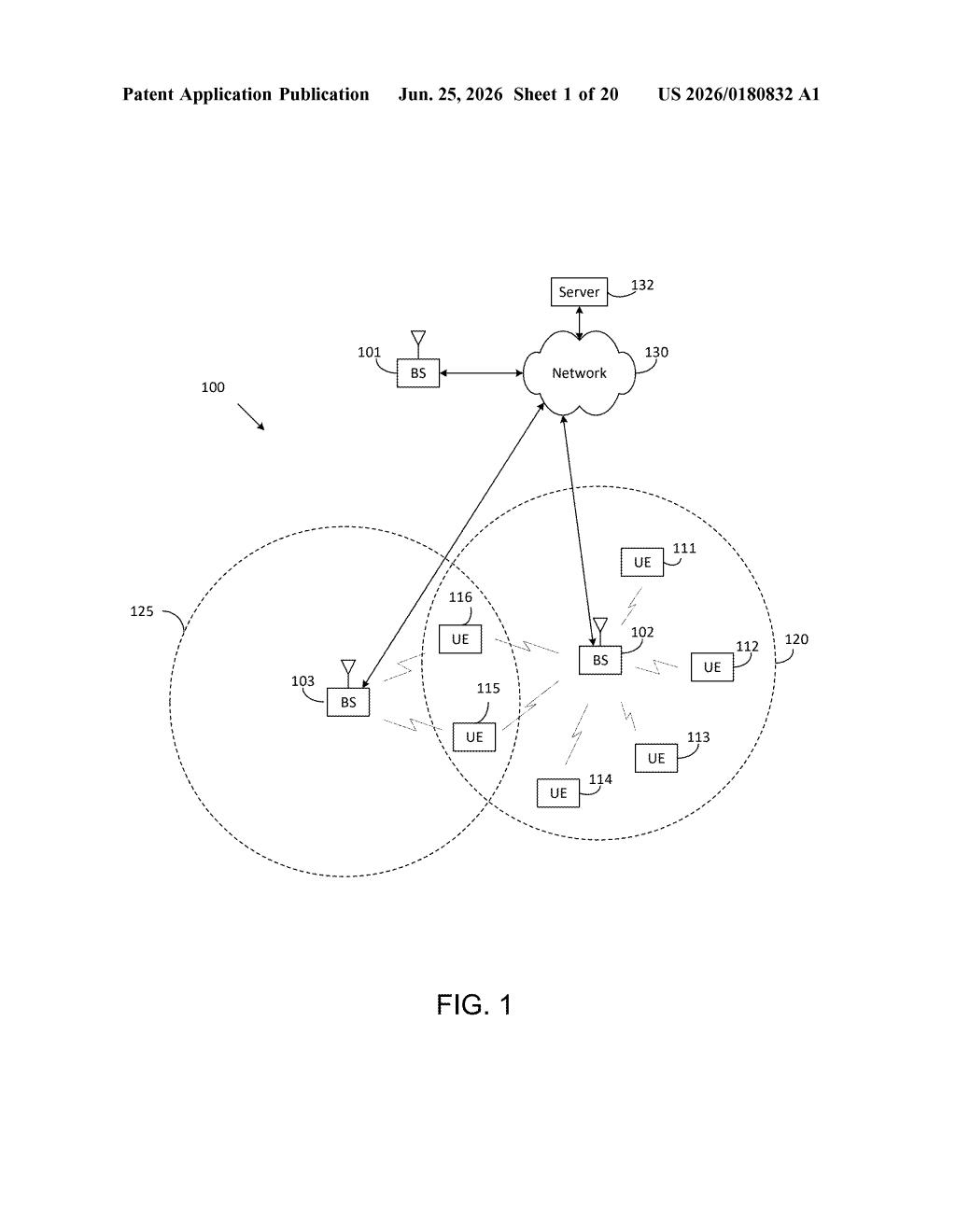
The whole process involves two network devices passing information back and forth: one collects the raw data from phones, the other does the AI-based analysis. A configuration step at the start tells the data-collecting device exactly what to gather and how to format it, so the analysis side gets everything it needs.
How the signal reconstruction and matrix estimation work
The patent describes a decision-directed channel estimation system, meaning the network uses already-decoded data decisions (the content of messages it successfully read) to inform its measurement of the channel, rather than relying only on pre-agreed test sequences.
Here's how the two-device workflow operates:
- A first device (think: a centralized AI processing node) asks a second device (a radio access node or base station) whether it can collect certain types of data, and gets back a capability report.
- The first device sends a configuration specifying what data to collect and the signal reconstruction parameters (the mathematical recipe for rebuilding the original transmitted signal).
- The second device ships back a data package containing raw uplink samples from connected phones (user equipments, or UEs).
- The first device uses the decoded transport blocks (the successfully read data payloads) alongside the reconstruction parameters to synthesize what each phone's signal looked like before it hit the air.
With those reconstructed signals, the system estimates two things: a channel matrix (a mathematical map of how the wireless channel distorted each signal) and an interference and noise covariance matrix (a measure of how much random noise and cross-interference is present). Both are inputs that modern multi-antenna receivers need to separate simultaneous transmissions cleanly.
What this means for 5G base station performance
Accurate channel estimation is a foundation of massive MIMO, the antenna technology that lets a single cell tower serve dozens of users at the same time on the same frequency. The better the network understands the channel, the more users it can pack in and the higher each person's throughput. By using decoded data instead of sparse pilot signals, Samsung's approach could produce more accurate estimates, especially in dense urban environments where interference is high.
The split architecture, where one node collects and another analyzes, also maps onto how modern Open RAN networks are being built, with centralized AI processors (called RIC nodes) making decisions for distributed radio units. A patent in this space suggests Samsung is positioning its AI channel estimation work to fit that disaggregated model.
This is core 5G infrastructure work, not a consumer-facing feature anyone will notice directly. But channel estimation quality has a direct line to network capacity, so improvements here translate into better call quality and faster speeds for everyone on a busy tower. Samsung's radio network division files a lot of patents in this space, and this one fits a clear strategy of moving AI processing into the network core.
There are more where this came from
We read every patent application Big Tech publishes and send you the ones worth knowing. Plain English, free, every week.
Want this weekly breakdown for a company we don't cover? Patentlyze Pro →