
A New Patent Lets Devices Automatically Find and Pull AI Models From the Network
AMD is patenting a system where a device can walk onto a network, hear a signal, and automatically receive an AI model, no app store, no manual setup, no prior knowledge of the server required.
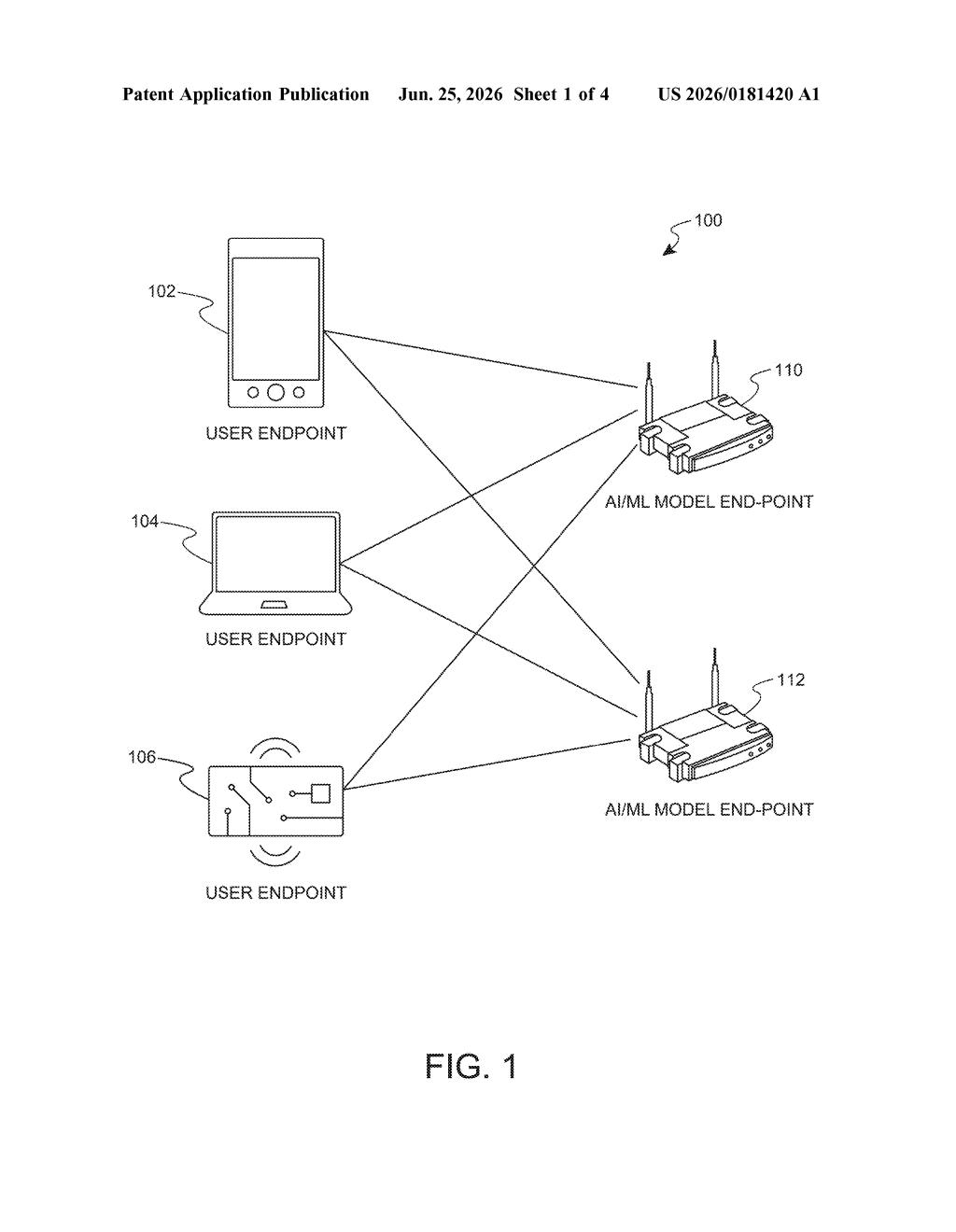
What AMD's on-network AI model delivery actually does
Imagine walking into a factory or hospital and your device automatically connects to a local AI system without you doing anything, the same way your phone joins a Wi-Fi network when it sees a familiar signal. That's the core idea here.
AMD's patent describes a special network node, called an AI/ML endpoint, that broadcasts a beacon announcing its presence. When your device picks up that signal and asks for an AI model, the node picks the right one and sends it over. Your device never needed to know the node was there ahead of time.
The whole handshake happens at a very low level of the network stack, roughly equivalent to how devices first identify each other on a local network before any internet traffic happens. That means it's fast, lightweight, and doesn't require any internet connection or cloud server to pull it off.
How AMD's beacon-and-request protocol selects a model
The patent describes an AI/ML endpoint, a piece of hardware with circuitry designed to distribute AI models to other devices on the same network. The process works in four steps:
- Beacon broadcast: the endpoint continuously announces itself on the local network, similar to how a Wi-Fi access point or Bluetooth device advertises its presence.
- Model request: a user device (called a user endpoint) hears the beacon and sends a request for an AI model.
- Model selection: the AI/ML endpoint runs a compute operation to choose the right model for that request, potentially picking from multiple available models.
- Transmission: the selected model is sent back to the requesting device.
Critically, all of this happens at Layer 2 of the OSI model (the Open Systems Interconnection model, a standard framework for how networks communicate). Layer 2 is the so-called "data link" layer, the level where devices on the same local network identify and talk to each other before any higher-level internet protocols get involved. Operating at this layer means the protocol is very low-overhead and works without a router or internet connection.
The patent specifically notes the user device has no prior information about the AI/ML endpoint, meaning discovery is fully automatic.
What this means for AI at the network edge
The real target here is edge computing, scenarios where AI needs to run close to the action (a factory floor, a hospital ward, a vehicle) rather than in a distant cloud data center. Today, deploying AI at the edge usually means pre-configuring every device to know where its AI server lives. AMD's approach would make that discovery automatic, cutting setup time and letting new devices join an AI-enabled environment the moment they connect to the local network.
For AMD specifically, this fits a broader push to position its data-center and embedded chips as the hardware running those edge AI nodes. If the discovery protocol AMD describes were to become a standard, it would give AMD-powered nodes a built-in advantage in environments that adopt it.
This is a quiet but genuinely interesting infrastructure bet. AMD isn't just building faster AI chips; it's filing patents on the protocols that would govern how AI gets delivered across local networks. That's a play for deeper ownership of the edge-AI stack, and it's worth watching as industrial and on-premises AI deployments grow.
There are more where this came from
We read every patent application Big Tech publishes and send you the ones worth knowing. Plain English, free, every week.
Want this weekly breakdown for a company we don't cover? Patentlyze Pro →