
Waymo Patents a Rotating Device That Checks Whether Its Night-Vision Lights Shine Evenly
Before a self-driving car can see in the dark, someone has to make sure its infrared lights are shining evenly in every direction. Waymo has patented a machine to do exactly that check, automatically.
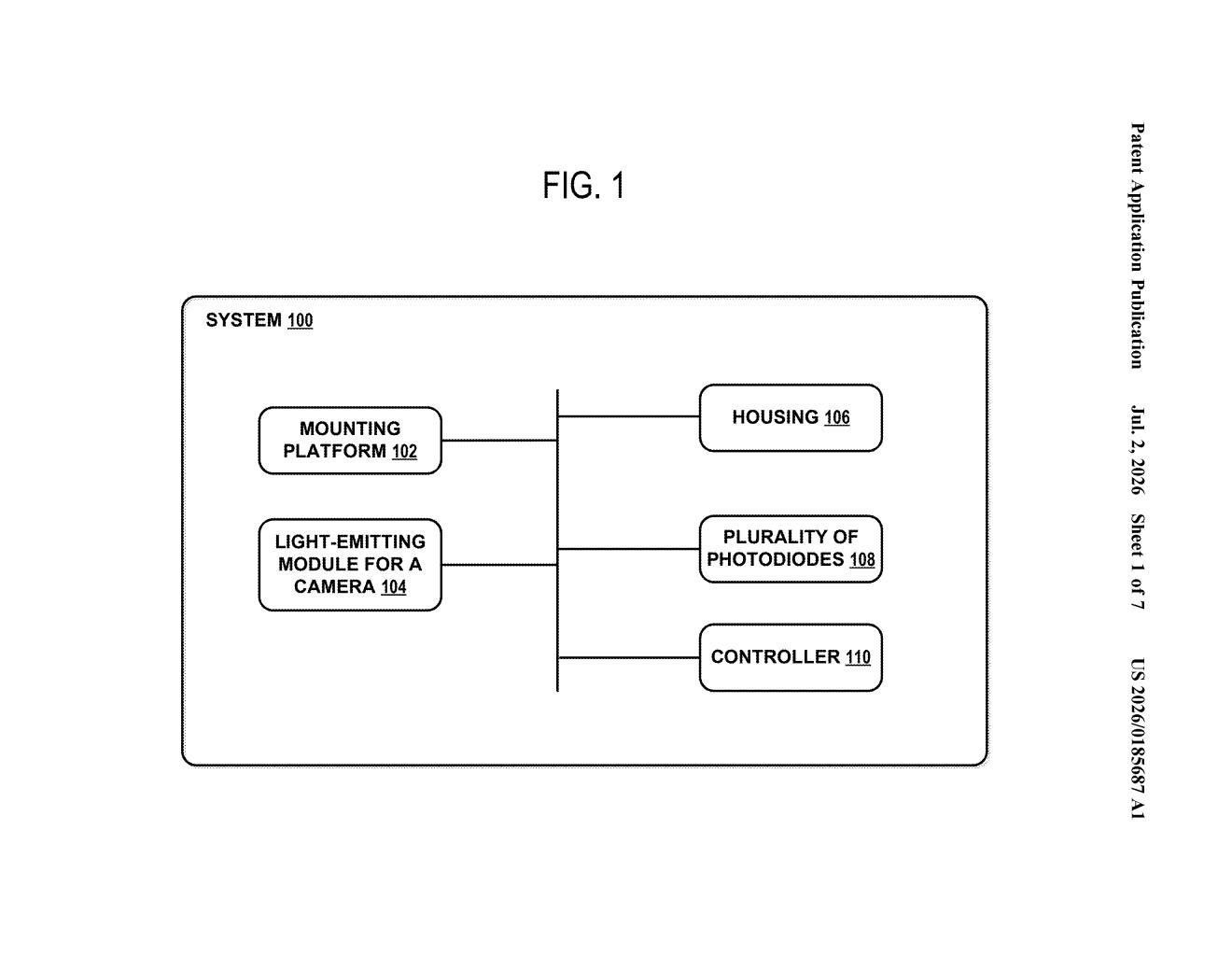
What Waymo's infrared light uniformity tester actually does
Imagine holding a flashlight and slowly spinning it around while someone measures how bright it is from every angle. That's essentially what this Waymo patent describes, but for the infrared lights used in its self-driving car cameras.
The system holds an infrared light module on a rotating platform and surrounds it with a curved wall of light sensors. As the platform spins in small, precise steps, the sensors record how much light hits them from each direction. The goal is to confirm that the light spreads out evenly, with no dim spots or hot spots that could fool the car's cameras.
This is factory-floor quality-control work. Before a light module goes into a Waymo vehicle, a machine like this would catch any that are subtly defective, so they never end up on a car navigating real streets.
How the rotating platform and photodiode array work together
The patent describes a test system built around three main components.
- A mounting platform that holds an infrared light module and rotates it in small, predetermined angle steps (like a turntable that pauses at each notch).
- A curved array of photodiodes (light-sensing chips) arranged in at least a 90-degree arc around the module. Photodiodes convert incoming light into an electrical signal, giving a precise reading of how intense the light is at each position.
- A controller that coordinates the rotation and triggers each set of sensor readings, building up a complete map of how the light spreads in three dimensions.
By rotating the platform and sampling at regular intervals, the system reconstructs the full angular light distribution of the module, essentially a map showing whether the infrared output is consistent across all directions or whether it peaks and dips unevenly.
The housing holds the photodiodes over at least a hemisphere's worth of coverage, meaning no angle goes untested. A module that passes produces a smooth, predictable light pattern; one that fails gets flagged before it ever leaves the factory.
Why even lighting matters for Waymo's self-driving cameras
Waymo's self-driving cameras rely on infrared light to see at night and in low-visibility conditions. If a light module has an uneven output, the camera system could have blind spots or inconsistent range in certain directions, which is a serious problem when the car is making split-second decisions around pedestrians and other vehicles.
This patent is about manufacturing quality control, not a new sensor technology. It suggests Waymo is investing in the production-line infrastructure needed to scale up vehicle builds reliably. For riders in a Waymo vehicle, the practical upside is that every light module in the car has been individually verified, not just spot-checked.
This is unglamorous but sensible manufacturing work. Automated optical testing at this level of precision is standard in consumer electronics production lines, and it makes sense that Waymo would want the same rigor for safety-critical hardware going into autonomous vehicles. It won't generate headlines, but it's the kind of foundational investment that separates a pilot program from a scaled fleet.
Get our take in your Top Stories
Liked this breakdown? Add Patentlyze as a preferred source on Google, and our plain-English take shows up more often in your Top Stories the next time Google patent news breaks.
There are more where this came from
We read every patent application Big Tech publishes and send you the ones worth knowing. Plain English, free, every week.
Want this weekly breakdown for a company we don't cover? Patentlyze Pro →