
Google Patents an AI That Learns Which Ad Keywords Actually Work
Google is training an AI to study which ad keywords historically win, strip them out of a dataset, and then teach the model to predict exactly those missing winners. It's like a fill-in-the-blank quiz where the answers are always your best-performing ads.
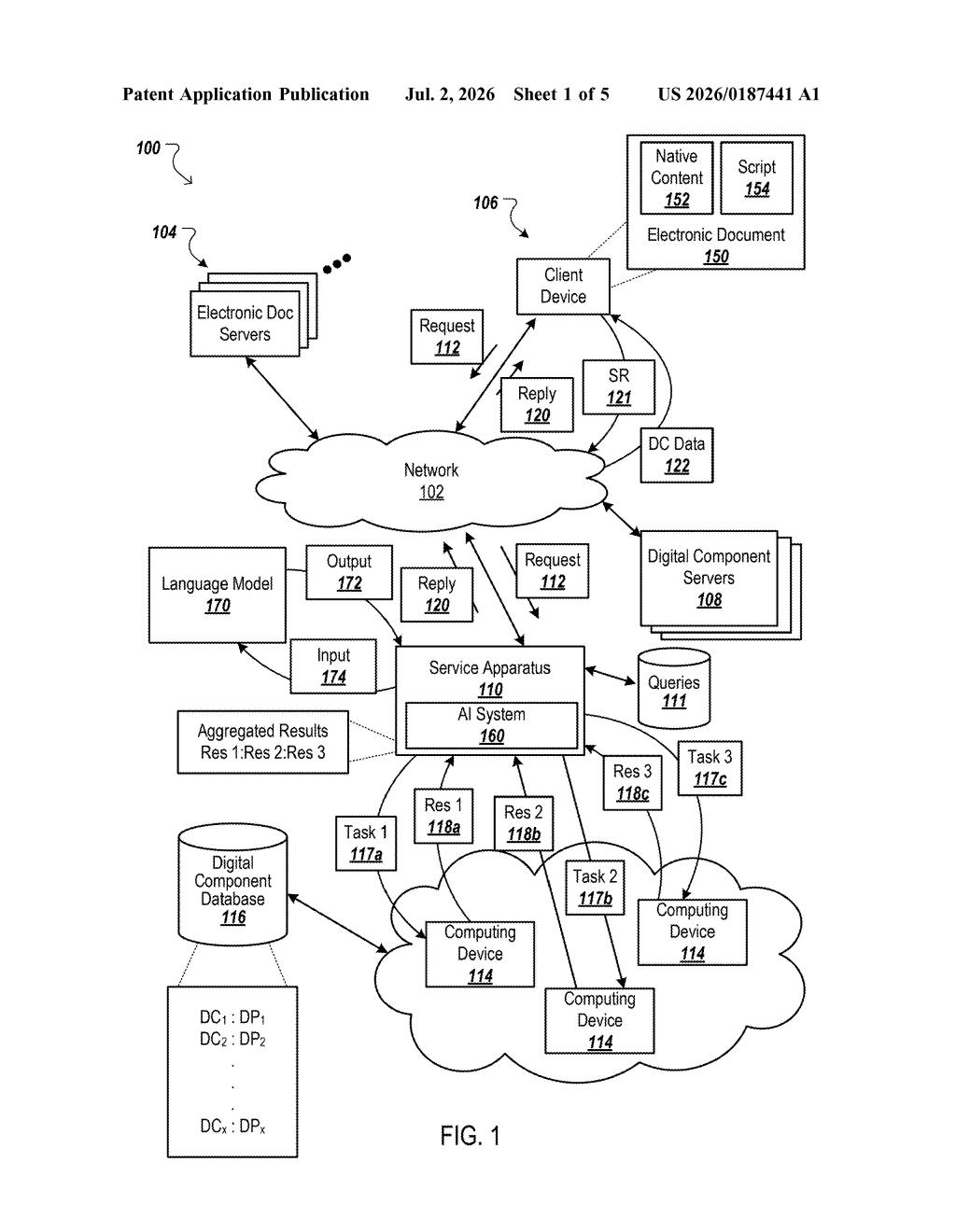
What Google's keyword-prediction AI actually does
Imagine you run a small bakery and you're paying Google to show ads when people search online. You have a list of words you're bidding on, like 'fresh bread,' 'birthday cake,' and 'gluten-free muffins,' but only a few of them actually bring in customers. Figuring out which ones are worth keeping is a real headache.
Google's patent describes an AI trained specifically on that problem. It looks at huge numbers of keyword lists from past ad campaigns, identifies which keywords performed well, removes them from the list, and then trains itself to predict what those missing winners were. Over time it gets good at spotting which keywords are likely to work, even for a brand-new advertiser it's never seen before.
The result is an automatic recommendation engine. You describe your business, and the AI suggests a shortlist of keywords worth bidding on. A human (or automated) review step can accept or reject each one before they go live.
How the model learns from high-performing keyword sets
The patent describes a training pipeline built around a specific trick called removal-based learning. Google starts with large collections of keyword sets that advertisers have already used. For each set, it identifies the best-performing keywords (those that cleared a performance threshold) and pulls them out, leaving behind only the mediocre or average ones.
That stripped-down list becomes the model's input during training. The model's job is to predict the keywords that were removed, meaning it is always trying to guess the winners from context clues about the rest of the set. This is structurally similar to how language models learn to predict missing words in a sentence, except here the 'words' are advertising keywords and the signal for correctness is real-world click and conversion data.
Once trained, the model can process a description of a new business or product (called a 'target entity') and output a ranked set of keyword recommendations. Those recommendations then go through an acceptance process, which could be a human reviewer, an automated quality filter, or both.
- Accepted keywords are attached to the advertiser's account and used in future ad auctions.
- Rejected keywords are discarded, keeping the system from polluting campaigns with bad suggestions.
- The cycle can repeat, feeding new performance data back into future training runs.
What this means for Google Ads and advertisers
For advertisers, especially small businesses without dedicated marketing teams, keyword research is one of the most time-consuming parts of running a Google Ads campaign. A model that reliably surfaces high-performers from the start reduces wasted ad spend and the trial-and-error cycle that burns through budgets.
For Google, the strategic angle is straightforward: better-targeted ads generate more clicks, which means more revenue per auction. If this system ships inside Google Ads or Performance Max, it would give Google's own AI more direct control over how advertisers build their campaigns, which is a direction the company has been moving for several years now.
This is a pragmatic, well-scoped patent that solves a real advertiser pain point. The removal-based training approach is clever because it uses existing campaign data as implicit labels, no expensive human annotation required. It won't generate headlines, but it's exactly the kind of incremental AI work that compounds into a significant product advantage over time.
Get our take in your Top Stories
Liked this breakdown? Add Patentlyze as a preferred source on Google, and our plain-English take shows up more often in your Top Stories the next time Google patent news breaks.
There are more where this came from
We read every patent application Big Tech publishes and send you the ones worth knowing. Plain English, free, every week.
Want this weekly breakdown for a company we don't cover? Patentlyze Pro →