
Microsoft Patent Would Use Cryptographic Identity Checks to Gate File Access
Imagine a file that can only be opened if you are who you say you are, in the right place, at the right time, and a third-party server agrees with all three. That's the system Microsoft just filed a patent for.
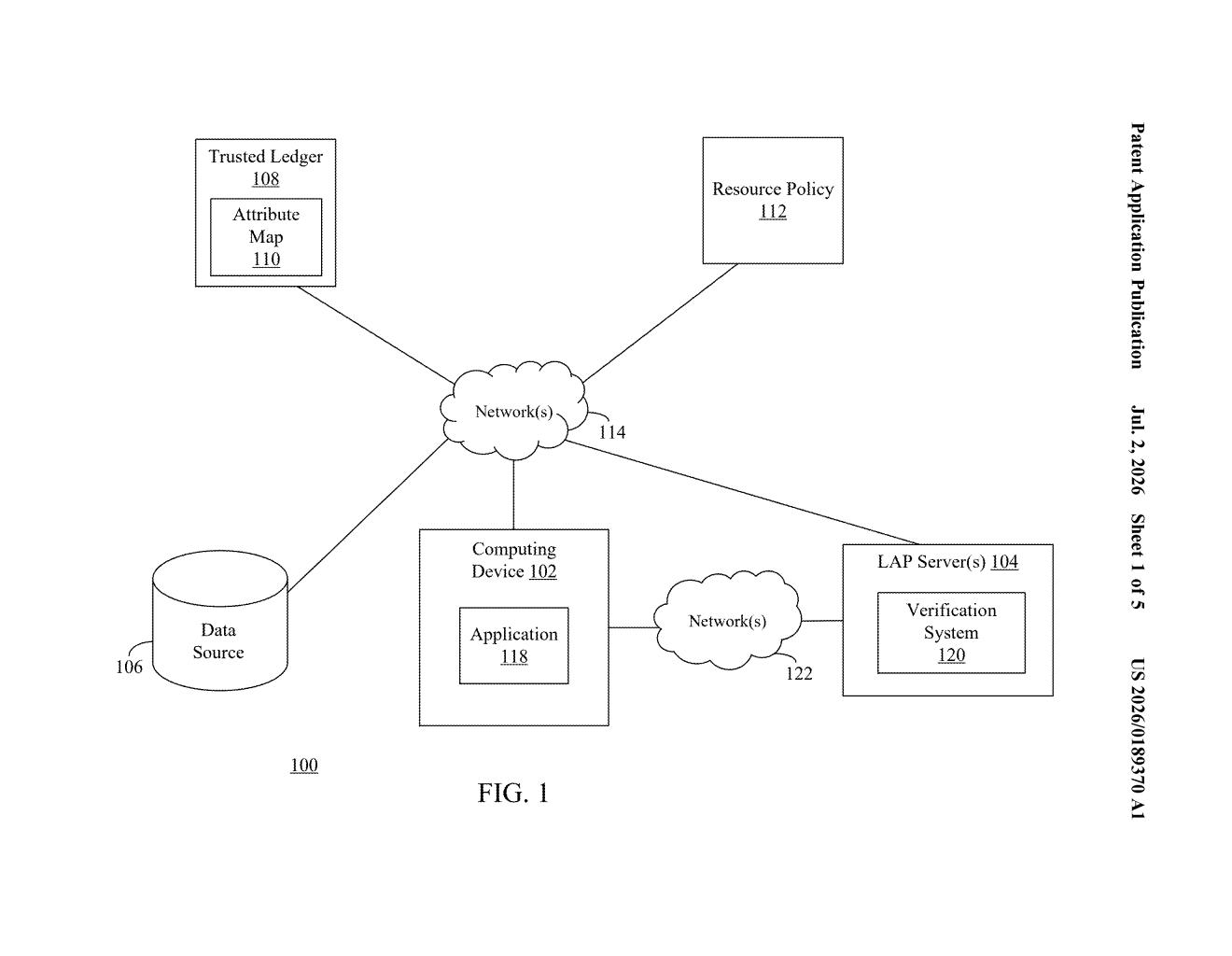
What Microsoft's location-gated file access actually does
Think about a sensitive document your company stores in the cloud. Today, access usually comes down to a password or a login code texted to your phone. Microsoft's patent describes something more layered: a file that stays encrypted until a dedicated server checks several things about you at once, things like your job role, your device, and where you are physically located.
The clever part is that neither side holds the complete key. You have one piece stored on your device, and the server holds another piece that it only hands over after verifying you meet the requirements. Only when both pieces are combined does the file actually unlock. If something is wrong, say you're logging in from an unexpected country, the server's piece never arrives and the file stays locked.
This approach means even if someone steals your device or your credentials, they still can't open the file without also satisfying whatever real-time conditions the policy demands. The verification happens through cryptographic proofs, meaning you can prove you have the right attributes without revealing the underlying details.
How the LAP server splits and reassembles the decryption key
The system centers on a Location Attribute Policy (LAP) server, a dedicated service that sits between you and any encrypted resource you want to open.
When you request access, the server consults a resource policy attached to that file. That policy lists two kinds of requirements:
- Static attributes: fixed facts about you, like your employee role or security clearance, that don't change moment to moment.
- Dynamic attributes: real-time conditions, like your current GPS coordinates or the time of day, that the server checks fresh each time.
To prove you meet the static requirements, your device sends a cryptographic proof (a mathematical demonstration that lets you confirm a fact without exposing the raw data behind it). The server checks that proof against a trusted ledger (a tamper-resistant record, similar in concept to a blockchain, that anchors the validity of the proof).
If the static proof checks out, the server supplies its own secret corresponding to the dynamic attribute. Your device then feeds both secrets, its stored one and the server's freshly issued one, into a decryption algorithm that combines them into the final key. Neither secret alone is enough; the file only opens when both halves arrive and the math works out.
What this means for enterprise data security and compliance
For enterprise IT and compliance teams, this is a meaningful step beyond traditional role-based access controls. Right now, most systems grant access once and trust the session to stay valid. Microsoft's design keeps checking conditions dynamically, so a valid login from London doesn't help an attacker who's actually in a data center in another country.
The split-key design also reduces the blast radius of a breach. If the LAP server is compromised, attackers still can't decrypt files without the secrets stored on each user's device. If a device is stolen, files still require the server's dynamic-condition approval. You get two independent failure points instead of one, which matters a lot for industries like finance, healthcare, and government contracting where data residency and access auditing are tightly regulated.
This is a genuinely thoughtful approach to a real problem: static access credentials that grant permanent access are a huge liability once compromised. The split-key, condition-aware design addresses that directly, and the use of a trusted ledger for proof verification adds an auditable trail that compliance-heavy industries will appreciate. Whether Microsoft ships this as a standalone Azure feature or folds it into something like Entra ID, it's the kind of infrastructure work that actually changes security posture.
There are more where this came from
We read every patent application Big Tech publishes and send you the ones worth knowing. Plain English, free, every week.
Want this weekly breakdown for a company we don't cover? Patentlyze Pro →
Be the first to weigh in