
Samsung Patents Technology That Switches Wireless Payment Connections to the Clearest Signal Automatically
Tapping your phone to pay only to have it fail is one of those small frustrations that adds up fast. Samsung's latest NFC patent attacks the problem at the signal level, by listening on two channels at once and automatically choosing the one with less noise.
What Samsung's two-channel NFC signal picker actually does
Imagine holding your phone near a payment terminal and the connection fails, not because of software, but because the radio signal between your phone and the terminal got garbled. That kind of interference is surprisingly common near metal surfaces, other electronics, or even certain phone cases.
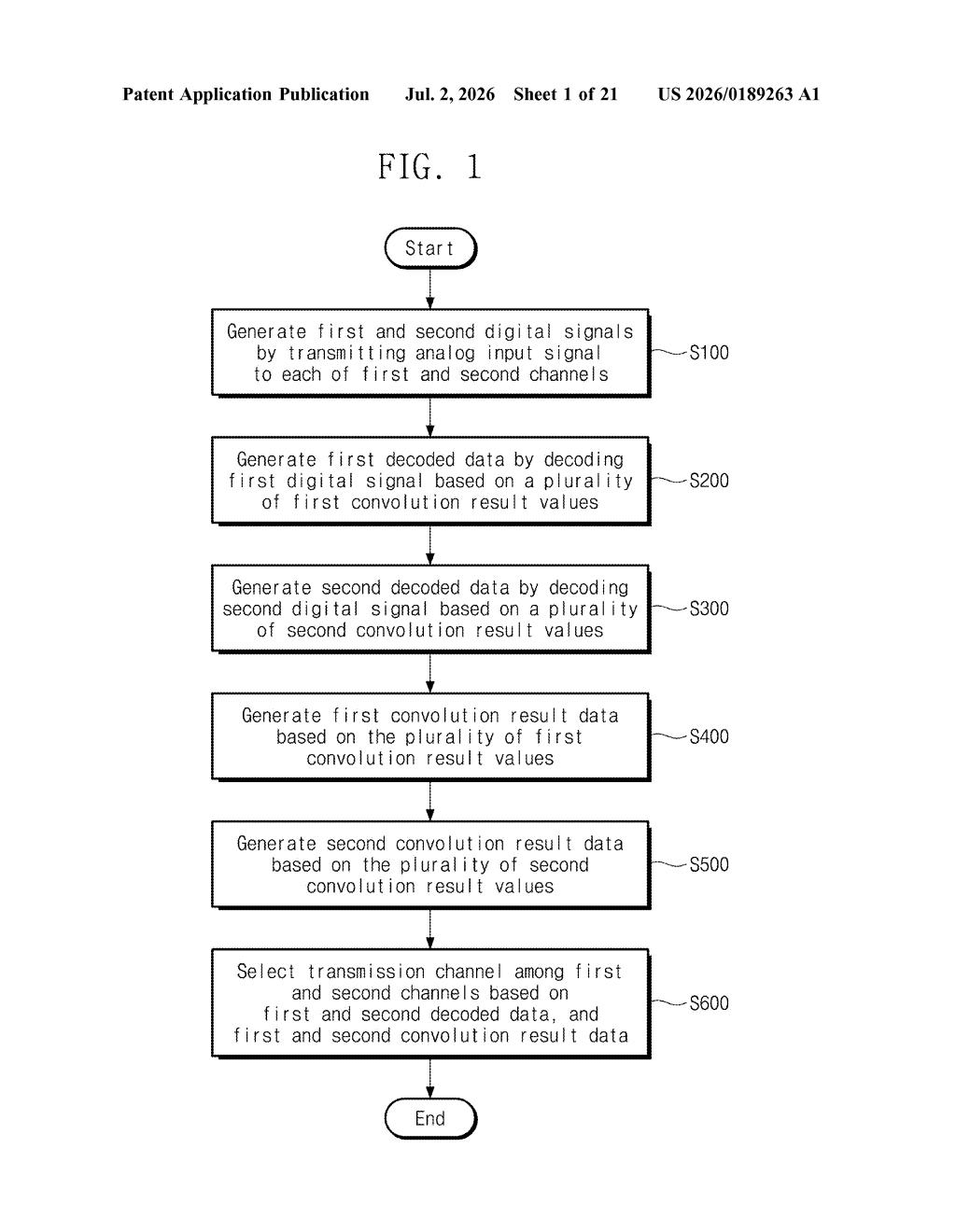
Samsung's patent describes an NFC chip that receives the same incoming signal through two separate channels at the same time. The two channels are slightly offset from each other in timing (a "phase difference"), so if one gets hit by interference, the other likely won't. The chip then decodes both, scores how clean each one is, and picks the better channel to use going forward.
The practical result: your tap-to-pay, transit card, or phone-to-phone NFC transfer has a better shot at working the first time, even in noisy radio environments.
How the matched filters score and select each NFC channel
The patent describes a method inside an NFC controller chip. When an external device (like a payment terminal) sends a signal, the chip captures it through two input paths called Channel 1 and Channel 2. These channels are identical except for a deliberate phase offset, meaning they sample the same analog signal at slightly different moments in time.
Each channel runs through a bank of matched filters (digital templates that score how closely the incoming signal matches the expected NFC waveform). The chip picks the best-performing filter from each bank, decodes the data from both channels independently, and produces what the patent calls convolution result data (essentially a numerical quality score based on how well the received signal matched the template).
The channel-selection logic then weighs four inputs:
- The decoded data from Channel 1
- The decoded data from Channel 2
- The quality score from Channel 1's best filter
- The quality score from Channel 2's best filter
Based on those four signals, the chip nominates one channel as the transmission channel for ongoing communication. This selection can adapt in real time as signal conditions change.
What this means for tap-to-pay reliability on Samsung devices
NFC reliability is a persistent weak point in contactless payments and device pairing, and the failure mode is almost always invisible to the user. You just tap again and hope. A chip-level system that automatically routes around a bad signal path could meaningfully reduce those failed taps, especially in environments like subway turnstiles or crowded checkout lines where interference is worst.
For Samsung specifically, this fits neatly into the NFC stack used across Galaxy phones and Galaxy Watch devices. Better first-tap reliability is a genuine user-experience win, and it's the kind of improvement that never shows up in a spec sheet but absolutely shows up in day-to-day use.
This is quiet, unglamorous silicon work that solves a real problem most people just accept as normal. The dual-channel approach is a clever application of signal diversity (a technique already common in Wi-Fi and cellular) to NFC, where it hasn't been widely used. Worth watching for its appearance in future Exynos or third-party NFC controller designs.
Get our take in your Top Stories
Liked this breakdown? Add Patentlyze as a preferred source on Google, and our plain-English take shows up more often in your Top Stories the next time Samsung patent news breaks.
There are more where this came from
We read every patent application Big Tech publishes and send you the ones worth knowing. Plain English, free, every week.
Want this weekly breakdown for a company we don't cover? Patentlyze Pro →