
IBM Patents an AI Color Advisor That Reads Your Words and Photos to Pick the Right Shade
Picking a paint color is notoriously hard to do from a description alone. IBM's new patent describes a system that takes your words, your reference photos, and your broader context, and returns actual color recommendations you can apply to a real object.
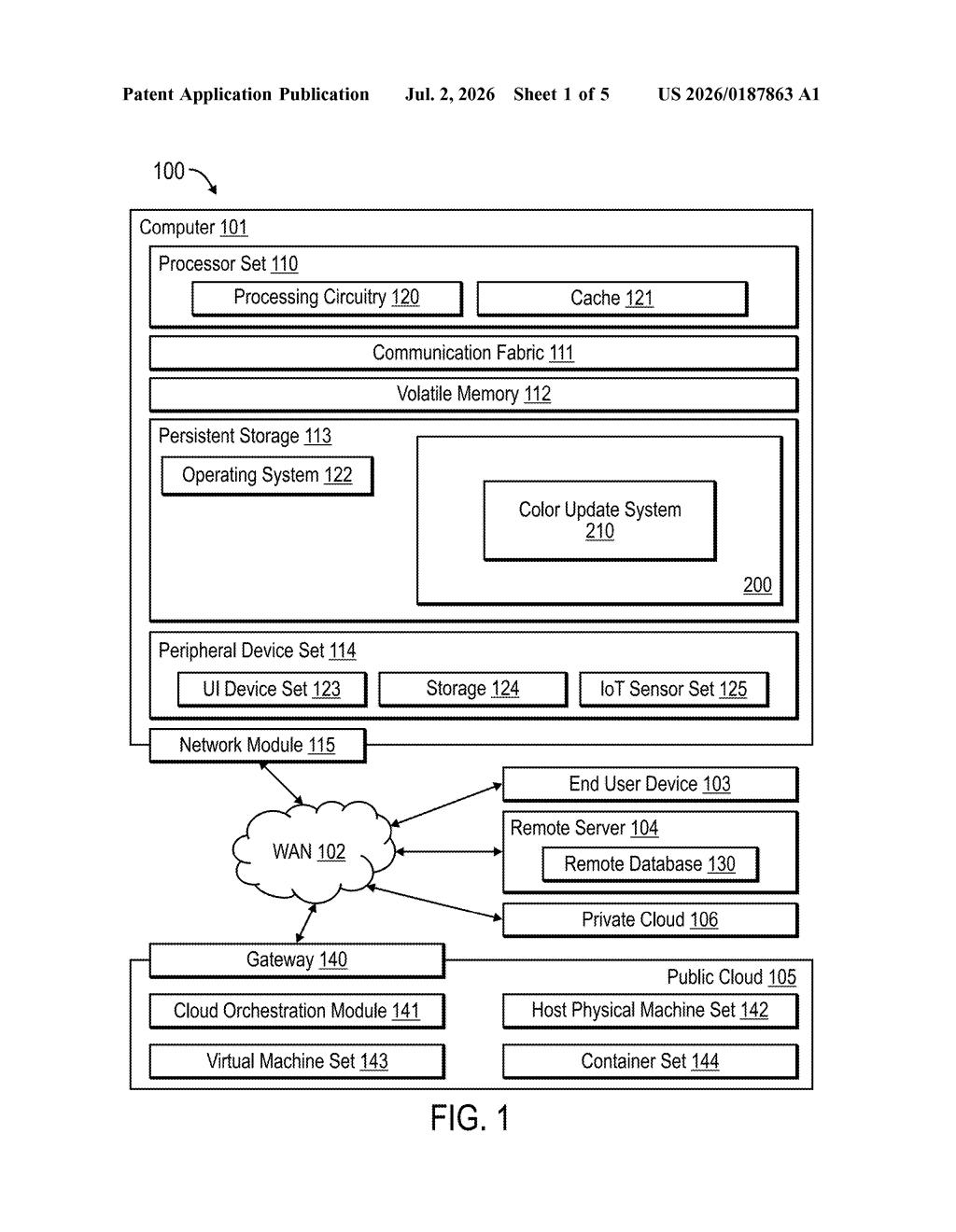
What IBM's AI color picker actually does
Imagine you want to repaint your living room wall. You tell an app something like 'warm, earthy tones, cozy cabin feel,' upload a photo of your furniture, and describe that you want it to match a sunset. IBM's patent covers a system that takes all of that together and surfaces specific colors that fit the bill.
The system pools your text description, any images you provide, and whatever context you've given into one big input. It then searches a database of tagged colors, finds the best matches, and shows them to you. When you pick one, the system applies that color to the object you're working on, whether that's a digital preview of a wall, a product design, or something else.
In short, it's an AI color recommendation engine that tries to understand what you mean by a color description, not just what you literally typed.
How IBM's system turns words and images into color matches
The patent describes a multi-step pipeline that converts mixed inputs into a color recommendation and then applies it to a target object.
- Input gathering: The system accepts text descriptions, images, and what the patent calls 'descriptive context' (think: room type, mood, intended use) all at once.
- Global text collection: These inputs are merged into a unified text representation. Images are presumably analyzed and converted to descriptive text before being pooled with the rest.
- Keyword generation: From that unified text, the system generates color search keywords (specific terms like 'terracotta,' 'muted sage,' or 'deep navy') that will be used to query a knowledge base.
- Knowledge base search: The keywords are matched against a database of colors that have been pre-tagged with descriptive labels. The closest matches are returned as recommendations.
- Color application: Once the user selects a color, the system applies it to the real-world object, updating it with the chosen color.
The 'real-world object update' language in the claim is intentionally broad. It could mean a digital rendering of a physical object, a design file, or a connected system that controls a physical display or product preview tool.
What this means for design and retail color tools
Color selection is a pain point in design, retail, and home improvement. Current tools usually require you to already know the color name or code you want, which assumes you've done research ahead of time. A system that takes loose, natural-language descriptions and translates them into specific colors could reduce friction for consumers choosing paint, fabric, furniture, or product finishes.
For IBM, this fits into a broader push to apply AI to everyday decision-making workflows. If the knowledge base is tied to a retailer's product catalog, the system could double as a product recommendation engine. You describe what you want; the system finds what exists in inventory that matches. That's a straightforward commercial use case with clear value for e-commerce platforms.
This is a practical, narrow patent covering a specific workflow: text plus images in, color recommendation out, apply to object. It's not a flashy idea, but the combination of natural-language input, image analysis, and a tagged color knowledge base into one pipeline is genuinely useful. Whether IBM turns this into a product or licenses it to a retailer, the commercial case is easy to see.
Get our take in your Top Stories
Liked this breakdown? Add Patentlyze as a preferred source on Google, and our plain-English take shows up more often in your Top Stories the next time IBM patent news breaks.
There are more where this came from
We read every patent application Big Tech publishes and send you the ones worth knowing. Plain English, free, every week.
Want this weekly breakdown for a company we don't cover? Patentlyze Pro →