
Nvidia Patents Sensors That Run on Their Own Power to Catch Server Water Leaks
Liquid cooling is how you keep a room full of AI chips from melting down, but a single dripping pipe joint can destroy millions of dollars of hardware. Nvidia's new patent describes a system that watches every connection point for leaks without ever touching the pipes, and keeps doing it even when the racks haven't been plugged in yet.
What Nvidia's cooling leak detector actually does
Imagine buying a brand-new server rack, shipping it across the country, and discovering on delivery day that a cooling pipe was slowly dripping the whole time. By then, the damage is done and the hardware is ruined.
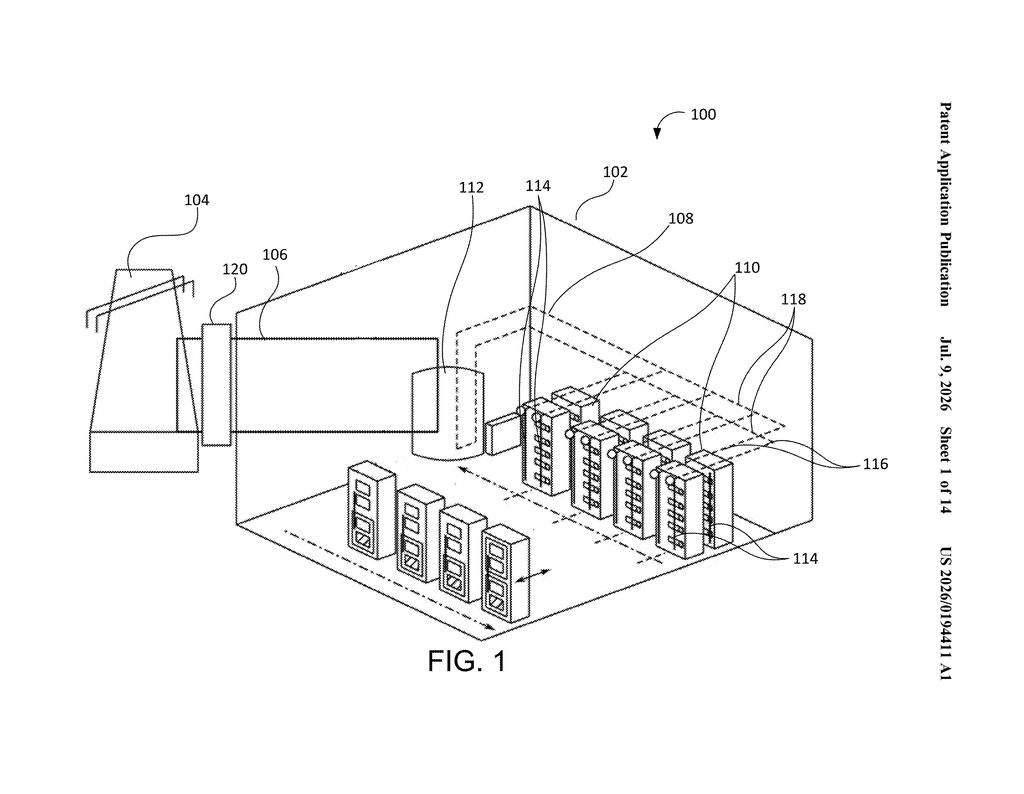
Nvidia's patent describes a set of small sensors, one placed at each pipe connection inside a rack, that watch for coolant leaks without physically touching the pipes. Each sensor has its own little battery or power supply, so the system can detect a drip even while the rack is sitting in a warehouse or on a truck with no external power plugged in.
When a sensor spots a problem, a controller logs both what happened and exactly where it happened, so technicians don't have to hunt through a full rack to find the bad joint. The whole system is designed to stay low-power so the batteries last through long storage or shipping windows.
How the non-contact sensors pinpoint a leak location
The patent describes a leak detection system built around three core components:
- Non-contact sensors placed at each individual pipe connection point in a liquid cooling loop. "Non-contact" means the sensors detect the presence of fluid (likely using optical or capacitive sensing) without a probe sitting inside the fluid path, which avoids contamination and keeps maintenance simple.
- Dedicated local power supplies for each sensor. Because server racks spend time in transit or storage before being connected to a data center's power grid, the sensors need their own energy source. The patent specifically calls out that these supplies keep sensors alive when "external power" isn't available.
- A controller that receives signals from all sensors, determines whether a reading counts as a leak indicator, and records both the leak status and its precise location within the enclosure.
The patent emphasizes low-power operation and small sensing areas (each sensor focuses tightly on one connection rather than scanning a wide zone), which lets the system run longer on limited battery capacity while still catching a leak at any specific joint. The stored location data means a technician can go directly to the problem pipe rather than inspecting every fitting in a large rack.
What this means for liquid-cooled AI data centers
Liquid cooling is no longer a niche setup. As AI training clusters pack more and more high-wattage GPUs into tight spaces, direct liquid cooling has become the default in serious data centers, and every liquid loop means dozens of connection points that can fail. A slow drip that goes unnoticed during shipping or installation can short out entire boards before anyone notices.
For Nvidia, whose data center customers are buying racks of H100 and Blackwell GPUs worth hundreds of thousands of dollars, a built-in leak detection system could reduce warranty claims and customer complaints. It also positions Nvidia as a full-stack infrastructure vendor rather than just a chip supplier, extending its reach into how racks are assembled, stored, and monitored.
This is unglamorous but genuinely useful work. Liquid cooling failures are a real and expensive problem in high-density GPU deployments, and catching a leak during shipping before it destroys hardware is exactly the kind of system-level thinking Nvidia needs as it sells more complete rack solutions. It's not flashy AI research, but it's the sort of patent that saves large customers a lot of money.
Get our take in your Top Stories
Liked this breakdown? Add Patentlyze as a preferred source on Google, and our plain-English take shows up more often in your Top Stories the next time Nvidia patent news breaks.
There are more where this came from
We read every patent application Big Tech publishes and send you the ones worth knowing. Plain English, free, every week.
Want this weekly breakdown for a company we don't cover? Patentlyze Pro →