
Meta Patents a Micro-Scale Spinning Light Steerer for AR Glasses
What Meta's tiny spinning grating does for AR glasses
Imagine trying to shine a flashlight through a tiny window no wider than a human hair, and the window keeps moving. That is roughly the problem AR glasses have to solve every time they project an image into your eye. The light has to enter a thin sheet of glass (called a waveguide) at a very precise angle, and even tiny misalignments make the image disappear.
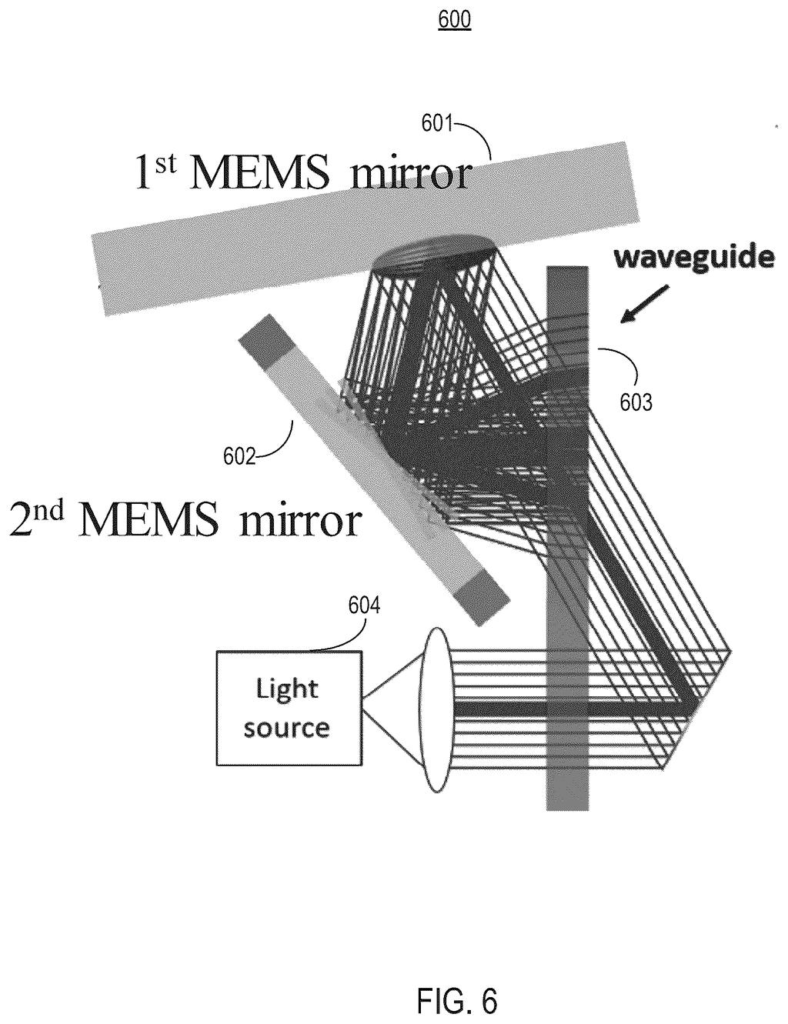
Meta's patent describes a spinning microscopic component, smaller than a grain of sand, that bends and redirects incoming light before it enters the waveguide. The component spins back and forth using interlocking finger-like teeth (a "comb drive") that are pushed by electricity, similar in principle to how a tiny tuning fork vibrates. By adjusting the spin angle, the system can correct where the light lands.
The goal is to keep your AR display sharp and bright even as the optics shift, flex, or simply aren't machined perfectly. It is the kind of invisible plumbing that makes the difference between a headset that looks good in a demo and one you would actually wear all day.
How the rotating grating and comb drive work together
The patent covers both the design and the manufacturing process for what Meta calls a micro rotary scanning element. The device sits in the optical path of an AR display and physically rotates a tiny transmissive diffraction grating (a surface etched with microscopic ridges that bend light at controlled angles, the way a prism splits white light into colors, but more precisely) to steer collimated (parallel, laser-like) light into a waveguide.
The rotation is driven by an angular comb drive, a well-established micro-electromechanical (MEMS) mechanism where two sets of interlocking finger-shaped electrodes attract each other when voltage is applied, producing a small but precise rotational movement. By varying that voltage, the system can sweep the grating through a small arc, nudging incoming light to correct for a problem called coupling walk-off, where the beam drifts away from the ideal entry point into the waveguide.
The fabrication method in the main claim is equally specific:
- A first silicon wafer is oxidized to form the grating layer, then the silicon beneath it is etched away so the grating floats free.
- A second wafer goes through a similar process to produce the comb drive.
- The two are combined into one integrated micro-device.
The approach is fully transmissive, meaning light passes through the grating rather than reflecting off it, which keeps the optical path compact and avoids the alignment headaches of reflective designs.
What this means for next-gen Meta smart glasses
Waveguide-based AR displays (used in devices like Meta's Ray-Ban smart glasses and the rumored next generation of more capable headsets) depend on getting light into the waveguide with almost no error. Small manufacturing imperfections, temperature changes, or physical flex can all shift the beam slightly, degrading image quality or brightness. An active micro-scanner that can compensate in real time solves that problem without requiring tighter (and more expensive) manufacturing tolerances.
For you as a potential future wearer, this kind of component is the difference between AR glasses that look washed out or dim and ones that stay crisp throughout the day. It also signals that Meta is investing in MEMS-level optical engineering, the same discipline that underpins high-end projectors and lidar sensors, to push its glasses hardware beyond the current generation.
This is deep, unglamorous optical engineering, and that is exactly why it matters. The difference between AR glasses that ship and AR glasses that people actually like often comes down to tiny components like this one. Meta filing at this level of fabrication detail suggests they are past concept-phase on waveguide optics and are wrestling with real manufacturing problems.
There are more where this came from
We read every patent application Big Tech publishes and send you the ones worth knowing. Plain English, free, every week.
The drawings
13 drawing sheets from US 2026/0211237 A1 · click any drawing to enlarge


Want this weekly breakdown for a company we don't cover? Patentlyze Pro →
Be the first to weigh in