
Google Patents On-Device AI That Strips Personal Data Before Cloud Upload
Google is patenting a system where your device — not Google's servers — is responsible for scrubbing your personal information out of AI prompts before anything leaves your phone or laptop. It's a privacy-first architecture that flips the usual cloud-AI data flow on its head.
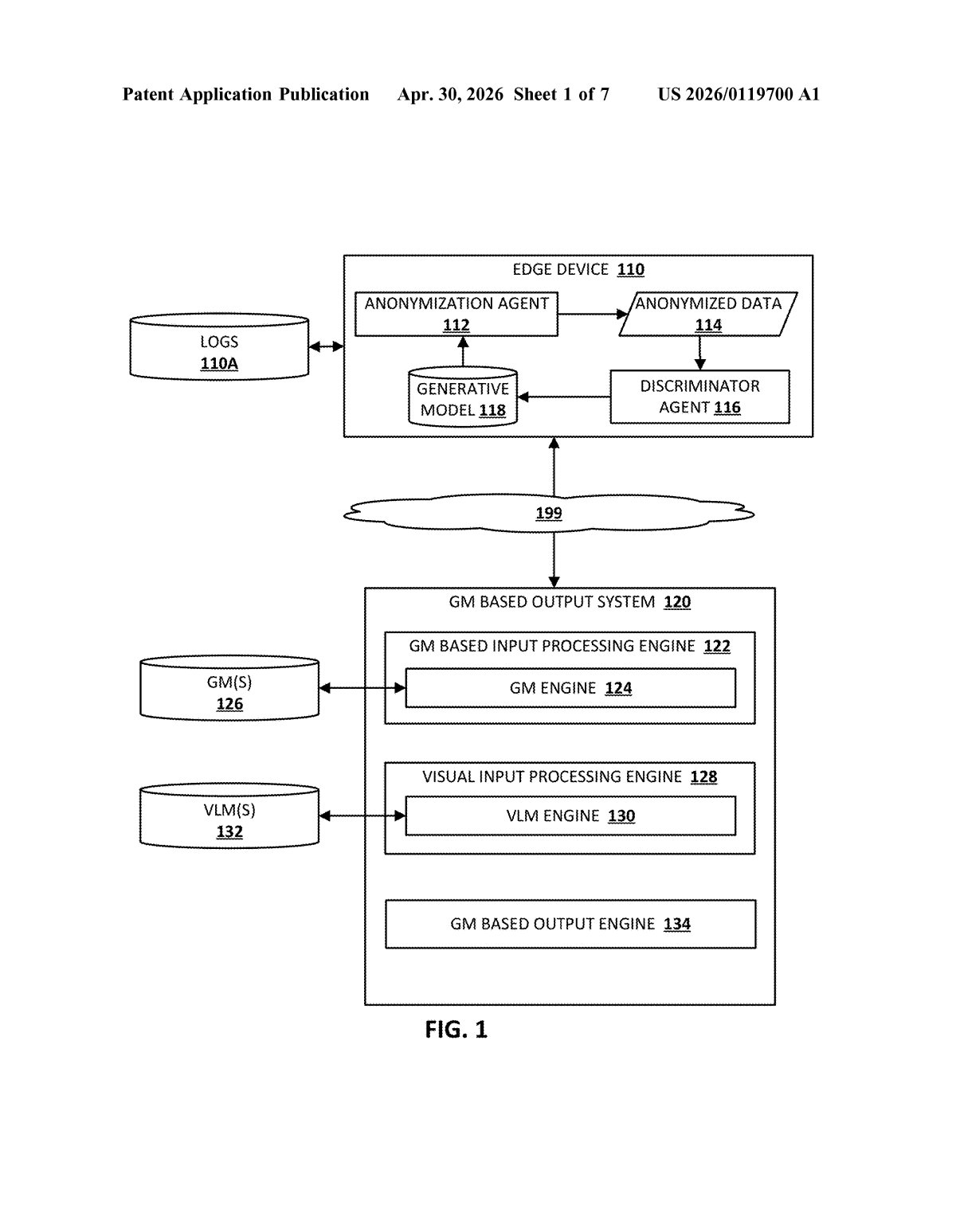
What Google's on-device PII scrubber actually does
Imagine you're using an AI assistant and you type something like, "Draft an email to my doctor, Dr. Sarah Kim, about my appointment on Thursday at 2pm." That prompt is full of personal details — a name, a profession, a time. Normally, that whole sentence gets sent to a cloud server for processing. Google's patent proposes a different approach: strip out the sensitive bits on your device before anything goes anywhere.
Here's how it works in plain terms: a small AI model running locally on your phone or laptop reads your prompt, identifies personal details like names, dates, and locations, and replaces or removes them. It then double-checks its own work to make sure nothing slipped through. Only the cleaned-up, anonymized version ever touches Google's servers.
The result is that the cloud gets just enough context to be useful — without ever seeing who you are or what you specifically said. It's the AI equivalent of redacting a document before faxing it.
How the edge model detects and removes leftover PII
The patent describes a multi-step anonymization pipeline that runs entirely on an edge computing device (think: your phone, tablet, or laptop — any device at the "edge" of the network, as opposed to a central server).
The process flows like this:
- Retrieve: The system pulls a generative AI prompt from local memory — this could be something you typed, or even output from a previous AI model run.
- Assemble an anonymization prompt: It packages that original prompt into a new prompt specifically designed to instruct an on-device AI model to find and remove PII (personally identifiable information — names, addresses, dates, account numbers, etc.).
- Process on-device: A local AI model — running entirely on the device, no internet required — reads the anonymization prompt and produces a scrubbed version of the original input.
- Inspect for leftovers: The system then audits the result for any remaining PII. If something slipped through, the loop can repeat before anything is uploaded.
- Upload only the clean version: Once the anonymized data passes inspection, it's sent to a remote server — and only then.
The clever architectural detail here is that Google is using one AI model to audit the output of another. The inspection step isn't a simple keyword scan — it's a generative model checking generative model output, which is more likely to catch contextual or implied personal information that a regex filter would miss.
What this means for AI privacy on Android and Chrome
For everyday users, this architecture would mean your AI assistant could handle deeply personal requests — health queries, financial questions, private messages — without those raw details ever leaving your device. That's a meaningful shift from how most cloud AI systems work today, where the full prompt typically travels to a server.
For Google specifically, this fits neatly into the broader push toward on-device AI with Gemini Nano — the lightweight model family designed to run locally on Android and Chrome OS devices. A system like this could become the privacy layer that makes it politically and regulatorily palatable to run AI features on sensitive user data. It's also the kind of architecture that would resonate in markets with strict data-residency laws, like the EU under GDPR.
This is a genuinely thoughtful privacy patent, not a vague hand-wave at 'responsible AI.' The two-stage approach — generate an anonymized version, then inspect it with a second model pass — addresses a real weakness in simpler redaction systems. Whether Google ships exactly this in Gemini or Pixel's AI features is unknowable, but the problem it solves is real, the mechanism is concrete, and it reflects where on-device AI is clearly heading.
There are more where this came from
We read every patent application Big Tech publishes and send you the ones worth knowing. Plain English, free, every week.
Want this weekly breakdown for a company we don't cover? Patentlyze Pro →