
Nvidia Patents a Way to Show Your Car From Camera Angles That Don't Exist
What if your car's parking camera could show you an angle it doesn't actually have a lens for? Nvidia is patenting a system that uses AI to generate realistic images from viewpoints that no physical camera is covering.
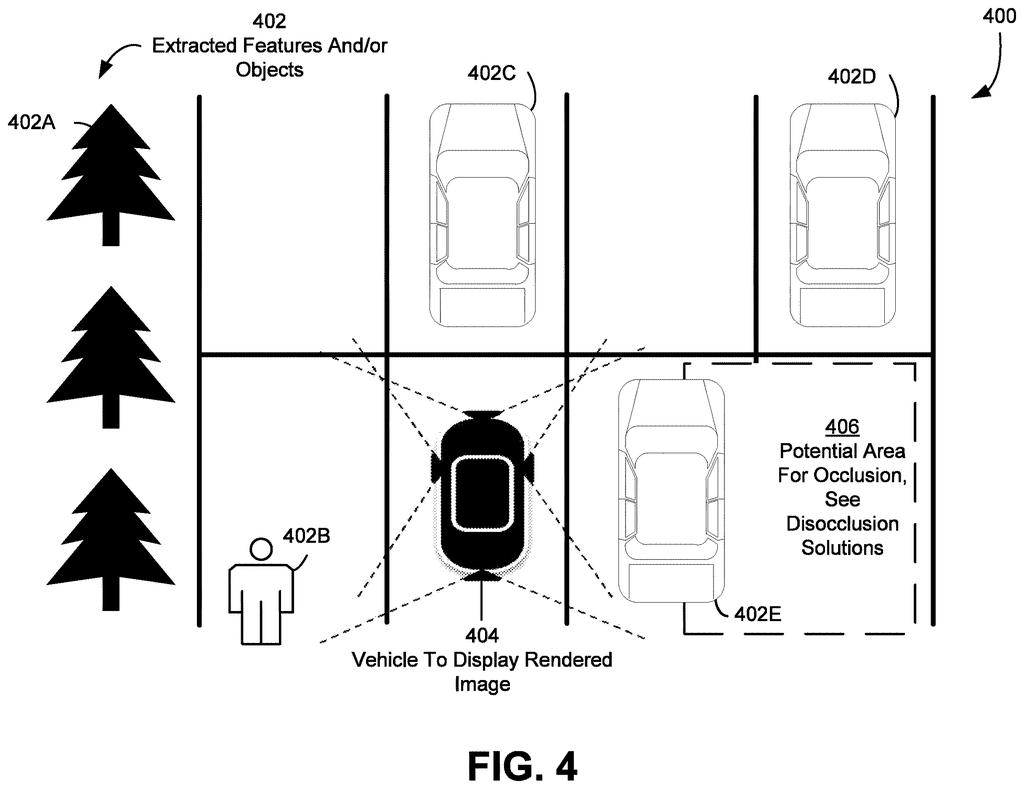
How Nvidia's AI conjures parking views from thin air
Picture this: you're backing into a tight parking spot, and your car shows you a crisp bird's-eye view even though there's no camera on top of the car. That's the kind of thing Nvidia's new patent is going after.
The system takes the images your existing cameras do capture, maps out the 3D shape of the world around the car, and then uses that information to paint a convincing picture of what the scene would look like from a completely different angle. It's a bit like how a director can create a virtual camera flyover in a movie using footage that was never actually shot from that position.
Nvidia specifically calls out a parking scenario in the patent: feed in a point cloud (a 3D map made of dots) and a target viewpoint, and the AI produces an image of the vehicle from that spot. No extra hardware required.
one or more circuits to use one or more first neural networks to generate one or more first images from a viewpoint outside of an object based, at least in part, on depth information generated using one or more second neural networks and feature information generated by one or more third neural networks.
Translation: Specialized hardware uses multiple AI systems together to calculate depth and visual details to render the car from entirely new angles.
How three neural networks divide up the rendering work
The patent describes a processor that coordinates three separate neural networks, each with a specific job.
- Second neural networks generate depth information (basically a map of how far away every surface is from the camera).
- Third neural networks pull out feature information (the visual details and textures in the scene, encoded in a form the AI can reason about).
- First neural networks take the depth map and the feature data together, then synthesize a new image from a requested viewpoint that no physical camera occupies.
The patent also mentions using a point cloud as an input. A point cloud is a collection of thousands of 3D coordinate dots that together describe the shape of physical objects, like a car or a wall. It's the kind of data a LiDAR sensor or a depth-estimation algorithm would produce.
By combining real camera images, depth maps, and point cloud geometry, the system can render a scene from an arbitrary outside viewpoint. The parking example in the filing has the AI generating an image of a vehicle from a vantage point chosen at render time, not at filming time.
… Using a point cloud and a viewpoint as inputs, a third neural network generates an image of vehicle from said viewpoint while parking.
Translation: By combining 3D spatial data with a target camera angle, the system renders a live picture of your car as you park it.
What this means for parking cameras and virtual production
For drivers, a system like this could make parking assist cameras far more informative without adding more hardware. Instead of five or six physical cameras stitched together awkwardly, a car could show any angle the driver wants based on what the existing sensors already see.
Beyond automotive, the same technique applies anywhere you want to synthesize camera angles from limited real footage: film production, sports broadcasts, robotics training data, or virtual telepresence. Nvidia is a major supplier of chips and software to all of those industries, so this patent covers a lot of ground even if the parking example is the most tangible one in the filing.
This is a solid, practical patent that targets one of the more annoying limitations of modern parking cameras. The three-network architecture is an interesting engineering choice worth watching, and the explicit callout of LiDAR point clouds ties it directly to Nvidia's automotive platform ambitions. It's not flashy basic research; it looks like a real system someone at Nvidia is building toward.
There are more where this came from
We read every patent application Big Tech publishes and send you the ones worth knowing. Plain English, free, every week.
The drawings
58 drawing sheets from US 2026/0228960 A1 · click any drawing to enlarge


Want this weekly breakdown for a company we don't cover? Patentlyze Pro →
Be the first to weigh in