
Samsung Patents a Self-Evaluating Compression System That Re-Compresses Bad Results
Most compression systems run once and move on — good result or not. Samsung's new patent describes a system that checks its own compression quality and, if the result isn't good enough, automatically adjusts its settings and tries again.
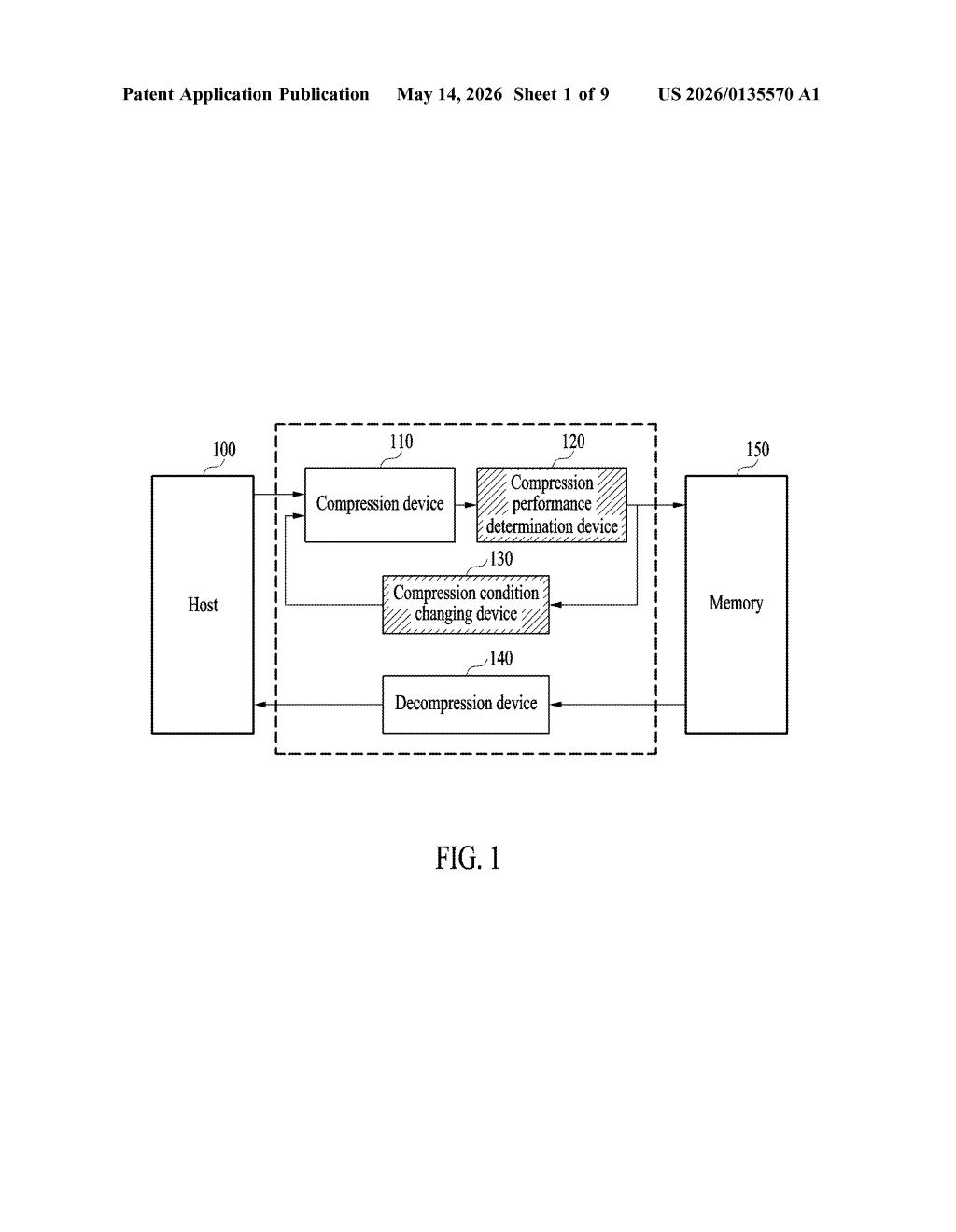
What Samsung's adaptive re-compression system actually does
Imagine you're packing a suitcase and after zipping it up, you step on a scale and realize it's still overweight. Instead of giving up, you rearrange the contents using a different folding strategy and try again. That's basically what Samsung's patent describes for data compression.
When your device compresses a file or chunk of data, the system doesn't just accept whatever size it ends up with. It measures a compression performance index — essentially a score for how well the compression worked — and decides whether the result is good enough.
If the score says "not good enough," the system automatically changes its compression parameters (the settings that control how aggressively data gets squeezed) and runs another compression pass on the already-compressed data. The goal is to squeeze out more efficiency without you — or any app — having to do anything.
How the compression performance index drives parameter changes
The patent outlines a processor-implemented pipeline with four key stages working together:
- Initial compression: Original data gets compressed using a baseline set of parameters.
- Performance evaluation: A dedicated compression performance determination device calculates a compression performance index — a metric that measures how much the data actually shrank relative to some target or threshold.
- Conditional re-compression: If the index falls below an acceptable level, the system routes the already-compressed data to a compression condition changing device that adjusts the parameters — think things like compression level, algorithm variant, or block size.
- Iterative additional compression: The adjusted parameters drive a second (or further) compression pass on the output from the previous round.
A decompression device is also part of the described system, suggesting the architecture is designed to work in tandem — compressing aggressively on the write path while still being able to recover data cleanly on the read path.
The system appears designed to run autonomously at the hardware or firmware level, sitting between a host system and a memory subsystem. This is consistent with how Samsung integrates compression logic into storage controllers and memory chips.
What this means for storage and memory efficiency in Samsung devices
For Samsung, which makes NAND flash, DRAM, and storage controllers, squeezing more efficiency out of compression directly translates to longer effective storage life, lower write amplification, and better memory bandwidth utilization. A chip that can adaptively tune its own compression could reduce the need for over-provisioning storage — meaning you get more usable capacity from the same physical hardware.
From a user standpoint, this kind of adaptive compression happening at the hardware level could mean faster app installs, smaller file footprints, and better battery life on devices that read and write data constantly — phones, SSDs, and memory chips alike. It's not flashy, but storage efficiency is one of those unsexy problems that has real downstream effects on everything from device cost to performance.
This is a solid, focused engineering patent solving a real problem: static compression settings leave efficiency on the table because no single configuration is optimal for all data types. Samsung's feedback-loop approach is sensible and practical. It's not novel in concept — iterative compression and adaptive encoders exist — but packaging it as an autonomous hardware-level pipeline with a formal performance index is worth watching, especially given Samsung's vertical integration across chips and storage.
There are more where this came from
We read every patent application Big Tech publishes and send you the ones worth knowing. Plain English, free, every week.
Want this weekly breakdown for a company we don't cover? Patentlyze Pro →